Email: admin@yeeshine-tech.com WhatsApp: +86-13712868936

- All
- Product Name
- Product Keyword
- Product Model
- Product Summary
- Product Description
- Multi Field Search

Views: 0 Author: Site Editor Publish Time: 2026-07-29 Origin: Site


Medical devices often depend on small plastic components.
These parts may control fluid flow, protect electronics, support assembly, or contact patients. Minor dimensional errors can affect sealing, dosing, fit, or long-term performance.
Medical components therefore need more than ordinary plastic processing.
They require controlled materials, precise tooling, repeatable production, documented inspection, and effective change control.
Medical device plastic injection molding provides a scalable manufacturing method for these requirements. It uses precision molds to produce consistent components across repeated production cycles.
However, the process involves more than melting plastic.
Manufacturers must control:
Exact resin grades
Material storage and preparation
Mold design and maintenance
Machine parameters
Production cleanliness
Inspection requirements
Batch documentation
Material traceability
This article explains the medical device plastic injection molding definition. It also covers materials, applications, benefits, limitations, and supplier evaluation.
Note: Medical molding is defined by its controlled production system, not only its molding equipment.


Medical device plastic injection molding is a controlled manufacturing process.
It produces plastic components for medical devices, diagnostic products, laboratory equipment, and healthcare systems.
Approved resin pellets enter an injection molding machine. The machine heats and meters the resin. It then injects molten plastic into a precision mold.
The material cools inside the mold cavity. It solidifies into the required geometry. The mold opens, and the finished component is ejected.
This process supports repeatable production rather than one-time part creation.
The molding cycle resembles general plastic injection molding.
Medical projects often require additional controls, including:
Approved material lists
Resin lot traceability
Defined process parameters
Documented inspections
Formal change control
Controlled production environments
Process validation where required
Customer-specific quality records
Requirements vary according to the component’s intended use.
A non-contact equipment housing may need fewer controls than a fluid connector. An implant-related component may require additional material and risk evaluation.
Medical Injection Molding should therefore follow the project’s functional, quality, and regulatory requirements.
No polymer name automatically makes a material suitable for medical use.
Polypropylene, polycarbonate, ABS, and PEEK include many different grades. Each grade may contain different additives, colorants, reinforcements, or stabilizers.
The exact grade must match the application.
Important selection factors include:
Patient-contact duration
Chemical exposure
Sterilization method
Mechanical loading
Optical requirements
Temperature resistance
Supplier documentation
Regulatory strategy
Some projects require documented medical-grade resin.
Other projects may use approved engineering plastics for external housings. The component’s intended use determines the correct requirement.
Medical injection molded components cover many product categories.
Common examples include:
Medical device housings
Diagnostic cartridges
Fluid connectors
Syringe components
Pump components
Inhaler parts
Laboratory containers
Instrument handles
Internal support frames
Buttons and controls
Wearable device enclosures
Sealing and valve components
The process can also integrate ribs, bosses, threads, clips, and hinges.
These molded features may reduce assembly steps and separate components.
The main difference is the control system surrounding production.
Area | General Plastic Molding | Medical Device Plastic Molding |
|---|---|---|
Material control | Commercial grades may be sufficient | Exact grades and lots may require approval |
Documentation | Basic production records | Detailed traceability may be required |
Inspection | Standard dimensional checks | Critical and functional checks may apply |
Process changes | Adjustments may be flexible | Formal review may be required |
Environment | Standard factory conditions | Controlled areas may be required |
Validation | Often limited | Risk-based validation may apply |
A supplier may own advanced molding machines. Equipment alone does not establish medical manufacturing capability.
No. Cleanroom requirements depend on contamination risk and intended use.
Some medical components can be produced in standard controlled areas. Others require classified cleanroom molding or assembly.
A controlled workshop may include:
Defined cleaning procedures
Restricted material handling
Controlled storage
Limited manual contact
Documented work instructions
An ISO-classified cleanroom adds monitored environmental controls.
These may include filtered air, particulate limits, gowning, access control, temperature, and humidity.
Cleanroom production does not make a part sterile.
Sterilization remains a separate process when required.
Tip: Define cleanliness requirements before quotation, tooling, and process planning begin.
The process begins before resin enters the machine.
Engineers first review the component design.
They assess:
CAD geometry
Wall thickness
Draft angles
Undercuts
Critical dimensions
Assembly interfaces
Sealing surfaces
Expected production volume
They also review patient contact, sterilization, chemical exposure, and mechanical loading.
Design for manufacturability identifies molding risks early. It can reduce expensive mold changes later.
The manufacturer confirms the approved resin grade.
Moisture-sensitive materials may require controlled drying. Storage and transfer methods should prevent contamination or moisture absorption.
The mold controls:
Resin entry
Cavity filling
Air removal
Cooling
Shrinkage
Part release
Engineers design gates, runners, vents, cooling channels, and ejection systems around these functions.
Mold trials confirm whether the design performs as expected.
The injection molding cycle follows eight main stages:
Resin enters the molding machine.
The screw melts and meters it.
The mold closes under clamp force.
Molten plastic fills the cavity.
Packing pressure compensates for shrinkage.
Cooling solidifies the component.
The mold opens.
The ejection system removes the part.
Temperature, speed, pressure, holding time, and cooling time affect each stage.
Finished components must meet approved acceptance criteria.
Inspection may cover:
Visual appearance
Critical dimensions
Part weight
Assembly fit
Leak performance
Functional movement
Surface quality
Secondary operations may include trimming, printing, welding, assembly, cleaning, or packaging.
Only accepted parts should proceed to final release.
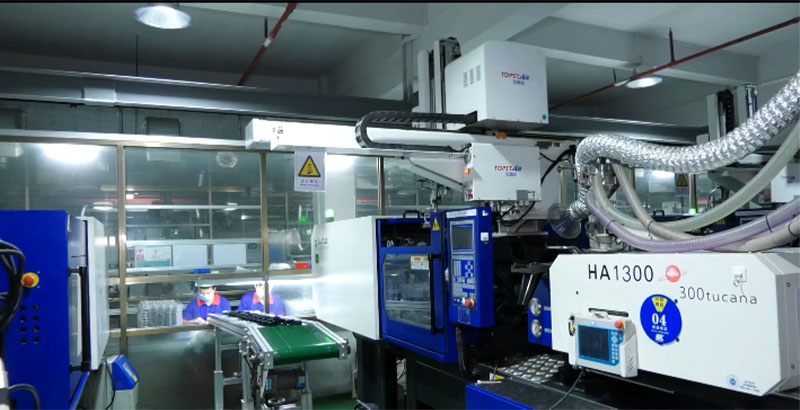
Medical device molding materials must match the product’s actual requirements.
There is no universal plastic for every healthcare application.
Common materials include polypropylene, polyethylene, ABS, and polystyrene.
They may be used for containers, housings, laboratory products, internal supports, and disposable components.
Polypropylene often provides chemical resistance and efficient processing.
Polyethylene offers different stiffness and flexibility options.
ABS can support rigid housings and appearance requirements.
Polystyrene may suit selected laboratory and disposable applications.
The exact resin grade still requires project approval.
Transparent components may use polycarbonate or PMMA.
These materials can support viewing windows, clear housings, and diagnostic components.
High-performance medical plastics include PEEK, PPSU, PEI, and PPS.
They may offer:
Heat resistance
Mechanical strength
Chemical resistance
Dimensional stability
Repeated sterilization capability
These materials often require stricter drying and temperature control.
High performance does not automatically mean implant suitability.
Thermoplastic elastomers can create grips, seals, cushions, flexible covers, and soft-touch surfaces.
Overmolding can combine rigid and flexible materials.
However, both materials must provide reliable bonding and stable dimensions.
Liquid silicone rubber uses a different molding system. It should not be confused with thermoplastic elastomer processing.
Requirement | Material Question |
|---|---|
Patient contact | Is the exact grade suitable for contact conditions? |
Sterilization | Can the resin tolerate the selected method? |
Chemical exposure | Will cleaners or fluids affect performance? |
Mechanical load | Does the component need stiffness or flexibility? |
Optical performance | Is clarity or light transmission required? |
Dimensional stability | How will the material shrink or warp? |
Traceability | Can the supplier document each resin lot? |
Note: Always approve the exact resin grade, not only the polymer family.
Medical plastic molding applications range from simple housings to functional components.
Injection molding can produce:
Test cartridges
Sample containers
Pipette components
Laboratory housings
Fluid-analysis components
Repeatable dimensions support consistent assembly and test performance.
Common products include:
Syringe parts
Inhaler components
Pump connectors
IV components
Valves
Fluid connectors
These components often require controlled sealing and flow geometry.
Small dimensional changes may affect leakage or dosing performance.
Medical device housings protect electronics and internal assemblies.
Examples include monitor housings, sensor enclosures, diagnostic covers, internal frames, buttons, and control panels.
They may require impact resistance, electrical insulation, suitable appearance, and accurate assembly fit.
Medical molding can also support instrument handles, ergonomic grips, wearable enclosures, and specialized polymer components.
Implant-related parts require additional material and process evaluation.
Quality control should begin before production starts.
Manufacturers may record:
Resin supplier
Exact grade
Material lot
Colorant lot
Additive lot
Drying record
Production batch
These records link raw materials to finished medical components.
Unapproved substitutions should not occur.
Changes involving materials, machines, molds, or suppliers may require formal review.
Some projects require IQ, OQ, and PQ activities.
Installation Qualification confirms suitable equipment installation.
Operational Qualification evaluates the approved operating range.
Performance Qualification confirms stable production under planned conditions.
Validation scope depends on product risk and customer requirements.
Routine monitoring may include:
Melt temperature
Mold temperature
Injection pressure
Fill time
Cycle time
Part weight
Inspection should focus on critical requirements.
Manufacturers may check dimensions, flash, voids, sink marks, warping, surface defects, assembly fit, and leak performance.
Nonconforming components should be identified and controlled.
Corrective actions should address the actual root cause.
Controlled production reduces contamination risks.
Required controls may include gowning, cleaning, filtered air, restricted access, and environmental monitoring.
The manufacturing environment should match the product’s risk.
Buyers should request actual classification records when cleanroom status matters.
Tip: Define critical dimensions, validation, cleanliness, and traceability before requesting quotations.
Medical Device Plastic Injection Molding offers several technical and commercial benefits.
Precision molds reproduce defined geometry across repeated production cycles.
Stable machine parameters reduce component variation.
This supports consistent assembly and functional performance.
Injection molding supports medium- and high-volume production.
Multi-cavity molds and automation can increase output.
Initial tooling costs are distributed across larger quantities.
Very small quantities may not justify production tooling.
Injection molding can create:
Ribs
Bosses
Threads
Clips
Hinges
Sealing features
Insert molding and overmolding can combine materials or components.
Part consolidation may reduce assembly time and potential failure points.
The process supports rigid, flexible, transparent, and heat-resistant plastics.
It can produce lightweight and ergonomic designs.
It also supports different textures, colors, and surface finishes.
Medical plastic part manufacturing also has important limitations.
Precision molds require significant upfront investment.
Cost depends on part complexity, cavity count, mold steel, sliders, textures, cooling design, and expected tool life.
Buyers should evaluate lifetime production costs, not only tooling prices.
Late design changes can require mold modification.
Major changes may require new tooling.
They may also affect inspection plans or qualification activities.
Early DFM reduces this commercial risk.
Some materials require strict drying and narrow processing ranges.
Others have limitations involving shrinkage, chemicals, heat, or sterilization.
One plastic cannot meet every medical requirement.
Colorants and additives also require project review.
CNC machining may suit low-volume precision components.
3D printing may support rapid prototypes or customized products.
Extrusion suits tubing and continuous profiles.
Thermoforming may suit simple trays and shells.
Note: Injection molding becomes most economical after design and production volume become stable.
Supplier selection should focus on project control, not only machine capacity.
Buyers should review experience involving similar components and materials.
They should confirm support for:
DFM
CNC prototyping
Mold-flow analysis
Tooling
Mold trials
Production scale-up
The supplier should explain how critical features and tolerances are reviewed.
Buyers should assess:
Material traceability
Inspection methods
Change control
Nonconformance handling
Validation support
Documentation practices
Certification scope should also be verified.
General marketing claims do not replace actual records.
The supplier should support both product launch and future demand.
Review:
Machine sizes
Cavity capability
Automation
Inspection equipment
Mold maintenance
Capacity planning
Supply continuity
The lowest quotation may not offer the lowest project risk.
Buyers should evaluate tooling cost, tool life, material experience, communication, lead time, documentation, capacity, mold ownership, and maintenance support.
Yeeshine-Tech supports custom plastic projects through engineering review, CNC prototyping, mold manufacturing, and injection molding production. Its capabilities cover medical device enclosures, diagnostic housings, and other custom plastic components.
Buyers should confirm project-specific material controls, cleanliness requirements, documentation, and validation support before production begins.
Explore Yeeshine-Tech’s plastic injection mold capabilities.
Tip: Choose a supplier that explains its control system, not only its equipment list.
Medical device plastic injection molding is a controlled manufacturing process.
It produces repeatable plastic components for healthcare products and medical systems.
The process combines:
Approved plastic materials
Precision molds
Controlled machine parameters
Documented inspection
Material traceability
Change control
Suitable production environments
It is most suitable when:
The product design is stable.
Production volume supports tooling.
Repeatable dimensions are required.
Material requirements are defined.
Quality controls are documented.
The supplier can support scale-up.
Before starting a project, buyers should ask:
Which resin grade is required?
Does the component contact patients or fluids?
Which sterilization method applies?
Which dimensions are critical?
Is process validation required?
Can the supplier provide full traceability?
Medical Device Plastic Injection Molding works best as one connected system.
Materials, tooling, design, quality, and production scale must support each other.
A: Medical Injection Molding produces repeatable healthcare components using approved plastics, precision molds, and documented controls.
A: Medical Injection Molding melts resin, fills a mold, cools, ejects, and inspects each component.
A: Medical Injection Molding supports precision, scalable production, complex geometry, and lower unit costs.
A: Tooling complexity, cavity count, materials, tolerances, and production volume affect costs.
A: Medical molding suits repeat production, while CNC machining suits prototypes and lower volumes.
A: Wet resin, poor venting, unstable temperatures, uneven cooling, or worn tooling can cause defects.


