Email: admin@yeeshine-tech.com WhatsApp: +86-13712868936

- All
- Product Name
- Product Keyword
- Product Model
- Product Summary
- Product Description
- Multi Field Search

Views: 0 Author: Site Editor Publish Time: 2026-07-31 Origin: Site


Developing high-quality injection molded parts involves far more than building a mold and producing the first samples. Before a product is released for mass production, manufacturers must complete a structured sample approval process to verify that both the tooling and molding process consistently meet engineering requirements. An experienced injection molding supplier typically follows several validation stages, including the T0 sample, T1 sample, and T2 sample, with each phase providing valuable feedback for improving mold performance and product quality before production approval.
During tooling validation and sample validation, engineers evaluate whether the molded parts satisfy design specifications under stable processing conditions. This includes detailed dimensional inspection to confirm critical measurements, along with cosmetic inspection to identify surface defects such as sink marks, flash, weld lines, flow marks, or color inconsistencies. The collected data helps determine whether mold adjustments, process optimization, or design improvements are required before moving to the next validation stage. Each trial reduces manufacturing uncertainty and improves production consistency.
A well-defined validation process also strengthens injection molding quality control by confirming repeatability rather than relying on a single successful sample. When tooling, processing parameters, and inspection results consistently meet project requirements, the customer can confidently grant production approval. Understanding how T0, T1, and T2 trials fit into the overall development cycle helps manufacturers reduce project risk, shorten launch timelines, and ensure that the transition from mold trial to full-scale production is both efficient and reliable.

The injection molding sample approval process is a structured validation procedure used to confirm that a new mold, molding process, and finished product meet all engineering and quality requirements before volume production begins. Instead of approving the first molded part, manufacturers evaluate several trial stages, typically including the T0 sample, T1 sample, and T2 sample. Each stage focuses on verifying different aspects of the project, allowing both the customer and supplier to identify issues early and reduce production risk before final release.
The T0 sample is usually the first trial after mold assembly and is primarily used for tooling validation. Engineers confirm that the mold fills correctly, ejects parts smoothly, and operates as designed. After any necessary tooling adjustments, the T1 sample is produced for dimensional validation and process validation. Critical dimensions are measured, molding parameters are optimized, and part appearance is evaluated to ensure stable manufacturing performance. If additional improvements are required, another trial may be completed before progressing to the T2 sample, which demonstrates consistent production capability under repeatable manufacturing conditions and supports production validation.
Throughout the approval process, comprehensive documentation is equally important. Suppliers normally provide dimensional reports, material certificates, and inspection records to verify product compliance and process consistency. These documents create traceability for every validation stage and help customers review whether the injection molded parts satisfy functional, cosmetic, and material specifications. A well-managed sample approval process not only confirms mold readiness but also establishes confidence that the supplier can deliver stable quality throughout mass production.
The T0 sample is the first injection molding trial performed after the mold has been manufactured and assembled. Its primary objective is mold validation, ensuring that the tool functions correctly before detailed product qualification begins. At this stage, engineers focus on tooling verification rather than approving the molded part itself. The trial confirms that the mold opens and closes properly, fills the cavity, ejects parts without damage, and operates safely throughout the molding cycle. It is common for the first trial to reveal areas that require adjustment, making T0 an important engineering milestone rather than a final quality assessment.
During the initial sample phase, technicians evaluate several key factors, including mold design verification, basic dimensional inspection, and overall part appearance. Engineers also review material flow analysis by examining flow patterns, weld lines, short shots, air traps, sink marks, flash, and filling balance. At the same time, ejection quality is checked to ensure parts release smoothly without distortion, scratches, or stress marks. These observations help determine whether the mold design performs as expected under real production conditions.
If problems are identified, corrective actions are implemented before the next validation stage. Typical improvements include mold modification, local steel corrections, gate relocation to improve resin flow, and cooling channel adjustment to achieve more uniform part shrinkage and cycle stability. Because T0 samples are intended for engineering evaluation, they are rarely used for customer approval. Only after the mold operates reliably, major defects have been eliminated, and critical issues are resolved can the project proceed confidently to the T1 validation stage, where dimensional accuracy and process capability become the primary focus.
After the initial tooling issues have been addressed, the project moves into the T1 sample stage, where the focus shifts from mold functionality to product quality and manufacturing consistency. Unlike the T0 trial, T1 is intended to verify whether the optimized mold can repeatedly produce parts that meet design specifications. This phase combines dimensional validation with process validation, helping both the customer and supplier determine whether the molding process is approaching production readiness.
During T1 evaluation, comprehensive dimensional reports are created by measuring critical features against the engineering drawing or 3D CAD model. Engineers assess shrinkage, flatness, wall thickness, hole positions, and other key dimensions to confirm that the injection molded parts fall within specified tolerances. At the same time, cosmetic quality is carefully reviewed for defects such as sink marks, flash, weld lines, flow marks, and surface blemishes. Stable molding parameters—including melt temperature, mold temperature, injection pressure, packing pressure, and cooling time—are also verified to ensure repeatable processing rather than relying on a single successful molding cycle.
If any dimensions or appearance requirements are not fully achieved, further optimization is carried out before advancing to the next stage. Adjustments may include fine-tuning processing parameters, polishing or venting the mold, modifying local steel, or balancing cavity filling. Once inspection results show consistent performance across multiple samples and major corrective actions have been completed, the project is ready to enter the T2 phase. At this point, the emphasis changes from engineering improvements to demonstrating that the validated process can support stable, repeatable mass production.
The T2 production trial is the final verification stage before full-scale manufacturing begins. At this point, the mold design and product dimensions have already been approved, so the primary objective is production validation. Rather than evaluating a single molded part, the supplier demonstrates that the complete manufacturing process can consistently produce quality components under normal production conditions. This stage provides confidence that the project is ready for long-term manufacturing without unexpected quality or process issues.
A key part of T2 is the process capability study, where production runs are carried out using standard production equipment and regular production operators instead of engineering trial conditions. Engineers verify cycle time verification to ensure that the planned production rate can be achieved while maintaining dimensional accuracy and cosmetic quality. Process stability is monitored throughout the run by checking critical dimensions, repeatability, machine settings, material consistency, and overall production efficiency. These results help confirm that the validated process can support the required production volume.
Beyond molding performance, T2 also evaluates downstream manufacturing activities. Packaging validation confirms that finished parts are properly protected during storage and transportation, while handling validation ensures that parts can move through inspection, assembly, and logistics without cosmetic damage or dimensional changes. Documentation, inspection records, and quality procedures are reviewed to verify compliance with customer requirements and internal quality standards. Once the supplier demonstrates mass production readiness through stable process capability, verified cycle times, and effective quality control, the customer can confidently approve the project for Production Signoff and authorize the start of regular mass production.
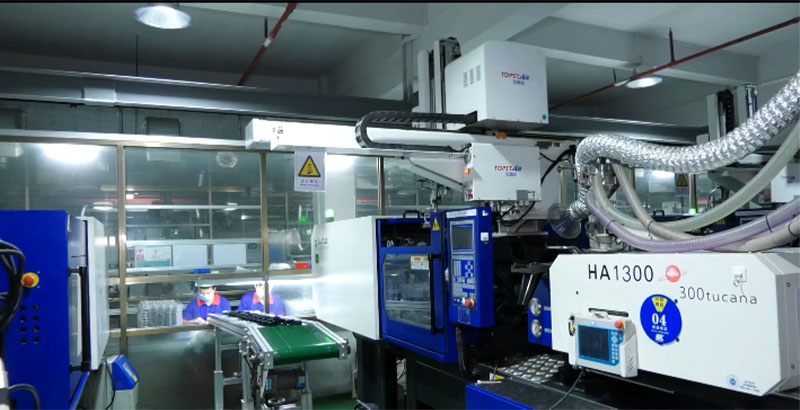

One of the most frequent sample approval failures is dimensional drift between molded parts produced during the same trial. Parts may meet specifications at the beginning of the run but gradually move out of tolerance as the process stabilizes. Common causes include inconsistent mold temperature, uneven cooling, material moisture, or unstable processing parameters. Preventing dimensional instability requires optimized molding conditions, regular machine monitoring, verified cooling performance, and complete process records that allow engineers to identify and eliminate sources of variation before production approval.
Another common reason for rejection is poor appearance or deformation. Cosmetic defects such as flash, sink marks, weld lines, flow marks, or surface scratches may affect product quality even when dimensions are acceptable. Warpage can also prevent proper assembly because uneven shrinkage changes the part shape after molding. Suppliers should combine visual inspections with dimensional reports to determine whether defects originate from mold design, processing conditions, or part geometry. Corrective actions may include improving venting, balancing cooling, optimizing gate design, or adjusting molding parameters.
Approval can also fail when the molded part does not use the specified resin or when supporting documents are incomplete. Material mismatch or unauthorized material substitution may change mechanical properties, appearance, or long-term performance, making the sample unacceptable. Missing inspection records, incomplete traceability, or outdated control plans can delay customer approval even if the parts appear acceptable. Maintaining certified materials, complete documentation, and standardized validation procedures helps reduce injection molding quality issues and improves the likelihood of successful approval before mass production begins.
A successful mold trial is not defined by producing a single acceptable part—it is achieved by proving that the entire manufacturing process is stable, repeatable, and ready for long-term production. From the first T0 trial through T1 optimization and T2 production validation, every stage reduces technical risk and builds confidence in the tooling, process, and final product.
An effective sample approval workflow combines engineering reviews, dimensional verification, cosmetic evaluation, process optimization, and complete documentation. These activities help identify potential issues before mass production, minimizing costly mold changes, production delays, and quality problems after launch. Careful validation also strengthens communication between the customer and supplier by providing clear data to support every approval decision.
When selecting an injection molding partner, look beyond the quality of the first sample. A supplier with a structured validation process, thorough inspection procedures, and strong process control is far more likely to deliver consistent production over the life of the project. Investing time in proper mold validation ensures smoother product launches, more predictable manufacturing performance, and lower total production costs while maintaining reliable product quality.


