Email: admin@yeeshine-tech.com WhatsApp: +86-13712868936

- All
- Product Name
- Product Keyword
- Product Model
- Product Summary
- Product Description
- Multi Field Search

Views: 0 Author: Site Editor Publish Time: 2025-08-11 Origin: Site


Spend less money when making a small number of parts.
Get strong and good parts that fit your needs.
Change your designs fast to keep up with the market.
Use this way for prototypes, testing, and small runs.
Low volume injection molding helps you save money. IIt uses cost-effective tool steel molds such as P20 or 718 for small batches. You can get strong, high-quality parts very fast. Most times, you get them in two or three weeks. This way lets you change your design between batches. You can make your product better each time. Making small batches lowers your risk. You only make the parts you really need. Injection molding is better than 3D printing and CNC machining. It gives you more material choices and makes parts faster. You can make hundreds of parts this way. It is good for prototypes and market testing. It also works for niche products and limited editions. Picking the right manufacturing partner is important. Smart design helps you get the best results. Low volume injection molding gives you flexibility, speed, and quality. It helps your business grow with confidence.
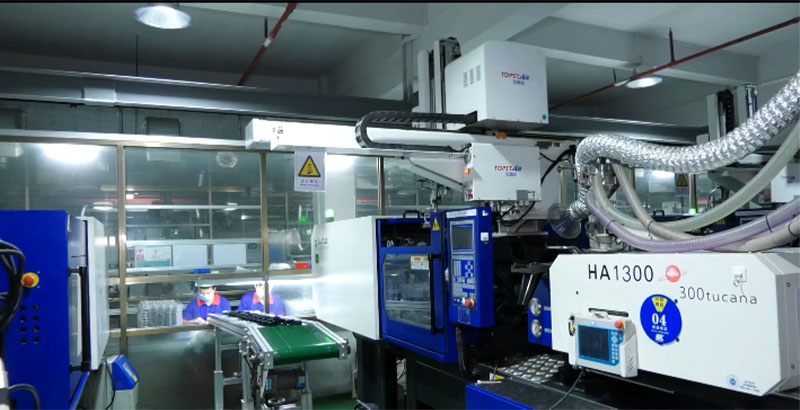
You want a reliable way to make parts quickly and with high quality. The injection molding process gives you that power. You start by designing a custom mold. You can use tool steel molds like P20 or 718 for low-volume production, offering durability and cost efficiency.. Next, you set up the machine and prepare your chosen material. You inject molten plastic into the mold, let it cool, and then remove the finished part. This cycle repeats for each piece you need.
Tip: Using plastic mold for small quantities lets you test new ideas without a big investment.
The steps in the injection molding process are simple:
Design and build the mold.
Set up the machine.
Prepare and load the material.
Inject, cool, and eject the part.
Finish and inspect the product.
You get consistent results every time. You can use a wide range of plastics, including high-performance materials, because the shorter runs keep costs low. This flexibility helps you create strong, custom parts for any project.
You do not need to order thousands of parts to get started. Small batch production lets you make just what you need. You can order as few as 500 pieces or scale up to 10,000. This approach works well for prototypes, market testing, or limited-edition products. You avoid the risk of overproduction and wasted inventory.
You can change your design between batches.
You can respond to customer feedback fast.
You can launch new products with less risk.
Low volume injection molding gives you the freedom to innovate. You can test your ideas in the real world before committing to large-scale production.
You might wonder how many parts count as a small batch. In low-volume production, you usually see orders from 500 to 10,000 units.
Note: Tool steel molds such as P20 or 718 are commonly used for small batch injection molding and offer a good balance of cost and durability.
This range fits most needs for prototypes, pilot runs, and custom parts. You get the same high quality as mass production, but you only pay for what you need. You can use specialized materials that might be too expensive for high-volume runs. Low volume injection molding makes it easy to get started, adapt quickly, and grow your business with confidence.
You want to keep your production costs low. Low volume injection molding helps you do that. You do not need to spend a fortune on molds. With low-volume production, you can use pre-hardened tool steel molds such as P20 or 718, which are more affordable than high-grade steel molds used for mass production.
This choice saves you both time and money while maintaining mold durability.
Take a look at the cost difference:
Volume Type | Typical Order Size | Tooling Cost Range | Machine Type |
|---|---|---|---|
Low Volume | ~1000-2000 small parts | Up to $10,000 | Small/desktop injection molding machines (including 3D printers) |
High Volume | Large orders, complex parts | Up to $100,000 or more | Large industrial injection molding machines (costing over $200,000) |
You can see that tooling for low volume injection molding often costs around $10,000. High volume molds can cost $100,000 or more. That is a huge difference. You get cost efficiency right from the start. You can invest your savings into other parts of your business. This makes low volume injection molding a smart choice for cost-effective manufacturing.
You need your parts fast. Low-volume production gives you a quick turnaround. You do not have to wait months for your molds. Aluminum molds are easier and faster to make than steel molds. You can get your first parts in just a few weeks.
You launch your product sooner.
You respond to market changes quickly.
You stay ahead of your competition.
Faster turnaround times help you test your ideas and get feedback fast. You can make changes and get new parts without long delays. This speed keeps your business moving forward.
You want to improve your product. Low volume injection molding gives you the freedom to change your design. You can update your mold between batches. You can try new features or fix problems without high costs.
Note: Low-volume production lets you test, learn, and improve with less risk.
You can make small runs for market testing. You can create custom parts for special customers. You can even use different materials for each batch. This flexibility supports innovation and helps you deliver what your customers want. You get cost-effectiveness and the ability to adapt fast.
You want every part to be good. Low volume injection molding helps you get quality parts each time. You do not need to worry about bad parts or rough finishes. You get the same quality as big factories, but with more care and control.
Many industries use this process for important jobs. You see it in medical devices, aerospace parts, and defense equipment. These areas need the best. You can trust strict quality checks at every step.
You get parts that pass tough tests. You can trust each batch to match your design and work right. This process makes sure your parts are always the same.
You want to stop costly mistakes. Low volume injection molding helps you find problems early. You can test, fix, and improve before making more parts. This way saves you time and money and keeps your good name.
Pick this method if you want good parts, trusted service, and peace of mind. You get high-quality production with no trade-offs.
You want to choose the best method for your project. 3D printing gives you fast results for prototypes and very small runs. You do not need to pay for molds. This means you save money when you only need a few parts. For example, if you make less than 50 units, 3D printing usually costs less per part than small-batch injection molding. The cost per part stays about the same, no matter how many you make.
Production Stage | 3D Printing Cost per Part | Injection Molding Tooling Cost | Injection Molding Cost per Part | Less Expensive Option |
|---|---|---|---|---|
Prototyping (4 iterations) | $100 | $10,000 | $10,000.05 | 3D Printing |
Small Batch (<50 units) | $100 | $10,000 | $200.05 | 3D Printing |
High Volume (100,000 units) | $100 | $10,000 | $0.15 | Injection Molding |
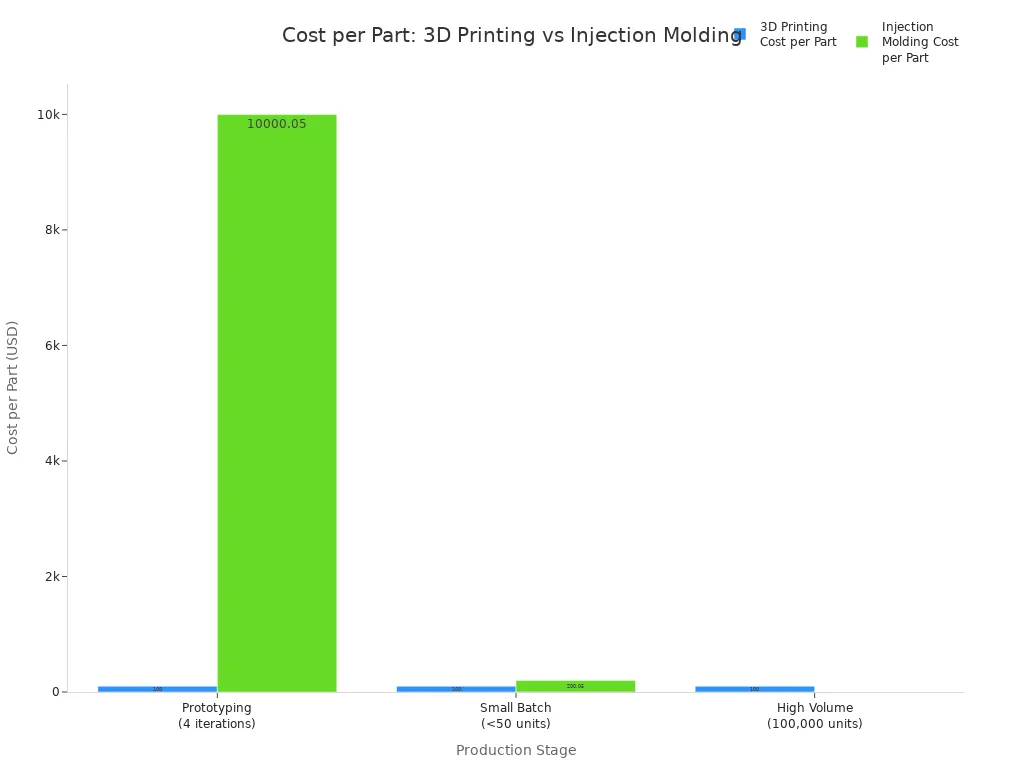
For very small batches, 3D printing wins on price. Once you need more than a few hundred parts, small-batch injection molding becomes the better deal.
You also get better material choices and surface finishes with small-batch injection molding. If you want strong, smooth, and colored parts, injection molding gives you more options.
CNC machining works well for custom parts and quick changes. You do not need a mold, so you can start production fast. For small batches, CNC machining can deliver parts in just one or two weeks. Each part takes hours to make, so the process slows down as you need more parts.
Method | Setup Time | Production Speed per Part |
|---|---|---|
Injection Molding | 2 to 6 weeks (mold creation) | Seconds to minutes per part (fast after setup) |
CNC Machining | 1 to 2 weeks (no mold needed) | Several hours per part (slower production) |
You get fast setup with CNC machining, but small-batch injection molding produces parts much faster once the mold is ready. If you need hundreds or thousands of parts, injection molding saves you time and money.
CNC machining works best for metal parts or when you need only a few pieces. Small-batch injection molding is your choice for plastic parts and larger runs.
You want to pick the right method for your needs. Use 3D printing for prototypes or very small runs. It costs less for under 50 parts and lets you test ideas quickly. Choose CNC machining for metal parts or when you need a few custom pieces fast.
Pick small-batch injection molding when you need:
More than 100 parts with high quality and strong materials.
Smooth finishes and color options.
Lower cost per part as your order grows.
Fast production after the mold is ready.
You see the break-even point between 250 and 2,000 parts. After that, small-batch injection molding gives you the best value. You get better material properties, surface finish, and scalability. Many companies use 3D printing for early prototypes, then switch to small-batch injection molding for real products.
If you want to grow your business, reduce costs, and deliver top-quality parts, small-batch injection molding is the smart choice for small batch production.


You want to see your ideas become real fast. Custom injection molding lets you do this. You can turn your designs into real parts in just days or weeks. You do not have to wait months. This method helps you make strong prototypes that look like the final product. You can check if your part fits and works well. You can also see if it breaks under pressure. If you find a problem, you can fix it and make a new one quickly.
You can use this process in many fields:
Automotive: custom car parts and brackets
Aerospace: special fittings and housings
Medical: tools and device covers
Electronics: connectors and cases
Consumer goods: toys and home decor
You get to try out different designs and materials. You do not spend a lot of money. You can avoid big mistakes before making lots of parts. You can even make working models for real tests. This way saves you time and money and helps you make better products.
Prototyping with custom injection molding helps you go from idea to real product fast and with confidence.
You want to know if your product will do well before making many parts. Market testing with low volume injection molding helps you do this. You can make small batches for testers or special launches. This way, you get real feedback from customers and improve your design before making more.
You can:
Test your idea with real users
Change your design after feedback
Avoid making too many parts you do not need
See if people want your product in new markets
This process lowers your risk. You only make what you need. You can change your product fast if the market changes. Many companies use this way to test new ideas and get people excited with special editions.
Market testing with custom injection molding helps you make smart choices and grow your business with less risk.
You want to help special markets that need unique parts. Low volume injection molding is great for niche products. You can make special parts in small amounts, from 100 to 10,000 units. This method works well for things like medical devices, aerospace, and electronics.
Common niche products are:
Devices that find chemicals or explosives
Custom medical tools for special care
Precision parts for defense and aerospace
Limited-edition gadgets and accessories
You can make custom parts that meet strict rules for quality and performance. You do not need to worry about high costs or long waits. You can react fast to new trends or customer needs. This flexibility helps you stay ahead in markets that change quickly.
Niche products need speed, quality, and flexibility. Custom injection molding gives you all three.
You might wonder how low volume injection molding helps in real life. Many businesses use this process to fix hard problems and work quickly. It lets you make special parts, try out new ideas, or fill orders fast. This method helps you act fast and stay ahead of others.
Here are some ways companies use low volume injection molding each day:
Industry | Real-World Uses |
|---|---|
Automotive | Custom parts for concept cars, limited-edition vehicles, and precise interior trim. |
Healthcare | Surgical tools, test kit housings, and medical device covers for pilot programs. |
Consumer Goods | Small runs of new gadgets or seasonal items to test customer interest. |
Electronics & Aerospace | Enclosures and complex parts that need frequent updates and tight tolerances. |
Industrial Equipment | Specialized brackets, enclosures, and machine interfaces for custom machinery. |
You can see this process works for many needs. You do not have to wait for big orders. You can make only what you need, when you need it.
This process helps you move from prototypes to full production. You get to test your designs with real materials and in real situations. This step helps you find and fix problems early, before you spend more money.
You can also use low volume injection molding for pilot runs and product checks. You can make enough parts for testing, safety checks, or market trials. This way, you know your product works before making lots of them.
Here are some smart ways to use low volume injection molding:
Scenario | How It Helps You |
|---|---|
Bridge Between Prototype and Production | Test real parts before full-scale manufacturing. |
Pilot Production and Product Validation | Make enough units for beta tests and certifications. |
Frequent Design Changes | Update your product fast without high costs. |
Emergency or Stop-Gap Production | Fill urgent orders or replace out-of-stock parts quickly. |
Niche and Limited-Edition Products | Make custom or seasonal items in small batches with high quality. |
Entry to New Markets | Test new regions or meet local rules with small runs before going big. |
Low volume injection molding helps you stay flexible. You can react to new trends, customer ideas, or changes in the market. You do not get stuck with extra parts or old products.
Many companies use this method to launch new things, test new places, or make special editions. You can do this too. You get speed, good quality, and control. Your parts will meet strict rules, even in small amounts.
If you want to move fast, lower your risk, and make great products, low volume injection molding is the best choice. Try it now and see how it can help your business grow.
You want to know how much low volume injection molding will cost you. The good news is that you can start with a much lower investment than high-volume production. Most low volume injection molding projects use P20 or 718 tool steel molds, which provide a good balance of cost, durability, and performance for small runs.You can see the typical cost ranges in the table below:
Mold Complexity | Cost Range (USD) | Typical Application |
|---|---|---|
Simple, Single Cavity | $3,000 to $6,000 | Low volume, prototyping |
Complex, Multi-Cavity | $25,000 to $50,000+ | High volume, production molds |
You usually pay between $3,000 and $6,000 for a simple mold. If you need a more complex mold, the price goes up. Most small-batch injection molding projects use aluminum molds, which last for up to 10,000 shots and cost much less than steel molds.
Many factors affect your total cost:
Mold material (aluminum costs less than steel)
Mold complexity and design
Material choice for your parts
Part shape and wall thickness
Labor and setup fees
Number of parts you order
Tip: You can save money by keeping your part design simple and choosing the right material for your needs.
If you want to keep costs low, focus on simple designs and use rapid tooling options. You get high-quality parts without a huge upfront investment.
You want your parts fast. Low volume injection molding gives you a quick turnaround compared to other methods. You can often get your first parts in just two to three weeks. This speed helps you launch products sooner and respond to market changes.
Manufacturing Method | Average Lead Time | Notes |
|---|---|---|
Low-Volume Injection Molding | 15-25 days (2-3 weeks) | Fast with tool steel molds (e.g., P20) and rapid tooling techniques |
CNC Machining | 2-6 weeks | Good for metal parts, slower for large batches |
3D Printing | Hours | Fastest for prototypes and very small batches |
High-Volume Injection Molding | 8-16 weeks | Longest lead time due to complex setup |
You see that low volume injection molding is much faster than high-volume production. You do not have to wait months for your parts. You can move from idea to finished product quickly and stay ahead of your competition.
Note: If you need only a few parts, 3D printing is even faster. For hundreds or thousands of parts, low volume injection molding is your best choice for speed and quality.
You want every part to meet your standards. Low volume injection molding delivers high-quality results, even with aluminum molds. You get parts that look and feel just like those made with expensive steel molds. The key is to follow good design rules, such as using draft angles of 2 to 3 degrees and keeping wall thickness between 1 and 3.5 millimeters. These steps help prevent defects and make sure your parts come out smooth and strong.
You do not have to worry about poor finishes or weak parts. When you work with a skilled partner, you get the same quality as high-volume production. Your parts will pass strict tests and work well in real-world use.
You can trust small-batch injection molding to give you reliable, high-quality parts for your next project.
You want to stay ahead in your market. Low volume injection molding gives you the flexibility you need to do that. You can change your product design between batches without big delays or high costs. This process lets you test new ideas, fix problems, and improve your parts quickly. You do not have to wait for long production runs to finish before making changes.
With low volume injection molding, you can optimize your product before it reaches your customers. You get to make adjustments and see real results fast.
You can take advantage of this flexibility in many ways:
Make several versions of your part and compare them side by side.
Change the mold to fix design issues or improve how your part fits.
Try different materials to see which one works best for your needs.
Test your product in the real world and get feedback from users.
Update your design after each batch to keep up with new trends or customer requests.
Work with experts who help you choose the right material and design for your part.
This process supports multiple rounds of development. You can make meaningful changes between batches. If you find a problem, you can fix it right away. You do not need to start over or spend a lot of money on new molds. Quick mold changes help you meet tight deadlines and respond to market demands.
Many industries rely on this flexibility. Automotive companies use it to test new parts and make sure they meet safety standards. Medical device makers need to adjust designs for better performance or new regulations. Consumer electronics brands want to launch new features fast. You can do the same in your business.
Fast turnaround times mean you get feedback, run tests, and make changes without waiting months. You can move from idea to prototype to finished product in record time.
You also save money. You do not waste resources on parts that do not work. You only make what you need, when you need it. This approach lowers your risk and helps you deliver better products.
If you want to innovate, respond to feedback, and stay ahead of your competition, low volume injection molding gives you the flexibility to succeed. Choose this method to turn your ideas into real products—quickly and cost-effectively.
You want your project to succeed from the start. Picking the right manufacturing partner makes all the difference. Look for a company with a proven history and repeat customers. This shows they deliver results. Make sure they have the right machines and in-house tooling. You need a partner who understands your industry and can handle your product’s needs.
Here are the top things to check when choosing a partner:
Proven track record and industry experience
Technical capabilities and in-house tooling
Quality certifications and strong inspection processes
Ability to meet your deadlines and manage schedules
Expertise in design and material selection
Experience with molds for your production volume
Extra services like assembly or packaging
Regular maintenance for molds and equipment
Financial stability for long-term support
Clear communication and teamwork
Tip: A great partner acts as an extension of your team. They help you solve problems and keep your project on track.
You want your parts to look good and work well. Smart design choices save you money and time. Use the lowest-cost surface finish that fits your needs. Add draft angles to help parts come out of the mold easily. Keep wall thickness between 1 and 3.5 mm for strong, smooth parts. Use rounded corners to boost strength and make molding easier.
Use ribs to add strength without extra material.
Place gates in hidden spots to avoid marks on visible surfaces.
Try multi-cavity molds if you need more parts per cycle.
Work with your molder to pick the right resin for your part.
Prototype with 3D printing before making the mold.
Note: Good design helps you avoid defects and lowers your costs. Always ask your molder for feedback on your CAD files.
You can launch your project with confidence by following clear steps. Start with a detailed 3D model using CAD software. Think about material, shape, and wall thickness. Next, choose the right mold. Aluminum molds work best for low volume runs because they cost less and are easy to change.
Here are the main steps:
Design and prototype your part.
Select the best mold type for your needs.
Begin production by injecting material into the mold.
Check each part for size, finish, and strength.
Launch your product and keep improving based on feedback.
A good partner will guide you through each step. You get quality parts fast and can adjust your design as needed. This process helps you bring your ideas to life and grow your business with less risk.
You want great results when making a small number of parts. Low volume injection molding helps you save money, get parts fast, change designs easily, and get good quality. Here is how each benefit helps you:
Benefit | Why It Matters for You |
|---|---|
Cost Savings | You pay less for molds and setup on small jobs |
Speed | You get your parts faster with simple tools |
Flexibility | You can change your design without big costs |
Quality | Each part is made the same and fits well |
Look at how many parts you need and your budget.
Think about how quickly you need your parts.
Decide if you want to change your design often.
Pick low volume injection molding if you want to move fast and spend less. Ask an expert if this way is right for your next project.
You can start with as few as 100 parts. Some providers accept even smaller runs. This flexibility lets you test ideas or launch products without a big commitment.
You can receive your first parts in as little as two to three weeks. Quick turnaround helps you launch products faster and respond to market changes.
Yes! You can update your design between batches. This process lets you improve your product, fix issues, or add new features without high costs.
You save money on tooling and setup. Aluminum molds cost much less than steel. You only pay for what you need. This method gives you high-quality parts without a huge investment.
You can choose from many plastics, including ABS, polycarbonate, nylon, and more. You can even use specialty materials for strength, flexibility, or heat resistance.
Absolutely! You get the same precision, finish, and strength as large runs. Skilled technicians and advanced machines ensure every part meets your standards.
Yes, you can. This method gives you real, functional prototypes that look and feel like final products. You can test, improve, and move to full production with confidence.
Contact a trusted injection molding partner. Share your design and goals. Get expert advice on materials, mold options, and production steps. You can launch your project quickly and easily.


