Email: admin@yeeshine-tech.com WhatsApp: +86-13712868936

- All
- Product Name
- Product Keyword
- Product Model
- Product Summary
- Product Description
- Multi Field Search

Views: 0 Author: Site Editor Publish Time: 2026-08-27 Origin: Site


Developing a new plastic product often requires several rounds of testing before it is ready for the market. Injection molding provides a practical path for turning an approved design into functional plastic components, while plastic part prototyping helps engineers evaluate the design before committing to full-scale production tooling. This approach allows teams to check dimensions, assembly fit, appearance, strength, and material behavior under realistic conditions.
Compared with traditional prototype methods, rapid prototyping combined with molding technologies can help shorten development cycles and identify design problems earlier. Effective design validation reduces the risk of expensive tooling changes after production begins and gives customers greater confidence before moving to higher-volume manufacturing.
For automotive, electronics, consumer products, and other industries, custom molded products can support the complete product development process—from early concept evaluation to production-ready parts. By connecting design testing with manufacturing requirements, companies can reduce development risks, improve product quality, and move promising designs toward market launch more efficiently.

Plastic molding products are custom-made components produced by shaping thermoplastic or other polymers inside a dedicated mold. During product development, manufacturers can use functional prototypes and low-volume molding to evaluate the design before investing in final production tooling. This approach provides a more realistic representation of the material, molding behavior, surface finish, and assembly conditions expected during Mass Production.
T1 sample is particularly useful for design validation because engineers can evaluate shrinkage, warpage, wall thickness, dimensional stability, and assembly fit using the intended resin or a closely matched material. These results can reveal problems that may not appear in 3D-printed or CNC-machined samples.
Compared with 3D printing, molded part can better demonstrate actual injection molding behavior. CNC machining may offer excellent dimensional accuracy, but it does not reproduce resin flow and cooling effects. For projects where tooling investment is significant, low-volume molding provides a practical way to validate the design, reduce modification risks, and build confidence before moving into full-scale production.
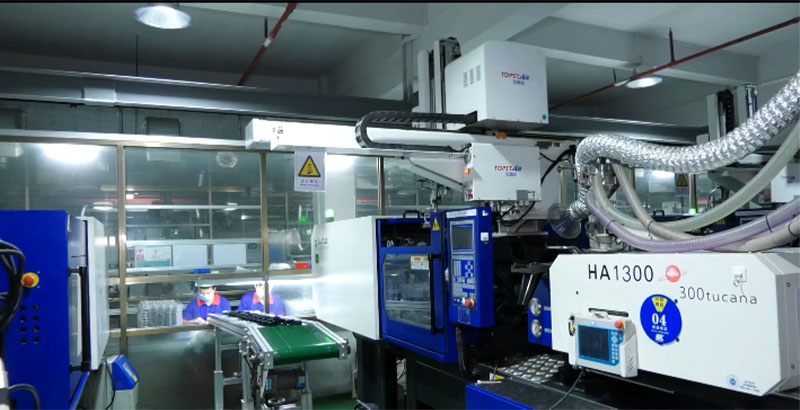
Custom plastic molding can provide a cost-effective development path. Low-volume molding allows engineers to test actual part geometry, wall thickness, ribs, bosses, and assembly interfaces without immediately committing to expensive production tooling. Early trials can reveal problems such as shrinkage, warpage, sink marks, poor fit, or difficult ejection while design changes are still relatively inexpensive. This reduces the chance of discovering major defects after the final mold has been completed. By combining prototype trials with structured design reviews, manufacturers can shorten development cycles and improve the transition toward stable production. The approach is especially useful when several design iterations are expected or when a new product requires functional testing before market launch.
Another advantage is material flexibility during development. With custom plastic molding, engineers can evaluate production-grade materials instead of relying only on prototype materials that behave differently from the intended resin. Depending on the application, teams can compare material strength, flexibility, appearance, chemical resistance, and thermal performance while also studying actual mold performance. Testing with representative molding conditions helps identify changes caused by shrinkage and warpage and provides more reliable dimensional data. Prototype parts can also undergo functional and assembly testing using the same interfaces planned for production. This creates a stronger connection between product design and manufacturing reality, helping teams validate structure, material, appearance, and performance before committing to high-volume production.
Injection Molding vs 3D Printing depends largely on the development stage and testing requirements. 3D printing is useful for quickly producing low-cost samples and checking complex geometry, basic dimensions, and assembly concepts without dedicated tooling. However, printed parts may use different materials and manufacturing characteristics from final products. Injection molding can use production-grade plastics, making it more suitable for evaluating actual material behavior, surface appearance, shrinkage, and functional performance. Although molding requires tooling investment, 3D printing vs injection molding becomes a different comparison when multiple samples or low-to-mid volume production is required. Molding generally offers better consistency, repeatability, and a clearer path toward scalable production.
CNC machining vs injection molding also involves different strengths. CNC machining can provide excellent dimensional accuracy and is useful for prototypes made from engineering plastics when only a small number of parts are required. It avoids mold investment and allows design changes to be implemented quickly. However, machining removes material rather than reproducing the flow, cooling, and shrinkage behavior of molded plastics. Injection molding can provide production-style surface finish, consistent part geometry, and realistic performance using the selected resin. Therefore, Injection Molding vs CNC Machining should be evaluated according to volume, material selection, geometry, and testing objectives. For functional prototypes that need to transition toward repeatable production, molding can provide stronger scalability and manufacturing validation.
In the Automotive Industry, custom plastic molding helps engineers validate components before committing to high-volume production. Prototype and low-volume molded parts can be used to check dimensions, mounting points, clips, ribs, and assembly fit under realistic conditions. Using production-grade resins also allows teams to evaluate strength, heat resistance, chemical exposure, and dimensional stability. Components such as interior trim, sensor housings, connector covers, brackets, and under-hood plastic parts can benefit from this approach. Early molding trials can expose shrinkage, warpage, sink marks, or interference between mating parts before production tooling is finalized. This reduces the risk of expensive mold modifications later. For automotive programs with long production cycles, validating geometry and material behavior early can improve development efficiency and create a smoother transition from prototype builds to stable mass production.
For Medical Devices, plastic molding provides an effective way to evaluate part geometry, material compatibility, and functional performance before full-scale manufacturing. Prototype molded components can help engineers inspect critical dimensions, snap-fits, seals, housings, and interfaces between disposable or reusable components. Compared with basic visual prototypes, molded samples can provide more realistic information about the selected resin, surface quality, stiffness, and dimensional behavior. This is important when small changes in geometry may affect assembly or device operation. Low-volume molding also allows teams to test designs with representative production materials before investing heavily in final tooling. Depending on the product and applicable regulations, additional validation and documentation may be required before commercial production. Early testing helps identify design weaknesses, reduce tooling changes, and improve confidence in the final manufacturing process.
Consumer Electronics often require compact parts with precise interfaces, attractive surfaces, and consistent assembly performance. Custom plastic molding allows development teams to evaluate housings, buttons, battery covers, connector components, bezels, and internal structural parts using realistic molding conditions. Prototype molding can reveal issues such as warpage, uneven shrinkage, visible weld lines, sink marks, or poor alignment between mating components. It can also help engineers assess surface finish, texture, color, and the compatibility of secondary processes such as painting, printing, or coating. For products that must move quickly from concept to launch, low-volume molded samples provide a useful bridge between early prototypes and production tooling. Testing actual molded parts before mass production helps reduce redesigns, improve assembly accuracy, and minimize the risk of cosmetic or functional problems appearing late in development.
For Industrial Products, molded plastic components often need to withstand mechanical loads, temperature changes, chemicals, vibration, or continuous operation. Prototype molding provides a practical method for testing housings, covers, gears, brackets, seals, protective components, and equipment interfaces before large-scale production. Engineers can examine dimensional stability, material performance, assembly fit, and functional behavior using representative plastics and molding conditions. This is particularly valuable for parts with complex ribs, bosses, snap-fits, or tight mating features that may behave differently after molding than in a CAD model. Low-volume production can expose design weaknesses while modifications are still manageable. By validating structure, material, appearance, and assembly early, manufacturers can reduce formal tooling risks, avoid unnecessary production changes, and establish a more reliable path toward repeatable mass production.

Injection molding is a strong choice when a project needs reliable design validation, and a clear path toward mass production. An experienced supplier can begin with DFM analysis to review wall thickness, draft angles, ribs, gates, ejection, and other manufacturability risks before mold manufacturing starts. Moldflow simulation can further evaluate filling, cooling, pressure, and potential warpage, helping engineers address problems earlier.
For projects requiring low-volume production, prototype or simplified tooling can provide functional samples without immediately investing in full-scale production tooling. A supplier familiar with international mold standards such as HASCO and LKM can also improve tooling compatibility and simplify future maintenance or mold transfer.
Beyond engineering, precision engineering, fast lead times, and strong process control are important for achieving quality consistency. The right supplier should support the project from initial design review and sampling through tooling validation and production ramp-up, reducing development risk while creating a smoother transition from prototype parts to dependable production.
Developing custom plastic parts is more than turning a CAD file into a finished component. A structured path from prototype development to production allows manufacturers to test geometry, materials, assembly, appearance, and performance before making a full tooling commitment. Early design validation helps identify shrinkage, warpage, fit, and manufacturing issues while changes are still easier and less expensive to implement.
For automotive, medical, electronics, and consumer goods applications, this approach can support faster product development, better cost reduction, and stronger production risk reduction. Prototype also provides valuable information about how the selected material and design will behave under realistic manufacturing conditions, helping teams make better decisions before mass production.
Working with a supplier that combines precision engineering, mold design, and quality control can further simplify the transition from prototypes to stable production. By validating critical requirements early and planning tooling with future production in mind, companies can shorten development cycles, avoid unnecessary modifications, and move reliable products to market with greater confidence.


