Email: admin@yeeshine-tech.com WhatsApp: +86-13712868936

- All
- Product Name
- Product Keyword
- Product Model
- Product Summary
- Product Description
- Multi Field Search
 |


| Quantity: | |
|---|---|
Product Description
Our manufacturing capabilities in injection molding are specifically structured to support the precise production of household part plastic injection molds. Producing components for daily household use requires strict adherence to dimensional tolerances, aesthetic consistency, and material durability. We utilize advanced manufacturing facilities and precision machinery to ensure that every molded part meets exact project specifications. Beyond standard production, we provide comprehensive technical support for every injection molding order. This includes evaluating mold design feasibility, guiding material selection for specific environmental exposures, advising on surface finishes suitable for consumer goods, and structuring tailored shipping solutions. By focusing on these technical details, we help buyers minimize production risks, control overall costs, and maintain consistent output quality for large-scale manufacturing runs.
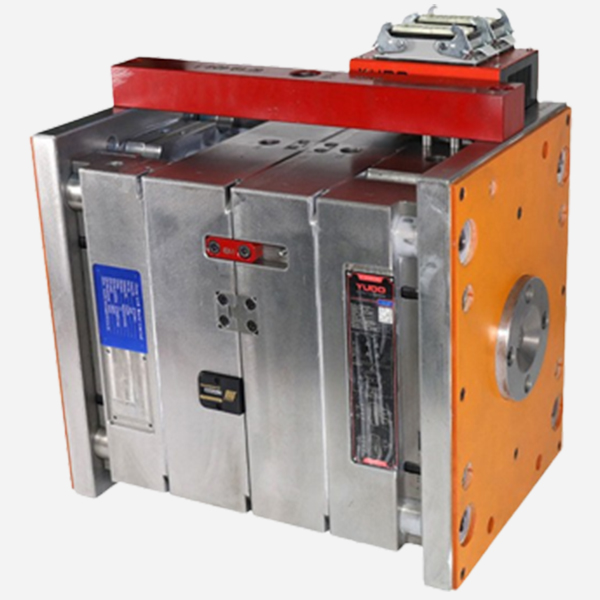
Plastic Injection Molding
Leveraging our technical expertise and precision machinery, we specialize in crafting a wide range of plastic injection molds tailored to meet strict specifications for tolerance and cost-efficiency. For household parts, standard plastic injection molding is the foundational process used to create structural housings, internal brackets, and external covers. We focus on optimizing the mold flow and cooling systems to prevent common defects such as warpage, sink marks, or short shots, which are critical for maintaining the visual and functional integrity of consumer products. This process supports a vast selection of thermoplastic materials, allowing for customization in strength, flexibility, and thermal resistance. By maintaining tight control over injection pressure and temperature, we ensure high repeatability, making this method highly economical for volume production while reducing the need for secondary machining.
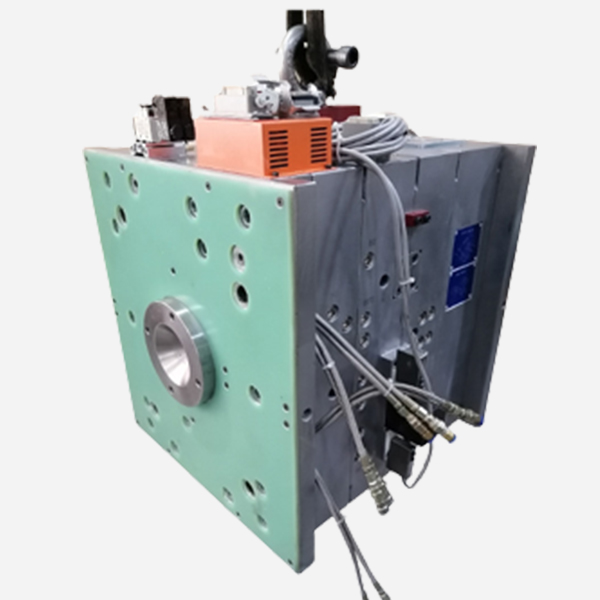
Overmold
By chemically bonding or mechanically interlocking plastic, metal, and rubber layers together, our overmolding process minimizes assembly duration while significantly enhancing the functional strength and tactile flexibility of household parts. In the context of household items, overmolding is frequently utilized to add soft-touch grips to tool handles, create waterproof seals for kitchen appliances, or introduce dual-color aesthetics without the need for adhesives. This process involves injecting a second material directly over a rigid substrate. This eliminates secondary assembly steps, thereby reducing labor costs and lowering the risk of component separation during daily use. The resulting integrated part offers improved ergonomics, better vibration dampening, and enhanced durability against wear and tear in domestic environments.
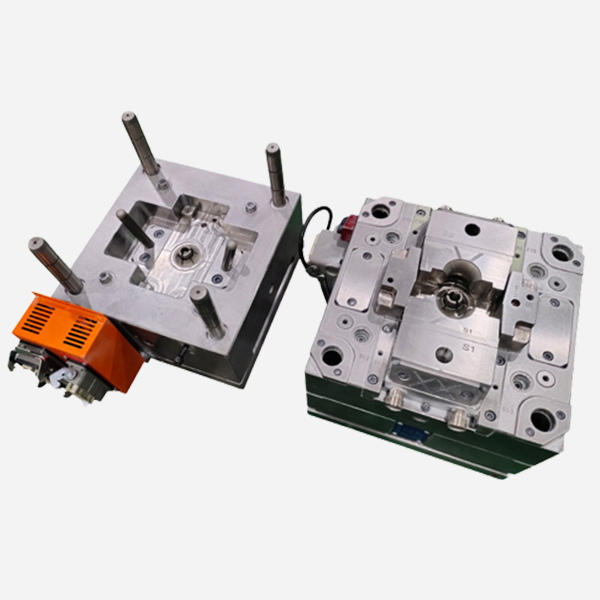
Insert Moulding
Insert molding involves molding thermoplastic material directly around a pre-existing component—typically a metal insert like a threaded brass nut, electrical pin, or structural bracket—to produce a final part that seamlessly integrates various materials. For household part plastic injection molds, this technique is essential for creating robust fastening points or integrating conductive elements into plastic housings. Instead of installing inserts post-molding via ultrasonic welding or heat staking, placing the insert directly into the mold ensures a stronger, more reliable bond encapsulated by the cooling plastic. This method significantly increases the pull-out and torque-out resistance of the fasteners. Consequently, it improves the overall structural integrity of the household component, reduces secondary assembly operations, and provides a highly reliable solution for parts subjected to frequent mechanical stress.
Selecting the appropriate molding technique is essential for achieving the desired balance of functionality, aesthetics, and production economy. Whether a project requires the high-volume efficiency of standard injection molding, the ergonomic benefits of overmolding, or the structural reinforcement of insert molding, our technical capabilities are aligned to deliver precise components. We focus on matching these manufacturing processes with your specific project requirements to ensure reliable performance and long-term value for household applications.
Establishing a reliable manufacturing partnership requires a highly structured, transparent, and predictable workflow. For household part plastic injection molds, dimensional accuracy, surface finish, and consistent cycle times are critical to your project's success. From project initiation, we uphold open communication and tight collaboration with every customer to ensure successful mold completion on the first attempt, minimizing costly revisions and preventing project delays. Prior to shipment, rigorous final inspections are conducted to guarantee compliance with your technical specifications and quality requirements.
Witness our systematic order handling process, carefully designed to guide your project from the initial quotation phase through engineering analysis, tooling, and final production. Our experienced engineering team and advanced machinery synergize to deliver custom molds and molded parts strictly within stipulated timelines. This rigorous eight-step approach not only ensures high-quality manufacturing but also significantly reduces procurement risks for complex household appliance components.
1/ Request for Quote | 2/ DFM Report | 3/ Mold Flow Analysis | 4/ Mold Tooling Production |
Request your quote from our online quotation platform or directly contact our engineering team. By providing your 2D/3D drawings, material preferences, and estimated production volumes, our dedicated engineers will evaluate your project and provide a comprehensive response within 24 hours. This rapid turnaround ensures your procurement process proceeds smoothly, allowing you to make informed budgeting decisions early in the project lifecycle. | To ensure we can produce functional and highly reliable molds, we offer in-depth Design for Manufacturability (DFM) feasibility reviews. Before any steel is cut, our engineers analyze your part design to identify potential manufacturing issues such as sink marks or problematic parting lines. This proactive step ensures we can fulfill all structural requirements, optimizing the design for efficient injection molding and reducing the risk of modifications. | Advanced predictive modeling software helps us look at the way molten plastic material moves, cools, and acts within the mold cavity. This detailed Mold Flow Analysis allows us to determine optimal gate locations, evaluate cooling efficiency, and predict potential warpage. By simulating the injection process, we deliver critical design improvements that enhance the final cosmetic appearance and structural integrity of your household parts. | Once the design is fully approved, we start the production of mold tooling according to your specific application needs. Utilizing precise CNC machining and EDM equipment, we craft the mold using the specific steel materials and surface finishes of your choice. Our strict machining tolerances ensure the mold will withstand required production volumes while maintaining the precise dimensions needed for household appliance assembly. |
5/ T1 Sample Verification | 6/ Low Volume Production | 7/ Strict Inspection | 8/ Delivery |
T1 sampling will be delivered for you to review prior to manufacturing the final plastic parts. These initial samples allow you to conduct physical evaluations of the part's precision, assembly fit, and overall surface quality. We work closely with your team to review the T1 results, ensuring every detail meets your expectations and making any necessary micro-adjustments to the mold before proceeding. | After completing the trial production phase and securing your approval on T1 samples, we proceed to low volume production. Utilizing our advanced injection molding machines and optimized processing parameters, we manufacture initial batches of parts quickly and efficiently. This step verifies the stability of the injection process and provides you with functional components for market testing or initial assembly line verification. | A strict inspection process is implemented throughout the entire manufacturing cycle. Our quality control team conducts comprehensive evaluations, including the inspection of structural function, critical dimensions using CMM equipment, and visual appearance for cosmetic defects. This rigorous testing ensures that both the molds and the final molded parts meet your exact specifications and comply with high-quality standards. | After a thorough final inspection and quality sign-off, we prepare your order for shipment. Molds are treated with anti-rust protection and securely packaged, while molded parts are carefully boxed to prevent transit damage. We coordinate with reliable logistics partners to deliver your products to your facility as quickly as possible, ensuring their safety and helping you meet your critical project launch deadlines. |
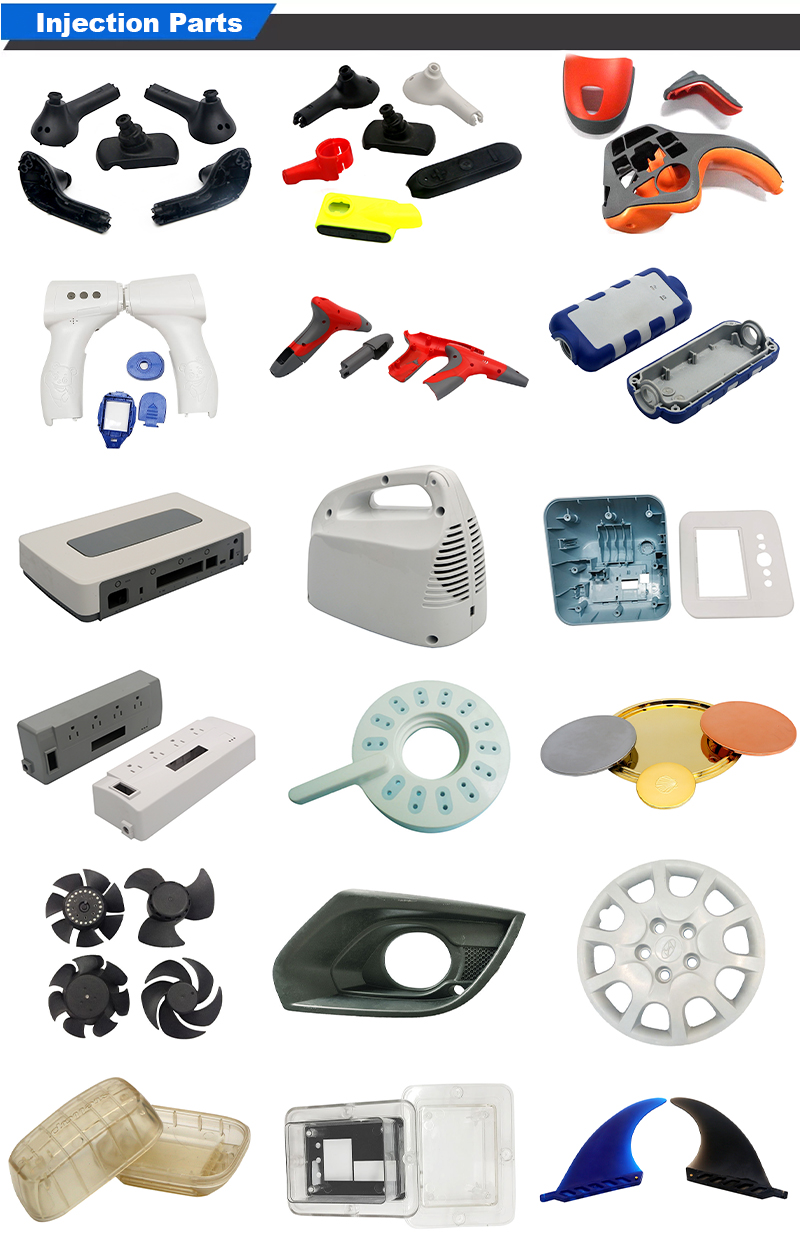
Browse through our portfolio showcasing a selection of our completed household plastic injection molded parts. Each component reflects our commitment to manufacturing precision, demonstrating consistent dimensional accuracy, clean surface finishes, and reliable structural integrity tailored for everyday consumer applications.
Rest assured, we possess the capability to fulfill your custom injection molding projects with meticulous adherence to your exact specifications. From complex geometries to specific material requirements, our finished parts showcase our ability to translate your precise designs into tangible, functional household products ready for assembly and market distribution.
Our engineering team brings extensive expertise and years of practical experience specifically in the field of custom injection molding for household plastic parts. We understand the stringent requirements for consumer goods, from structural integrity to surface finish. By leveraging our deep industry knowledge, we can identify potential design flaws early in the development phase, significantly reducing mold trial times and minimizing project risks. Our proven track record of delivering precise, durable molded parts ensures that your procurement process is backed by reliable technical support and consistent manufacturing capabilities.
We recognize that every household part project presents unique specifications, functional requirements, and market challenges. To address this, we provide highly customizable molding solutions tailored to align with your specific procurement needs. Our flexibility spans the entire project lifecycle—from assisting with optimal resin material selection (such as high-impact ABS, durable PP, or heat-resistant PC) to comprehensive design optimization and mold flow analysis. Whether you require specific surface textures, complex geometries, or adaptive production scheduling, our flexible approach ensures your desired outcomes are achieved efficiently without unnecessary delays.
Consistent quality is the foundation of a reliable supply chain. We implement stringent quality control protocols throughout the entire custom injection molding process to ensure every household part meets precise dimensional tolerances and aesthetic requirements. Our quality assurance begins with rigorous steel material inspection for the mold and extends through in-process monitoring to final part evaluation. By maintaining meticulous attention to detail—such as ensuring flash-free edges, uniform wall thickness, and defect-free surfaces—we help purchasing teams mitigate quality risks, reduce assembly issues, and maintain a dependable product reputation in the consumer market.
In the fast-paced household products market, meeting project deadlines is critical to maintaining your competitive edge. We are committed to strict lead-time management and strive to deliver your custom molds and plastic parts on schedule, every time. Our streamlined production workflows, combined with proactive project management, allow us to optimize machining and molding cycles effectively. By providing transparent progress updates and anticipating potential manufacturing bottlenecks, we ensure that even projects with tight timelines are completed efficiently, helping you accelerate your time-to-market without compromising on structural integrity or precision.
Procurement decisions require a balance between upfront investment and long-term operational value. We offer highly competitive pricing structures by continuously optimizing our manufacturing processes and maximizing resource efficiency. True cost-effectiveness goes beyond the initial quote; it involves designing durable molds that require less maintenance, run at faster cycle times, and produce minimal scrap. By focusing on mold longevity and stable production performance, our custom injection molding solutions deliver significant long-term value, helping you control overall manufacturing costs and improve your project's profitability.
Building a reliable supply partnership requires more than just delivering a product; it demands clear communication and dedicated support. We prioritize transparency and collaborative problem-solving from the initial technical consultation through to post-production service. Our engineering and service teams work closely with your procurement and design departments to ensure all specifications are thoroughly understood and executed. By providing responsive feedback, detailed project documentation, and dependable after-sales support, we aim to build long-lasting, trust-based relationships that make your sourcing process smoother and more predictable.
Plastic injection molding represents one of the most reliable and efficient manufacturing processes available today, particularly for producing household components. Selecting the appropriate manufacturing method is a critical step in any product development cycle, directly impacting structural integrity, aesthetic appeal, and overall project budget. Injection molding is uniquely capable of producing high-quality, durable parts on a massive scale while maintaining strict tolerances. Although it is commonly employed for both low- and high-volume production scenarios, its true value shines when scaling up. Below are the notable advantages of utilizing professional plastic molding processes to help you determine if this technology aligns with your specific project requirements.
Low cost at higher volumes: While the initial investment in tooling and mold creation requires upfront capital, the process becomes exceptionally cost-effective as production scales. The core advantage of economies of scale means that as the production volume increases, the cost per individual unit decreases dramatically. This makes the process highly suitable for mass-market household products where maintaining a competitive unit price is essential for commercial success.
Exceptional part cosmetics and surface finish: The injection molding process offers unparalleled control over the final appearance of a product. It allows for the integration of specific surface finishes directly into the mold cavity, ranging from high-gloss polishes to intricate matte textures and custom patterns. This eliminates or significantly reduces the need for secondary post-processing operations, saving time and ensuring that the final household parts meet strict cosmetic standards right out of the machine.
High repeatability: Consistency is a vital metric in manufacturing, especially when producing components that must fit together seamlessly in an assembly. Injection molding provides exceptional repeatability. Once the process parameters are optimized, the equipment can produce thousands or even millions of parts that are virtually identical to the first one. This high level of precision guarantees reliable performance and maintains brand quality across large production runs.
Complex parts manufacturing: Modern mold design allows for the creation of highly complex geometries that would be difficult or impossible to achieve through other manufacturing methods. Features such as internal threads, undercuts, complex ribs, and precise bosses can be molded directly into a single component. This capability allows engineers to consolidate multiple parts into one, simplifying the final assembly process and enhancing the overall structural stability of the household item.
Low scrap rate: Compared to subtractive manufacturing processes like CNC machining, which cut away material from a larger block, injection molding minimizes waste. It only utilizes the exact amount of plastic resin required to fill the mold cavities and the runner system. Furthermore, excess material from sprues or runners can often be reground and recycled for future use, resulting in a highly efficient process with a notably low scrap rate.
Large selection of thermoplastic and thermoset materials: The versatility of material selection is a significant benefit. Project engineers can choose from a vast array of polymer resins tailored to specific functional requirements. Whether the household part requires high impact resistance, thermal stability, flexibility, food-grade properties, or chemical resistance, there is a compatible thermoplastic or thermoset material available. This extensive selection ensures that the final product will perform optimally in its intended everyday environment.


