Email: admin@yeeshine-tech.com WhatsApp: +86-13712868936

- All
- Product Name
- Product Keyword
- Product Model
- Product Summary
- Product Description
- Multi Field Search


Are manual tools creating a bottleneck on your shop floor? Traditional fabrication methods constantly struggle to keep pace with modern manufacturing demands. Today's production environments require extreme speed, absolute accuracy, and rapid scalability. Instead of relying on a machinist to physically guide a cutter, modern facilities utilize advanced automation to solve complex geometry challenges.
Below, we break down exactly why industries rely heavily on this subtractive technology. We will compare its capabilities to traditional methods, highlight its critical role in modern product development, and provide actionable engineering insights for your next project.
To understand why this technology dominates modern production floors, we must first establish what the process actually entails. CNC stands for Computer Numerical Control. In practical terms, it is a subtractive manufacturing process where computerized systems dictate the exact movement of factory tools and machinery. Instead of an operator turning wheels and levers to shape a block of raw metal, a programmed computer directs the cutting tools. This carves away material layer by layer until the final desired geometry emerges.
Historically, the shop floor was dominated by highly skilled artisans manually cranking the handwheels of traditional lathes and mills. While manual milling is still occasionally utilized for simple repairs or rough cuts, it relies entirely on human physical consistency. Human operators are naturally susceptible to fatigue, microscopic measurement errors, and minor operational inconsistencies.
The evolution toward automated equipment completely transformed this dynamic. Modern machines use advanced software to calculate exact toolpaths. This effectively removes human error from the physical cutting process. This pivotal shift allowed factories to scale up production volumes without ever sacrificing component quality.
The workflow of this technology follows a strict, logical sequence. It effectively bridges the gap between a digital concept on a screen and a tangible part in your hand.
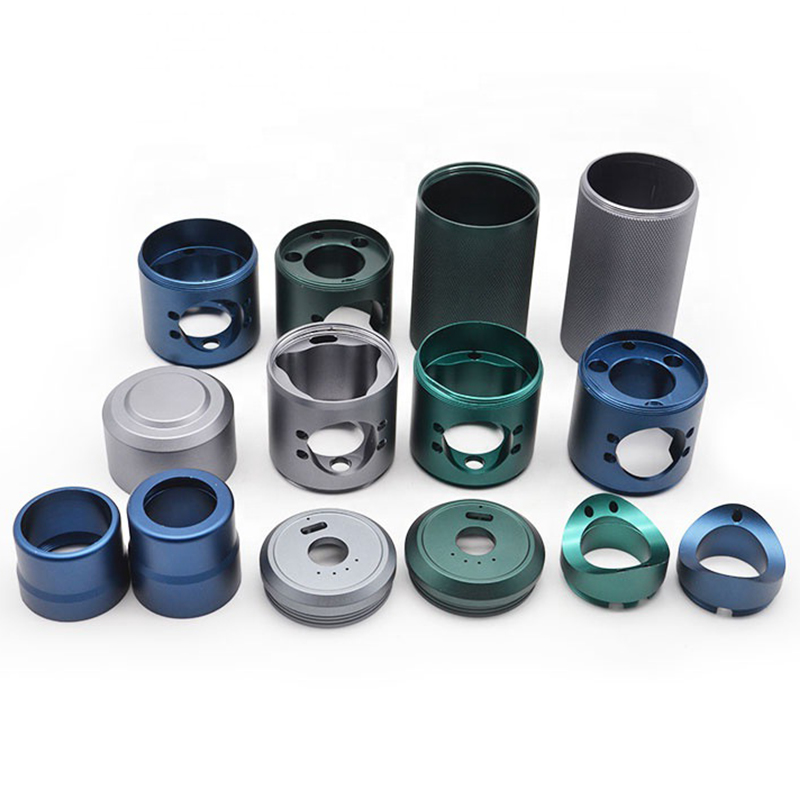
When comparing computer-controlled equipment to traditional manual mills, the operational benefits become immediately apparent. The core reasons manufacturers invest millions in these advanced systems revolve around unparalleled accuracy, volume capabilities, and operational speed. To illustrate this shift, consider the direct comparison below.
| Feature | Traditional Manual Machining | Automated Subtractive Machining |
|---|---|---|
| Precision & Tolerances | Relies on operator skill; typical tolerances around ±0.1 mm. | Software-driven; routinely achieves tight tolerances down to ±0.005 mm. |
| Production Speed | Slow, requires constant human intervention and manual tool changes. | Extremely fast, operates 24/7 with Automatic Tool Changers. |
| Part Complexity | Limited to basic geometric shapes and flat surfaces. | Easily handles complex organic curves and multi-axis geometries. |
| Scrap Rate | High risk of human error leading to wasted raw materials. | Minimal scrap due to simulated toolpaths and precise execution. |
In industries where a fraction of a millimeter means the difference between a functional component and a catastrophic system failure, accuracy becomes non-negotiable. Consequently, precision machining stands out as perhaps the most compelling advantage of this technology. Modern multi-axis machines are capable of holding incredibly tight tolerances, often reaching ±0.005 mm depending on the material and part geometry.
Because the toolpaths are driven by closed-loop feedback systems, the machine constantly monitors and micro-adjusts the position of the cutting tool. This completely eliminates the backlash and hesitation associated with manual turning. Whether carving a simple aluminum bracket or a highly complex aerospace turbine blade, the equipment ensures the final product aligns flawlessly with the engineering blueprint.
Creating one perfect prototype is an engineering achievement. Creating ten thousand perfect parts is a strict commercial necessity. Traditional fabrication constantly struggles with consistency over long production runs. As a manual operator fatigues throughout an eight-hour shift, the likelihood of dimensional drift naturally increases.
Furthermore, automated systems excel at repeatable machining. Once the initial program is verified and the first article is strictly inspected and approved, the machine runs the exact same sequence indefinitely. The physical movements will never deviate. This guarantees the final part coming off the assembly line at the end of the month is dimensionally identical to the very first part produced.
Another primary reason engineers choose this subtractive method over alternatives like injection molding is its sheer material versatility. Subtractive processes can manipulate almost any solid block, provided the correct carbide cutting tools and flood cooling systems are utilized.
Due to their structural integrity and thermal resistance, metals remain the most frequently processed materials on the shop floor. Specifically, stainless steel machining is highly prevalent in sectors demanding absolute corrosion resistance and high tensile strength. Processing grades like 304 and 316L requires highly rigid machinery to prevent cutting tool chatter. Advanced equipment can achieve exceptional surface finishes down to Ra 0.8 on these dense alloys, a metric crucial for medical and food-grade applications.
Additionally, aluminum alloys like 6061 and 7075 are widely favored for their lightweight properties and excellent machinability. Titanium, known for its exceptional strength-to-weight ratio, is notoriously difficult to cut manually due to rapid heat buildup. Therefore, computer-controlled coolant and feed-rate management are absolutely essential to prevent work-hardening.
While injection molding is the standard for mass-producing commercial plastics, subtractive manufacturing is preferred for low-volume runs, functional prototyping, or parts requiring extreme dimensional stability.
High-performance engineering plastics like PEEK and POM offer excellent wear resistance and low friction. This makes them ideal for specialized gears and medical housings. Similarly, Polycarbonate and ABS are frequently milled to create durable electronic enclosures that require impact resistance without the massive upfront cost of steel molding tools.
The global manufacturing landscape is shifting rapidly. Supply chain disruptions have forced product developers to rethink their sourcing strategies. There is a massive trend toward localized, agile production to mitigate logistical risks. Facilities are increasingly adopting Industrial Internet of Things sensors to monitor spindle vibration and tool wear in real-time.
This data-driven predictive maintenance approach minimizes unexpected downtime. Furthermore, artificial intelligence is beginning to optimize toolpaths on the fly, adjusting feed rates based on material density variations. Consequently, automated subtractive methods are becoming the backbone of smart micro-factories, allowing rapid iteration from initial prototype to mass production within days rather than months.
The theoretical benefits of automated subtractive manufacturing translate directly into real-world applications. Several highly regulated industries depend entirely on CNC manufacturing to function safely and efficiently.
The aerospace sector operates under the strictest safety regulations in the world. Components like landing gear housings, engine manifolds, and titanium impellers must withstand extreme stress and drastic temperature fluctuations. Automated equipment provides the necessary tight tolerances and material strength required to keep these critical flight components from failing mid-air.
Similarly, the automotive industry relies on this technology for both rapid prototyping and mass production. Engine blocks, cylinder heads, and custom dashboard fittings are routinely milled. The ability to rapidly carve complex aluminum geometries allows automotive engineers to lightweight their vehicles, vastly improving fuel efficiency and electric battery range.
The medical sector requires parts that are not only dimensionally precise but also biologically safe. Surgical instruments, bone screws, and orthopedic joint replacements must be manufactured flawlessly. A microscopic burr or a slight dimensional error on a titanium hip implant could lead to severe medical complications. Therefore, reliance on automated precision in this sector is an absolute necessity.
A common misconception is that automated subtractive manufacturing is inherently too expensive for standard projects. While purchasing a 5-axis mill and funding the initial programming phases require significant capital investment, the long-term unit economics strongly favor this method for production runs.
In a traditional machine shop, the ratio of machinist to machine is strictly one-to-one. A skilled worker must stand at the lathe, physically engaged for the entirety of the process. In a modernized facility, a single trained operator can monitor a cell of three or four vertical machining centers simultaneously.
Once the heavy lifting of setup is complete and the G-code is running smoothly, the operator's primary role shifts to quality assurance and loading raw billets. Because the machines can operate overnight without human intervention, factory output effectively doubles without a corresponding spike in payroll.
Raw material costs significantly impact the bottom line of any manufacturing project. Manual operations rely heavily on visual judgment, which inevitably leads to scrapped parts due to human error. Every scrapped part represents wasted raw material and lost labor time.
Advanced CAM software optimizes the cutting paths before the spindle even turns on. The software calculates the most efficient way to nest parts within a single block of raw material, maximizing yield. The precise nature of the automated cutting process ensures that scrap rates are kept to an absolute minimum.
Understanding why the technology is used is only the first step. To truly benefit from automated manufacturing, product developers must actively optimize their approach. Transitioning from digital concepts to manufacturable realities requires strict engineering discipline.
To maximize efficiency and reduce costs, consider these practical guidelines when preparing your next project:
The primary purpose is to automate the subtractive manufacturing process to achieve extreme precision, high repeatability, and rapid production speeds. By removing manual human intervention from the cutting process, manufacturers can produce complex geometries consistently while significantly lowering per-unit labor costs and material waste.
Efficiency is drastically improved through continuous operation and optimized toolpaths. Modern machining centers feature automatic tool changers and robotic loaders, allowing them to run 24 hours a day with minimal supervision. Additionally, CAM software calculates the fastest possible material removal rates without damaging the tool, vastly reducing cycle times compared to manual milling.
Both technologies have their distinct place on the shop floor. 3D printing, or additive manufacturing, is exceptional for rapid prototyping of complex, hollow geometries and low-volume conceptual models. However, subtractive machining is vastly superior when the project demands structural integrity, tight tolerances, specific material properties, and high-volume consistency.
The initial costs stem from the specialized engineering labor required to program the CAM software, design custom workholding fixtures, and set up the physical machine. However, once the setup is complete, the cost per part drops significantly for medium to high-volume runs, making it highly economical at scale.
Yes. Processing tough materials is incredibly common. Modern equipment utilizes specialized carbide or diamond-coated cutting tools, rigid machine frames to prevent vibration, and high-pressure flood coolant systems. These are specifically designed to handle dense, hardened metals without compromising on strict dimensional standards.
Ready to transition your digital designs into flawless physical components? Choosing the right manufacturing partner is critical to navigating material selection, tolerance optimization, and cost-effective production. Whether you need rapid prototyping for a complex aerospace part or high-volume stainless steel machining for medical devices, partnering with an experienced facility ensures your project meets the highest industry standards. Evaluate your specific engineering requirements and explore advanced fabrication solutions at Yeeshine to bring your next project to life with absolute precision.


