Email: admin@yeeshine-tech.com WhatsApp: +86-13712868936

- All
- Product Name
- Product Keyword
- Product Model
- Product Summary
- Product Description
- Multi Field Search

Views: 0 Author: Site Editor Publish Time: 2026-08-21 Origin: Site


Material selection in precision manufacturing dictates more than just end-part performance. It fundamentally determines manufacturing viability, tooling expenditure, and production lead times. Specifying the wrong material leads to accelerated tool wear, failure to hold tight tolerances, and inflated unit costs. You cannot simply over-engineer a bracket or underestimate the environmental stressors on a fluid valve without paying the penalty on the shop floor. Machinists and engineers must align the physical properties of the raw stock with the capabilities of the milling or turning centers. A systematic framework is required to evaluate cnc machining materials based on mechanical requirements, machinability ratings, and project economics to ensure scalable production. We need to look at how the metal cuts, how it handles heat, and how it behaves when you remove a massive volume of its original mass.

Machinability drives total cost: Highly machinable metals reduce cycle times and tooling wear, often making a more expensive raw material cheaper to manufacture in volume.
Operating environment dictates the baseline: Thermal dynamics, chemical exposure, and load requirements must filter the initial material shortlist before cost is considered.
Internal stress impacts precision: Material stability and proper stress-relief tempers are critical for holding tight tolerances without warping during heavy material removal.
Post-processing alters dimensions: The chosen material must be compatible with required surface treatments (anodizing, passivation) without compromising final dimensional accuracy.
Define baseline needs for yield strength, ultimate tensile strength, and hardness to handle expected load and impact. Yield strength indicates the exact point where a material transitions from elastic deformation to permanent plastic deformation. If a fixture bends under clamping pressure and stays bent, you exceeded the yield strength. Ultimate tensile strength defines the absolute maximum stress the material can endure before catastrophic failure. We also evaluate weight constraints and strength-to-weight ratio requirements. Aerospace components, drone chassis, and high-performance automotive parts demand lightweight solutions that do not compromise structural integrity. Assess fatigue resistance for parts subjected to cyclical loading. Components like drive shafts or robotic arms experience constant, repetitive stress cycles. You need materials that resist microscopic crack propagation over millions of cycles.
Identify exposure to corrosive elements. This includes harsh industrial chemicals, saltwater environments, or repetitive medical sterilization processes like autoclaving. A part might survive mechanical loads perfectly but fail in weeks due to pitting corrosion. Determine required thermal conductivity and maximum operating temperatures. Parts operating in high-heat environments must maintain dimensional stability without losing their temper or structural rigidity. Evaluate the risk of galvanic corrosion if the part will interface with dissimilar metals. When two different metals contact in the presence of an electrolyte, the less noble metal accelerates its corrosion rate. Selecting compatible alloys or specifying protective barrier coatings prevents premature assembly failure.
The manufacturing industry typically uses free-machining brass (C360) as the 100% benchmark. Materials rating above 100% cut easier and faster, generating predictable chips and minimal tool wear. Materials rating below 100% require slower speeds, rigid setups, and more robust tooling. Analyze how material hardness impacts feed rates, spindle speeds, and tool life. Harder materials induce severe tool deflection. You need highly rigid machine setups to prevent chatter. Chatter destroys surface finishes and shatters carbide end mills instantly. Heat dissipation during machining matters immensely. Evaluate how a material's thermal conductivity affects heat buildup at the cutting edge. Poor conductors trap heat at the point of contact. This accelerates tool failure through thermal shock or plastic deformation of the cutting insert. Good conductors pull heat away from the tool, transferring it into the evacuated chip and allowing for aggressive material removal rates.
Soft, gummy metals like pure copper require highly polished flutes and extreme positive rake angles to shear the material cleanly and prevent built-up edge.
Work-hardening alloys like titanium demand sharp cutting edges, rigid setups, and programmed toolpaths that maintain a constant chip load to prevent rubbing.
Abrasive materials like glass-filled plastics necessitate wear-resistant coatings to extend tool life against rapid abrasion.
Hardened steels require negative rake angles, rigid machine spindles, and advanced insert materials to withstand immense cutting forces.
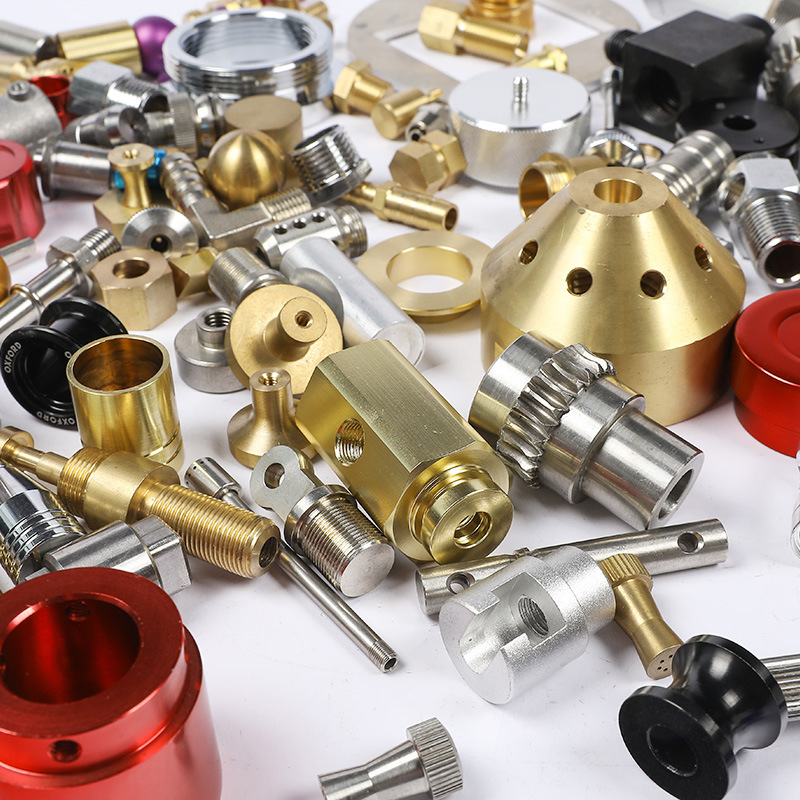
CNC machining aluminum remains the most versatile and widely used choice across manufacturing sectors. It delivers a high strength-to-weight ratio, excellent thermal and electrical conductivity, and is highly malleable. The 6061-T6 alloy provides general-purpose utility, while 7075-T6 offers high-stress load capacities rivaling some steels. It machines three to four times faster than many other metals. High thermal conductivity efficiently dissipates heat generated by high-speed cutting tools. The thermal load transfers into the evacuated chips rather than the tool or workpiece. This allows for rapid spindle speeds and aggressive feed rates. It is best for aerospace components, electronic enclosures, automotive fixtures, and optical equipment. Trade-offs include lower fatigue strength than steel. It is susceptible to galling and built-up edge on cutting tools if machined without proper coolant strategies. Chips can weld to the cutting edge, destroying surface finishes and causing tool breakage.
CNC machining stainless steel provides high tensile strength, superior corrosion resistance, and the capability of handling extreme impact, heavy loads, and high heat. Austenitic grades like 304 and 316 offer exceptional chemical resistance. Martensitic grades like 17-4 PH can be heat-treated for extreme hardness and structural integrity. It is best for medical devices, food processing equipment, fluid handling systems, and marine hardware. The main trade-off is a low machinability rating. Poor thermal conductivity traps heat at the tool edge, causing rapid tool wear and work hardening. If the tool rubs the surface rather than cutting cleanly, the material surface hardens instantly. You must maintain a heavy chip load to stay under the work-hardened layer. This requires highly rigid workholding, sharp tooling, and slower feed rates, significantly increasing cycle time and tooling consumption.
CNC machining brass offers exceptional machinability, a low friction coefficient, non-sparking characteristics, and excellent dimensional stability. It chips predictably, preventing long, stringy swarf from wrapping around the spindle or clogging chip conveyors. It is best for precision gears, fluid fittings, valves, and electrical contacts. Trade-offs include a higher raw material cost per pound and lower yield strength compared to steel and high-end aluminum alloys. It is also susceptible to dezincification in certain environments, where zinc leaches out of the alloy, leaving a porous, weakened copper structure.
Tool Steels offer exceptionally high hardness and abrasion resistance. They are ideal for manufacturing dies, molds, and cutting tools, but require specialized tooling and slow machining speeds. Hard milling these materials often requires ceramic or cubic boron nitride inserts. Carbon and Alloy Steels provide high load capacity and toughness. They require secondary surface treatments to prevent rust, such as black oxide, zinc plating, or powder coating. Titanium delivers the ultimate strength-to-weight ratio and biocompatibility. It is notoriously difficult to machine due to poor heat dissipation and chatter. It requires high-pressure coolant systems and highly specific toolpath strategies to prevent work hardening. Copper offers superior electrical conductivity. Its gummy consistency makes chip breaking difficult during machining. These represent critical CNC machining metals for highly specialized engineering tasks requiring maximum electrical or thermal transfer.
Alloy Performance and Application Matrix
Alloy Type | Machinability Rating | Primary Strength | Common Application |
|---|---|---|---|
Aluminum 6061 | Excellent (270%) | High strength-to-weight ratio | Electronic enclosures, fixtures |
Stainless Steel 316 | Poor (36%) | Superior corrosion resistance | Medical devices, marine hardware |
Brass C360 | Benchmark (100%) | Low friction, dimensional stability | Precision gears, fluid valves |
Titanium Grade 5 | Very Poor (15%) | Ultimate strength, biocompatibility | Aerospace structures, implants |
Criteria for substituting metals with plastics include weight reduction, chemical resistance, RF transparency, and electrical insulation. Plastics offer significant weight savings and self-lubricating properties for moving parts, eliminating the need for external grease or oil. Heat management is the primary challenge on the shop floor. Plastics have high coefficients of thermal expansion. Aggressive machining can cause melting, smearing, or post-machining dimensional creep. Sharp, high-rake tooling and optimized coolant flow are required to shear the plastic cleanly without inducing localized melting. Workholding must be delicate to avoid crushing or deforming the raw stock before the cutting even begins.
Material Substitution Guide
Original Metal | Plastic Alternative | Primary Benefit of Substitution |
|---|---|---|
Aluminum | Delrin (POM) | Lower weight, self-lubricating properties |
Stainless Steel | PEEK | Chemical resistance, radiopacity for medical |
Brass | PTFE (Teflon) | Extreme chemical inertness, zero friction |
Carbon Steel | Glass-Filled Nylon | High impact resistance, electrical insulation |
You calculate total production cost by adding raw material cost, cycle time multiplied by the machine hourly rate, and tooling consumption. Consider why a cheaper, tougher steel can result in a higher final part cost than a more expensive, free-machining aluminum alloy. The steel may cost half as much per pound. However, if it takes three times longer to mill and consumes four end mills per production run, the cumulative machine time and tooling expenses quickly eclipse the initial raw material savings. Machinability directly dictates profitability. You must evaluate the entire manufacturing cycle, not just the purchase order for the raw stock.
The impact of designing around standard stock sizes versus requiring custom extrusions is massive. Standard sizes reduce lead times and material waste. Machinists require a small margin of oversized stock to face off the outer layer and achieve a precise dimension. Designing a part to be exactly 1.000 inches thick means the shop must buy 1.250-inch stock and mill away the excess, wasting time and material. Material lot consistency also matters. Variations in raw material temper affect long-run precision machining and automated production. Inconsistent hardness across different material batches forces operators to constantly adjust feeds and speeds. This disrupts automated manufacturing and causes unpredictable tool wear.
Navigating material traceability requirements through Material Test Reports is non-negotiable for regulated industries. These reports verify the chemical composition and physical properties of the specific metal batch, ensuring it meets engineering specifications. Ensuring RoHS compliance, DFARS compliance, and adherence to FDA/ISO standards for medical and aerospace applications requires strict documentation. Substituting a non-compliant alloy can lead to catastrophic regulatory failures, product recalls, and severe legal liabilities. The shop floor must maintain clear segregation of certified materials to prevent cross-contamination.
Removing large volumes of material through asymmetrical machining releases internal stresses, causing parts to warp out of tolerance. When a thick plate is milled heavily on one side, the remaining material bows, destroying flatness and parallelism tolerances. The outer skin of cold-rolled stock holds immense tension. Specifying stress-relieved material tempers helps significantly. Utilizing roughing-then-finishing toolpath strategies allows the material to move before final sizing. Flipping the part multiple times during roughing equalizes the stress release. You leave a small amount of stock and let the part rest before taking the final precision finishing passes.
Evaluating how specific alloys respond to anodizing, passivating, electropolishing, or bead blasting prevents late-stage failures. Certain aluminum alloys anodize beautifully, producing vibrant colors and hard surfaces. Others with high silicon content turn gray and splotchy. Failing to account for coating thickness in the CAD model results in out-of-tolerance features after plating. A standard hardcoat anodize adds measurable thickness to all surfaces. You must subtract this buildup from the pre-plated machining dimensions to ensure dowel pins and bearings still fit correctly after processing. Masking critical holes adds manual labor, so adjusting the initial machining tolerances is often the better strategy.
Define your environmental constraints and mechanical load requirements before reviewing material data sheets.
Consult with your manufacturing engineer during the design phase to match material selection with available machine capabilities.
Specify stress-relieved tempers on your engineering drawings if your part requires heavy, asymmetrical material removal.
Calculate and apply the required pre-plating dimensional offsets to account for surface treatment thicknesses like hardcoat anodizing.
A: Aluminum 6061 is widely considered the most cost-effective material. While plastics or mild steels might have lower raw material costs, aluminum's exceptional machinability reduces cycle times and tooling wear, resulting in lower overall production expenses for most precision parts.
A: A higher machinability rating means the material can be cut faster with less tool wear. This reduces machine time and tooling replacement frequency. Consequently, highly machinable materials often yield a lower final part cost, even if the raw material itself is more expensive.
A: Aluminum 6061 offers excellent weldability, corrosion resistance, and versatility for general-purpose parts. Aluminum 7075 provides significantly higher tensile strength and fatigue resistance, making it ideal for high-stress aerospace applications, but it is more difficult to weld and slightly less corrosion-resistant.
A: Choose aluminum for lightweight applications, high thermal conductivity, and faster production times. Opt for stainless steel when the part requires high tensile strength, superior corrosion resistance, or the ability to withstand extreme temperatures and heavy impact, accepting that production will be slower.
A: Brass possesses a naturally low friction coefficient and exceptional machinability. It allows for extremely tight tolerances, produces clean surface finishes, and does not spark. This makes it perfect for intricate components like gears, valves, and fluid fittings.
A: While it is possible to machine hardened tool steel using specialized carbide or ceramic inserts, it is slow and aggressively wears down tools. Standard practice involves machining the steel in its annealed state, heat-treating it, and then performing final precision grinding or hard milling.
A: Materials with high thermal expansion rates, like plastics and certain metals, grow as heat builds up during machining. If measured while hot, the part will shrink out of tolerance as it cools. Proper coolant application and temperature-controlled inspection are required to maintain accuracy.


