Email: admin@yeeshine-tech.com WhatsApp: +86-13712868936

- All
- Product Name
- Product Keyword
- Product Model
- Product Summary
- Product Description
- Multi Field Search

Views: 0 Author: Site Editor Publish Time: 2026-10-23 Origin: Site


Getting to market first can make or break your hardware business. This intense pressure leaves many founders and engineering teams struggling to choose the most efficient testing method. Traditional fabrication models often take weeks or even months to build. This creates a severe bottleneck in the development cycle. In this comprehensive guide, we will explore the exact differences between these methodologies. We will compare advanced digital systems with conventional manufacturing techniques to help you optimize your time-to-market.
In the context of engineering and manufacturing, a product prototype is a preliminary physical model of a part or assembly. Its primary function is straightforward. It allows designers, engineers, and stakeholders to rigorously test the form, fit, and function of a concept before committing to expensive mass production tooling.
Why risk thousands of dollars on tooling before testing a physical part? Imagine discovering a fatal ergonomic flaw in a handheld medical device only after investing huge capital in steel injection molds. Skipping this preliminary phase is widely considered a critical error in product development. These early models serve as a fundamental tool for risk mitigation. They provide tangible evidence for investor pitching and enable real-world user testing. Most importantly, they help engineering teams identify critical design flaws early in the development cycle. Identifying a structural weakness during this phase costs a fraction of what it would cost to recall a fully manufactured consumer good.
Historically, creating these mockups was a painstaking endeavor. However, the evolution of manufacturing has seen a dramatic shift from artisan-crafted pieces to highly automated digital fabrication. Grasping this evolution is essential for understanding why modern digital methods have become the undisputed industry standard.
Conventional fabrication encompasses a variety of manual and semi-manual methods. Before the advent of digital manufacturing, engineers and industrial designers relied heavily on woodworking, clay modeling, and manual metalworking. Basic casting techniques were also standard practice to bring ideas into the physical realm.
The workflow for this conventional approach is inherently sequential. It typically begins with 2D technical drawings. A skilled craftsman or machinist then interprets these drawings to manually shape raw materials. Consequently, the quality, accuracy, and speed of the final model depend almost entirely on the individual skill and experience of the human operator.
There are specific scenarios where legacy methods still hold unique value. They remain highly effective for large-scale aesthetic mockups, such as automotive clay models. In these cases, designers need to physically sculpt and evaluate sweeping curves in real-time. Additionally, they are occasionally necessary when working with highly specific, non-standard traditional materials.
Despite these niche applications, the drawbacks are significant for fast-paced product development. Traditional methods are notoriously slow. If a design iteration is required after a failed drop test, the craftsman often must start entirely from scratch. Furthermore, it is incredibly difficult to replicate a manual piece exactly. This leads to exorbitant costs for multiple iterations and a high susceptibility to human error.
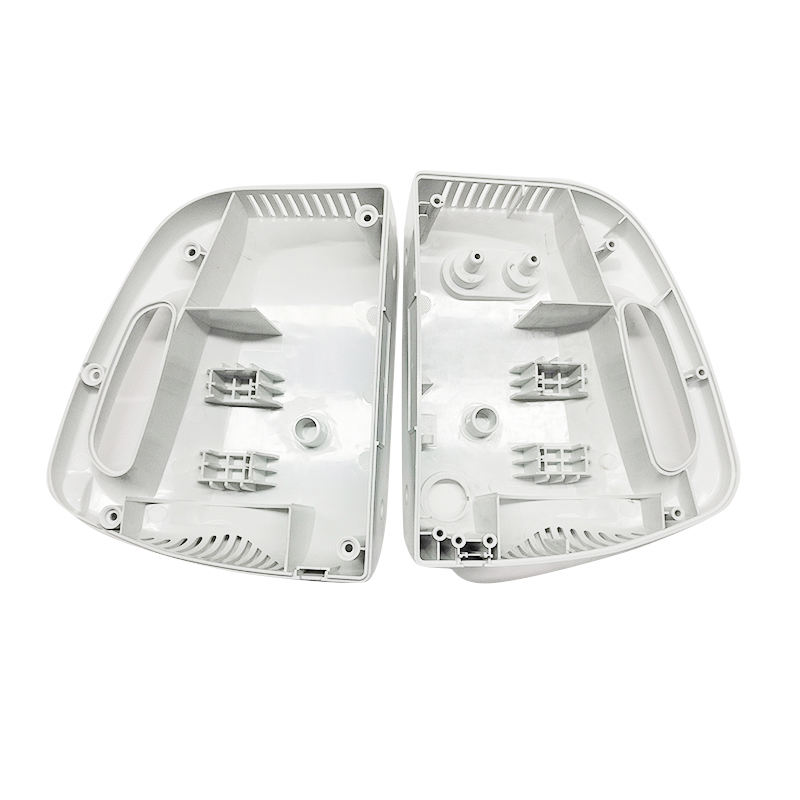
This modern approach is an overarching term for a group of advanced techniques used to quickly fabricate a scale model directly from 3D Computer-Aided Design data. Unlike its traditional counterpart, it relies on a purely digital and highly streamlined workflow.
The process kicks off with a robust 3D digital model. This digital blueprint is translated into standard machine-readable formats and sent to Computer-Aided Manufacturing software. The software generates the precise toolpaths or slicing instructions required by the automated machinery. Finally, the data is pushed directly to the machine. The equipment then builds the part with minimal human intervention.
The ultimate goal of this modern approach is sheer speed. By removing the manual labor bottleneck, engineering teams can iterate designs rapidly based on immediate physical testing feedback. This agile methodology fosters a fail-fast and learn-faster environment. For hardware startups and established enterprises alike, this agility is absolutely critical for survival in today’s hyper-competitive market.
To understand the fundamental shift in modern product development, one must objectively analyze the operational disparities between traditional and rapid methodologies. The distinction lies not just in the tools used on the shop floor, but in the entire engineering workflow.
| Evaluation Metric | Traditional Methods | Modern Rapid Methods |
|---|---|---|
| Speed & Lead Time | Weeks to months. Highly sequential. | Hours to days. Direct digital-to-physical pipeline. |
| Cost of Iteration | High. Each revision requires new manual labor and tooling. | Low. Machine setup is minimal, allowing cheap concurrent variations. |
| Accuracy & Precision | Prone to human error and tolerance stacking issues. | Microscopic precision. CNC machines hold tight tolerances up to ±0.01 mm. |
| Geometric Complexity | Limited by physical tool access and manual skill. | Virtually limitless. Can produce complex internal channels and lattices. |
Conventional fabrication carries a steep initial setup cost. Because each iteration requires fresh manual labor, the financial penalty of a design flaw is severe. If a bracket snaps during a stress test, the budget spent on manual labor is lost. The entire process must be funded again.
In contrast, modern methodologies shift the financial model from high fixed costs to low variable costs. Because machine setup time is virtually nonexistent, the cost per unit remains relatively flat. This economic structure actively encourages an iterative design process. Engineers can concurrently manufacture five slightly different geometric variations of a component for the same cost it would take to produce a single traditional model.
Human error is an inherent risk in manual craftsmanship. Even highly skilled machinists are subject to fatigue. Manual measurements can lead to tolerance stacking issues, where microscopic discrepancies compound across a complex assembly.
Digital CAD-to-machine processes practically eliminate the variable of manual intervention. The digital file serves as the absolute source of truth. Advanced manufacturing equipment follows exact coordinate instructions. This ensures that the physical output mirrors the digital input with exact precision.
The term rapid encompasses a variety of distinct manufacturing technologies. Selecting the correct process depends entirely on the mechanical, thermal, and aesthetic requirements of your specific engineering project.
Additive manufacturing is often synonymous with fast-paced development. It encompasses several distinct polymer and metal processes. Stereolithography utilizes an ultraviolet laser to cure liquid resin layer by layer, making it ideal for visual models. Selective Laser Sintering uses a high-power laser to fuse polymer powder, yielding parts with excellent isotropic mechanical properties. Fused Deposition Modeling extrudes melted thermoplastic filament and remains the most accessible method for early-stage volumetric testing.
While 3D printing is excellent for evaluating form and fit, rigorous functional testing often requires the exact material properties of the final production unit. From an engineering standpoint, this is where prototype machining becomes indispensable. Modern multi-axis CNC centers can rapidly mill complex parts directly from solid blocks of production-grade materials.
For instance, if an engineering team needs to test the thermal stability of an engine sensor housing, they will specify a machined component. They can utilize engineering-grade thermoplastics like POM, PEEK, or Polycarbonate, or metals like aluminum and titanium. Subtractive methods provide superior surface finishes. High-end equipment routinely holds dimensional tolerances between ±0.01 mm and ±0.05 mm, delivering true mechanical properties that additive polymers sometimes struggle to match.
When a project requires a small batch of high-fidelity parts for beta testing, vacuum casting is the optimal choice. The process begins by creating a highly accurate master pattern via CNC milling. Liquid silicone is poured around the master to create a mold. Liquid polyurethane resins are then cast into the cavity under a vacuum. This unique method produces parts that closely mimic injection-molded plastics in both appearance and mechanical performance.
Historically, early-stage testing and mass production were treated as two entirely separate phases of the supply chain. They were often handled by different vendors using vastly different technologies. Today, the lines between these phases have blurred significantly.
Recent market analyses highlight a massive shift towards localized, hybrid manufacturing ecosystems. Modern engineering teams are no longer treating agile iteration merely as a preliminary step. As global supply chain disruptions force companies to rethink their strategies, the ability to instantly iterate and produce small batches on demand has become a fundamental survival mechanism. We are seeing a surge in investments toward automated CNC cells that seamlessly transition from concept validation to end-use production.
Once a design has been rigorously tested, the exact same digital data can be leveraged to produce end-use parts. This seamless transition into rapid manufacturing is particularly valuable for low-to-medium volume production runs. The immense capital expenditure of traditional steel injection molds simply cannot be justified for a run of 500 units. By utilizing advanced machining centers, companies bypass the tooling phase entirely. This saves tens of thousands of dollars and enables continuous design improvements based on live market feedback.
Selecting the optimal technology is a strategic engineering decision. It requires carefully balancing speed, cost, and functional demands. To make this actionable, evaluate your project against these three core parameters.
The stage of your project dictates the required technology. In the initial looks-like phase, the goal is purely to evaluate physical size or ergonomics. High-resolution 3D printing is usually sufficient here. However, once you enter the works-like phase, you must conduct rigorous mechanical or thermal testing. At this point, you must prioritize material properties and transition to subtractive machining.
Engineering budgets must be managed strategically. Additive manufacturing is generally the most cost-effective solution for single iterations. It involves zero setup time and wastes very little raw material. Conversely, as the required quantity increases beyond a few units, the per-unit cost of CNC machining or vacuum casting becomes much more favorable due to faster cycle times.
The intended real-world application dictates the material. The material then dictates the technology. If your final product requires aerospace-grade titanium, precision milling is your only viable option. If you need to physically test the snap-fit functionality of a consumer electronic enclosure, ordering a CNC plastic prototype made from ABS or PC is absolutely essential. This ensures the clips do not snap prematurely during assembly testing.
Access to advanced machinery is only one component of a successful product development cycle. The true value lies in the engineering expertise required to operate these complex systems optimally. Translating a digital concept into a flawless physical model requires deep knowledge of toolpath generation, thermal dynamics, and material science.
When evaluating potential manufacturing partners, hardware teams must apply objective criteria. Look for facilities that offer a comprehensive suite of technologies rather than a single process. This ensures they can provide unbiased recommendations based on your specific geometry. Robust quality assurance protocols and comprehensive First Article Inspection reports are non-negotiable for critical engineering projects.
While traditional manual crafting holds historical significance, digital technologies have undeniably become the modern standard. By shifting from labor-intensive physical sculpting to automated digital fabrication, companies drastically reduce their market entry time. They simultaneously lower the financial risks associated with hardware development. Investing in these agile methods ensures your engineering team can test, iterate, and perfect designs with unprecedented speed. Ready to accelerate your hardware development? Stop letting slow fabrication bottleneck your timeline. Visit Yeeshine to explore advanced manufacturing capabilities, upload your digital files, and get an instant quote to start building today.
No, the technology extends far beyond plastics. While polymer-based printing is widely recognized, modern methodologies frequently utilize engineering-grade metals. Technologies can print complex geometries in titanium, stainless steel, and aluminum. Additionally, advanced CNC machining centers are routinely used to rapidly mill metal components with production-grade mechanical properties and tight aerospace tolerances.
On a per-iteration basis, digital methodologies are significantly more cost-effective. While the initial capital investment in 5-axis CNC machines is substantial for the service provider, the cost passed down to the consumer is remarkably low. Digital processes eliminate the need for expensive custom tooling and extensive manual labor. The ability to fail fast and iterate cheaply ultimately reduces the total research and development budget.
3D printing, or additive manufacturing, is simply one specific category beneath the broader umbrella of automated technologies. While all 3D printing used in product development is a form of rapid iteration, not all rapid iteration is 3D printing. The overarching concept also encompasses subtractive CNC machining, vacuum casting, and sheet metal fabrication. The term refers to the overall speed and digital workflow rather than a single specific machine.
Hardware development generally follows four distinct stages. It starts with a Proof of Concept to test basic feasibility. Next is a visual model to evaluate aesthetics and ergonomics. This is followed by an engineering model for rigorous functional testing. Finally, a pre-production model is created using the exact materials and manufacturing processes intended for mass production.
It allows engineering teams to adopt a fail-fast approach. By quickly transforming digital designs into physical parts, teams can identify structural flaws, test market viability, and validate mechanical performance in days rather than months. This dramatically reduces the risk of expensive tooling errors later in the production cycle.
Lead times depend entirely on geometric complexity, chosen technology, and required post-processing finishes. Standard 3D printed models can often be manufactured and shipped within 24 to 48 hours. More complex machined parts or low-volume vacuum casting orders typically require 3 to 7 business days. This digital efficiency allows engineering teams to test multiple design revisions within a single week.


