Email: admin@yeeshine-tech.com WhatsApp: +86-13712868936

- All
- Product Name
- Product Keyword
- Product Model
- Product Summary
- Product Description
- Multi Field Search

Views: 0 Author: Site Editor Publish Time: 2026-10-22 Origin: Site


Walk into any hardware development lab today, and you will likely hear engineers tossing around terms interchangeably. A common industry confusion persists where procurement teams and designers use 3D printing and rapid prototyping as exact synonyms. While these two concepts are intrinsically linked in modern engineering workflows, treating them as the same thing is technically incorrect and often leads to costly missteps.
Confusing a broader product development strategy with a specific fabrication tool creates suboptimal manufacturing decisions. When hardware teams misunderstand these definitions, they might default to additive methods when traditional subtractive machining would have provided better structural feedback. Alternatively, they might hire a basic print farm when they actually require comprehensive engineering support to bring a complex fluid pump or mechanical assembly to life.
To put it simply, the overarching methodology is the goal, while the fabrication technology is merely the tool used to achieve it. This comprehensive guide breaks down the fundamental differences, compares various additive technologies with real-world engineering parameters, and provides an objective framework to help you choose the correct manufacturing approach for your next project.
To accurately differentiate the terminology, we must first define the broader concept. This process is not a single piece of machinery or a standalone material. Rather, it refers to a diverse group of techniques and a distinct phase within the product development lifecycle. The primary objective is to quickly fabricate a physical scale model using three-dimensional computer-aided design data.
In the trenches of mechanical engineering, the ultimate goal of this phase is risk mitigation through physical validation. Imagine designing a new centrifugal pump impeller. Before committing fifty thousand dollars to expensive steel injection molds, you must physically test the fluid dynamics. Does the volute casing align perfectly without leakage? Can the internal vanes handle the targeted flow rate without cavitation? This accelerated testing phase answers these critical questions early in the development cycle.
It is crucial to understand that this methodology extends far beyond a single technology. Depending on the material requirements and mechanical specifications, a physical model might be created using 5-axis CNC milling, urethane vacuum casting, or rapid sheet metal bending. The word "rapid" simply denotes the accelerated iterative timeline compared to traditional mass-manufacturing lead times.
If the testing phase is the overarching strategy, additive manufacturing is the highly efficient vehicle used to get you there. This is a concrete manufacturing process that creates three-dimensional solid objects from a digital file by depositing material layer by layer.
This approach stands in direct contrast to subtractive manufacturing. A CNC machine removes material from a solid block of aluminum or steel to reveal the final shape. Specifically, the additive process begins with a digital model, which specialized slicing software divides into hundreds of two-dimensional cross-sections. The machine then reads these slices and deposits, cures, or sinters material sequentially until the final object is fully formed, often achieving layer heights as fine as 0.05 millimeters.
Historically, this technology was developed purely as a tool for creating fragile visual models. This history is exactly why the linguistic confusion between the two terms endures today. However, the technology has experienced a massive evolution. Modern industrial systems utilize a vast array of engineering-grade materials. We now print with high-performance thermoplastics like PEEK, durable photopolymer resins, and even aerospace-grade titanium powders. Because of this material evolution, the technology is no longer restricted strictly to the testing phase.
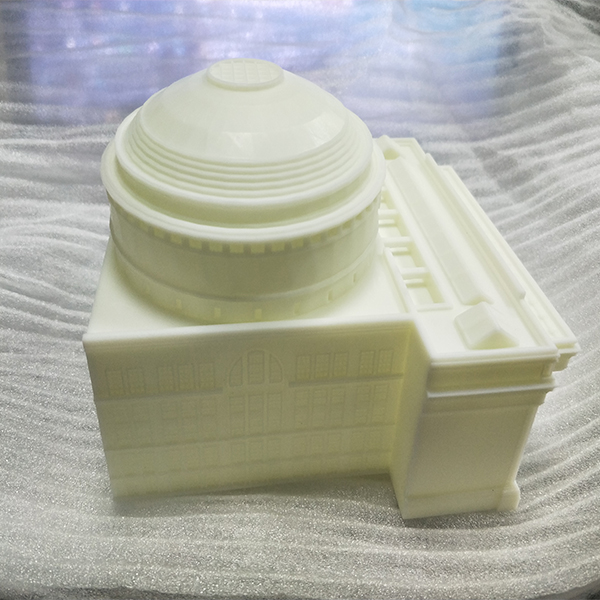
To ensure clear communication with manufacturing partners, mapping out the exact distinctions across several operational dimensions is highly beneficial. The fundamental difference lies in the relationship between strategy and execution.
| Comparison Dimension | The Prototyping Process | The Additive Technology |
|---|---|---|
| Categorization | A product development methodology or phase. | A specific manufacturing technology or machine action. |
| Primary Goal | To validate design, form, fit, and function before mass production. | To fabricate a physical object layer-by-layer from a digital file. |
| Techniques Included | CNC machining, vacuum casting, rapid tooling, sheet metal forming, and additive methods. | Strictly limited to layer-by-layer material deposition. |
| Application Scope | Strictly limited to the research and testing phases. | Used in testing, but increasingly utilized for final end-use production and aftermarket parts. |
The most effective way to conceptualize the difference is through an analogy. The testing phase is the journey, while the additive machine is the vehicle. You can complete the journey using different vehicles, such as a CNC mill or a silicone casting mold. Conversely, you can use the additive vehicle for entirely different journeys, like manufacturing final end-use medical implants that go directly into a patient's body. By separating the outcome from the mechanical action, engineering teams can make more objective decisions about which fabrication technology actually suits their specific requirements.
Despite the clear technical distinction, these terms are frequently conflated for a very valid reason. Layer-by-layer fabrication is arguably the most effective tool ever invented for early-stage product development. Its dominance is driven by several measurable advantages over traditional manufacturing methods.
Compressing Weeks into Hours
Traditional manufacturing methods require significant preparatory work. Creating a test model via injection molding requires machining a soft aluminum mold, a process that typically takes anywhere from four to eight weeks. Additive manufacturing bypasses tooling entirely. A mechanical engineer can export a file, send it to a machine, and have a physical part in hand with tolerances of plus or minus 0.1 millimeters within 24 hours. This drastically accelerates the overall time-to-market.
Eliminating Upfront Tooling Costs
Because there are no upfront tooling or complex setup costs, the financial barrier to entry is exceptionally low. Machining a complex geometry might require expensive custom fixtures and multiple manual machine setups. Additive systems operate on a linear cost model, making them highly economical for single-unit production or small batches ranging from one to fifty units.
Unlocking Absolute Design Freedom
Subtractive methods face physical limitations. A cutting bit must be able to reach the material it needs to remove, which restricts the creation of sealed hollow cavities. Furthermore, because additive technology builds from the ground up, it allows for the fabrication of highly complex internal fluid channels, weight-reducing lattice structures, and consolidated assemblies that are physically impossible to manufacture any other way.
When leveraging layer-by-layer fabrication, selecting the correct specific technology is critical. Different printing methods yield vastly different mechanical properties, surface finishes, and dimensional tolerances. Below are the three most prevalent technologies used in industrial applications today.
This resin-based process utilizes an ultraviolet laser to selectively cure liquid photopolymer resin into solid plastic. For projects demanding microscopic precision, SLA printing steps in as the undisputed industry standard. It routinely achieves tolerances of plus or minus 0.05 millimeters. It is ideal for visual presentation models, snap-fit enclosures, and microfluidic devices. If your model needs to look exactly like a final polished consumer product, this technology delivers exceptionally smooth surface finishes, though standard resins can sometimes be too brittle for high-impact drop testing.
This is the most widely recognized form of additive fabrication. It operates by melting a solid thermoplastic filament and extruding it through a heated nozzle onto a build platform. This method is highly effective for low-cost proof-of-concept models and basic volumetric validation. Because it utilizes real engineering-grade plastics like ABS and Polycarbonate, the resulting parts possess excellent mechanical strength and thermal resistance. This makes it perfect for bulky manufacturing jigs, assembly fixtures, and structural brackets.
This technology utilizes a high-power laser to fuse small particles of polymer powder into a solid structure. Specifically, because the unfused powder acts as a natural support for the part during the build process, it requires no dedicated support structures. This unique trait makes it highly favored for printing complex interlocking moving parts, living hinges, and durable functional housings that mimic the isotropic strength of injection-molded Nylon.
Looking at current manufacturing trends, the industry is witnessing a profound paradigm shift. For decades, the line between testing and mass production was clearly defined by the limitations of additive technology. Printers were too slow, materials degraded under sunlight, and unit costs were simply too high for large-scale manufacturing.
Today, those traditional boundaries are rapidly blurring. Recent global supply chain vulnerabilities have forced enterprises to rethink offshore mass production. Consequently, additive systems are increasingly being deployed for bridge manufacturing and low-volume end-use production. We are seeing a massive trend where hardware startups bypass injection molding entirely for their first thousand units. By producing final components directly from digital files, businesses are transitioning toward digital warehousing. This allows supply chains to become highly agile and instantly responsive to fluctuating market demands, proving that a rapid prototype is no longer the only end goal of these advanced machines.
As your hardware project moves from internal design to external fabrication, you will likely need to partner with an outsourced vendor. At this procurement stage, understanding the difference between a basic print bureau and a comprehensive engineering partner is vital for budget and resource management.
A standard print-on-demand service operates on a highly transactional model. You upload a finalized file to an automated web portal, select a material, and the vendor prints exactly what you provided with minimal human intervention. This efficient model is perfect for experienced engineers who have already validated their tolerances and simply need extra machine capacity for early low-risk iterations.
In contrast, a comprehensive manufacturing partner operates as a consultative extension of your engineering team. Before any machine is turned on, experts review the files to provide proactive design for manufacturability feedback. They might suggest that while the outer shell should be printed, a high-stress internal gear should actually be CNC machined from brass. In addition, these full-scale facilities offer extensive post-processing options like custom painting, threading, and manual assembly.
Selecting the correct manufacturing vendor is a critical decision that directly impacts your product time-to-market, budget, and overall quality. When evaluating potential partners, engineering teams should look far beyond basic unit pricing and deeply assess operational capabilities.
First, evaluate their technology portfolio. A reliable vendor should offer a diverse range of additive processes alongside traditional subtractive methods. This ensures they recommend the best fabrication method for your specific application rather than forcing your project into the only machine they own. Second, scrutinize their material selection. Ensure they stock durable thermoplastics, advanced resins, and metal powders that closely align with your final production intent.
Finally, assess their quality control standards. The best partners provide transparent inspection reports, adhere to strict ISO quality certifications, and guarantee dimensional accuracy before shipping. If you are looking for high-quality, precise, and reliable manufacturing, partnering with an expert prototype service can dramatically accelerate your development cycle from initial concept to market readiness.
Understanding the distinct terminology within the manufacturing landscape empowers better daily engineering decisions. Rapid prototyping is your overarching product development strategy. It is the essential journey of testing, failing, and validating. Additive manufacturing is simply the modern, highly efficient vehicle you use to navigate that journey.
By separating the process from the tool, hardware teams can avoid costly missteps, allocate budgets more effectively, and choose the most appropriate fabrication methods for each stage of development. If you are ready to validate your next hardware design or need professional guidance on selecting the right manufacturing technology, explore the comprehensive solutions at Yeeshine Technology to bring your concepts to life with uncompromising precision.
Yes, absolutely. While additive manufacturing is the most accessible and common method today, traditional techniques are still widely used. CNC machining, urethane vacuum casting, rapid sheet metal bending, and even traditional hand-sculpting in clay are all highly valid forms of early-stage modeling, depending on your specific material and tolerance requirements.
There is no universal better technology. The right choice depends entirely on the engineering application. Resin-based printing is vastly superior for high-detail, smooth visual models and intricate micro-structures where aesthetics are paramount. Conversely, filament extrusion is generally more cost-effective and utilizes tougher engineering-grade thermoplastics, making it the better choice for basic functional testing and structural validation.
Costs vary widely based on several factors, including the physical volume of the part, the specific fabrication technology utilized, the raw material selected, and the level of manual post-processing required. A simple structural bracket might cost only a few dollars, while a large, highly finished model with custom painting and threaded inserts could cost several hundred dollars.
From a purely technical standpoint, they describe the exact same layer-by-layer material deposition process. However, the distinction lies in industry semantics. The latter is a broader, more colloquial term often used in consumer or hobbyist contexts. The former is the formal industrial term utilized by engineers to describe professional production-grade applications, advanced materials, and automated machinery.
It depends on the mechanical requirements of your test. If your part requires the exact isotropic strength, thermal properties, or tight tolerances of production-grade metals or specific plastics like Delrin, CNC machining is superior. However, if you need to test complex internal geometries quickly and at a lower cost, additive methods are the better choice.
For standard plastic parts, Fused Deposition Modeling and Stereolithography are generally the fastest methods available. Depending on the size of the part, a digital file can be turned into a physical, testable object in less than 24 hours, completely bypassing the lengthy tooling and setup times required by traditional manufacturing.


