Email: admin@yeeshine-tech.com WhatsApp: +86-13712868936

- All
- Product Name
- Product Keyword
- Product Model
- Product Summary
- Product Description
- Multi Field Search

Views: 0 Author: Site Editor Publish Time: 2026-10-21 Origin: Site


Does physical iteration merely represent a passive phase in the manufacturing pipeline, or is it a distinct, highly sought-after capability? In today’s hyper-competitive hardware market, transitioning an abstract idea into a tangible product demands far more than simply uploading a file and pushing a start button on a machine. You do not just print a part. You architect a physical experiment. This necessitates a rigorous, multidisciplinary approach blending deep technical expertise with strategic foresight.
The reality on the engineering floor is that rapid iteration is absolutely a skill. More accurately, it is a complex skillset merging mechanical engineering, aesthetic sensibilities, and analytical problem-solving. This combination drastically accelerates the pace of innovation. Professionals who master this discipline architect physical tests yielding critical data.
This comprehensive guide deconstructs the exact competencies required to excel in this field. We will explore the tangible benefits of mastering these workflows. Furthermore, we will evaluate how leveraging specialized external partners can seamlessly bring your most ambitious concepts to life.
When evaluating modern product development workflows, a pervasive misconception often arises. Many assume physical iteration is merely the automated output of advanced machinery. This perspective fundamentally ignores the human ingenuity driving the hardware.
Rapid fabrication is frequently misunderstood as the basic operation of a 3D printer or the routine programming of a CNC mill. Interacting with equipment is certainly a component. Yet, the true expertise lies in the broader methodology of hypothesis testing. A skilled technician might know how to print a part. A skilled engineer defines what specific data that part must yield.
Whether you are evaluating thermal resistance in a pump housing, load-bearing capacity in a bracket, or ergonomic comfort in a consumer device, the underlying skill remains the same. You must structure the physical test to answer a precise engineering question efficiently. This requires an intuitive understanding of how to sequence iterations so each version logically informs the next. Consequently, you minimize trial-and-error fatigue.
Creating a successful physical model requires navigating a delicate balance between aesthetic intent and rigid mechanical principles. Industrial designers typically prioritize the user interface, sleek ergonomics, and visual appeal. Conversely, mechanical engineers focus on tight tolerances, material yield strength, and assembly logic.
The art of rapid iteration sits directly at this chaotic intersection. A proficient developer must interpret the visual vision and translate it into a physically viable object. This often means making calculated, invisible compromises. You might subtly adjust a surface curve to allow for better mold release. Alternatively, you might thicken an internal rib to prevent warping during extrusion. Crucially, you do this without destroying the original aesthetic.
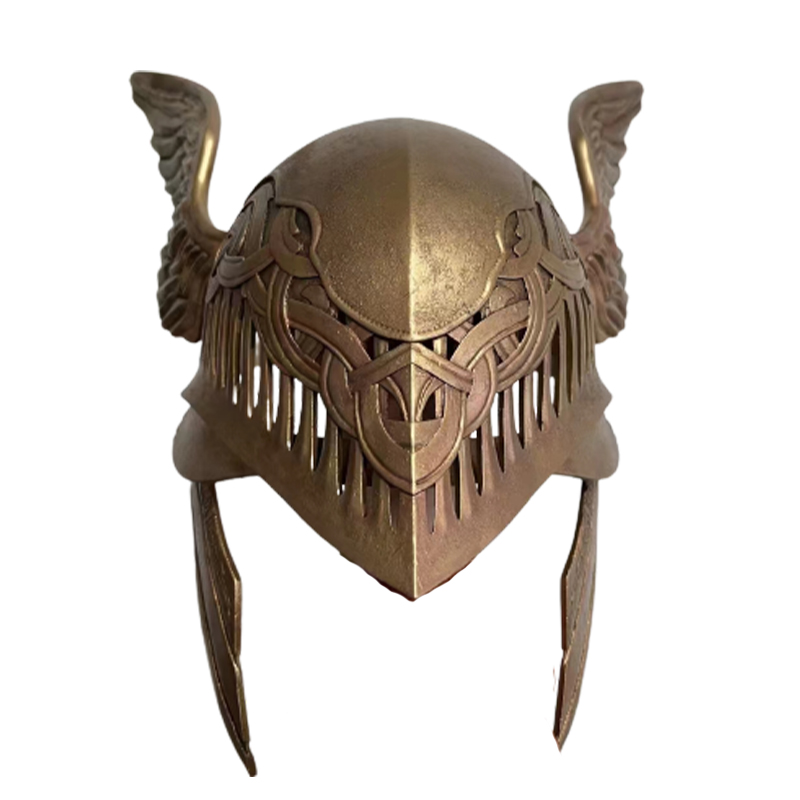
To execute physical builds effectively, professionals must possess a robust, quantifiable technical toolkit. These hard skills form the absolute foundation of any successful transition from a digital screen to the physical world.
Before any resin is cured or metal is cut, a mathematically flawless digital twin must exist. Mastery of CAD prototyping is entirely non-negotiable in this landscape. Utilizing software environments like SolidWorks or Fusion 360 involves far more than basic geometric sketching. It requires fluency in parametric design. Altering a single dimensional variable must automatically update all related features and assemblies.
Furthermore, engineers must model specifically for the intended manufacturing process. A digital file configured for injection molding looks vastly different from one prepared for Selective Laser Sintering. It demands distinct draft angles, uniform wall thicknesses, and custom support structures.
A pristine digital model becomes useless if fabricated in the wrong medium. Material science is a critical competency for any hardware engineer. A seasoned professional knows exactly which resins, metal alloys, or thermoplastics will accurately mimic the final mass-produced product physical properties.
For example, if an end-use item will be injection-molded in ABS plastic, the engineer must select an additive filament or a machinable block matching ABS specific tensile strength and thermal deflection limits. Understanding the nuanced differences between isotropic and anisotropic materials is essential. Knowing how they behave under mechanical stress depending on their layer orientation ensures reliable testing data.
Selecting the optimal fabrication method based on the project lifecycle stage is a vital decision-making skill. Early-stage volumetric studies might only necessitate inexpensive Fused Deposition Modeling. In stark contrast, late-stage functional validation often demands the rigorous precision of 5-axis CNC machining.
Engineering experts must know the specs. For instance, when validating large automotive housings, you might need large-format 3D printing capabilities that can handle single-piece builds up to 800mm by 800mm by 600mm to maintain structural integrity without gluing. Similarly, understanding that high-end CNC machining can hold tight tolerances of plus or minus 0.01mm dictates whether you choose subtractive or additive methods for critical bearing press-fits. Empowering teams with this knowledge optimizes development cycles seamlessly.
While technical prowess builds the physical object, strategic soft skills dictate the overall efficiency, budget, and ultimate success of the research and development initiative.
One of the most difficult psychological hurdles for an engineer to overcome is the perfectionist mindset. In the realm of rapid iteration, getting emotionally attached to a single design is a massive liability. The objective is to construct a minimum viable model, expose its flaws immediately, and pivot without hesitation.
This fail fast methodology requires a highly analytical perspective. You must view structural failure not as a setback, but as vital data acquisition. Skilled developers deliberately stress-test their designs to discover the breaking point early. This ensures those critical weaknesses are engineered out long before the product reaches the factory floor.
An iteration expert rarely operates in a vacuum. They frequently act as a technical translator between disparate departments. They must articulate complex mechanical constraints to marketing teams, interpret subjective aesthetic feedback from industrial designers, and provide actionable adjustments to factory floor managers.
Clear, objective communication prevents catastrophic misunderstandings. When a physical model fails a drop test, the engineer must concisely explain the exact physics of the failure. They then propose a geometric or material solution that all stakeholders can readily digest and approve.
Recent analyses of the global manufacturing sector indicate a massive operational shift. The hardware industry is actively borrowing agile development methodologies from the software world. Consequently, physical iteration is no longer viewed as a passive, isolated phase at the end of the design cycle. It has evolved into a proactive, continuous engineering discipline.
Market trends show an unprecedented demand for hybrid professionals who can bridge the gap between digital conceptualization and physical shop-floor realities. Supply chain volatility has forced companies to reshore certain R&D elements, demanding faster local iteration capabilities. Organizations are moving away from siloed departments. They are opting instead for integrated teams where designers understand manufacturing constraints and machinists understand design intent. This industry-wide pivot underscores a simple truth. The ability to iterate quickly and intelligently is now recognized as a primary driver of market dominance.
Cultivating this multifaceted expertise provides tangible, highly measurable advantages to both individual hardware developers and the broader organizations they serve.
In highly saturated industries, speed to market is often the definitive metric for commercial success. Teams equipped with strong iterative skills can effortlessly bypass traditional, sluggish R&D bottlenecks. By transitioning rapidly from digital concepts to physical reality, companies can physically test a dozen iterations in the time it historically took to produce just one.
This accelerated cycle actively fosters innovation. It allows engineering teams to explore unconventional, high-risk ideas. If an experimental concept proves unviable, it is discarded within days. If it succeeds, it is rapidly refined and pushed toward mass production.
The financial consequences of discovering a fundamental design flaw during mass production are nothing short of catastrophic. Steel tooling costs for injection molding can easily run into the hundreds of thousands of dollars.
A meticulously executed product development prototype acts as an impenetrable insurance policy. By utilizing rigorous validation methodologies, engineers can identify fatal flaws long before committing to expensive production tooling. Finding an electronic overheating issue, structural fatigue, or internal assembly interference early saves companies millions in potential product recalls and emergency redesigns.
As organizations increasingly recognize that rapid iteration is a specialized discipline, a critical strategic crossroad emerges. Should this capability be developed entirely within the company, or is it more efficient to outsource the execution to dedicated external experts? Both pathways carry distinct operational, financial, and strategic implications.
| Evaluation Criteria | In-House Fabrication Team | Professional Manufacturing Partner |
|---|---|---|
| Capital Expenditure | High initial investment for industrial machinery and facility upgrades. | Zero equipment costs. Pay strictly per project or part. |
| Turnaround Time | Immediate access for daily micro-iterations. | Typically 3 to 5 days, depending on shipping and complexity. |
| Technological Breadth | Limited to the specific machines purchased by the company. | Access to diverse technologies including SLA, SLS, CNC, and Vacuum Casting. |
| Maintenance & Labor | Requires dedicated technicians, material handling, and constant machine calibration. | Managed entirely by the vendor expert engineering team. |
| Data Security | Maximum internal control over sensitive Intellectual Property. | Requires strict Non-Disclosure Agreements and secure file transfer protocols. |
For the vast majority of hardware startups and established enterprises alike, the most pragmatic approach is leveraging external expertise. Outsourcing to a professional 3D printing service grants immediate access to top-tier talent and enterprise-grade equipment without the crippling overhead costs.
These external specialists process thousands of diverse projects annually. This grants them an unparalleled breadth of experience in material science and manufacturability. They can analyze a CAD file and instantly identify potential failure points that an insular internal team might overlook. By outsourcing the physical fabrication, internal engineers are freed to focus entirely on their core competency of product innovation.
Whether you are an individual engineer looking to enhance your professional marketability or a team manager aiming to optimize internal workflows, developing a robust iterative skillset requires continuous, deliberate education.
The single most critical hard skill a developer can acquire is a deep, intuitive understanding of Design for Manufacturability. This is the engineering practice of designing products specifically so they are easy, reliable, and cost-effective to manufacture. A skilled practitioner does not just design for visual appeal. They design for the machine constraints.
Engineers must learn the specific geometric rules dictated by different processes. When preparing a part for injection molding, you must incorporate draft angles and avoid complex undercuts. When utilizing additive manufacturing, you must account for optimal layer orientation and minimize overhangs to reduce wasted support material.
Theoretical knowledge is vastly insufficient in the realm of hardware development. To truly master prototype design, professionals must actively experiment with different fabrication technologies and get their hands dirty. Additive manufacturing behaves entirely differently than subtractive machining.
Engineers should spend time operating basic desktop equipment to understand the physical limitations of thermoplastic extrusion. Simultaneously, they should analyze CNC-machined parts to comprehend toolpath limitations and tolerance stacking. Taking calipers to a freshly printed part or physically feeling how different materials react to stress is an empirical process that cannot be replicated through software simulations.
Understanding the theories and strategies behind rapid iteration ultimately culminates in the actual execution of a project. If you choose to leverage external expertise to accelerate your timeline, selecting the right manufacturing partner is paramount. A subpar vendor can derail entire product launches with inaccurate parts.
Procurement managers and engineers should utilize a strict, parameter-driven evaluation standard:
By applying these rigorous standards, you ensure the complex transition from a digital concept to a tangible, testable product is executed with flawless precision.
Rapid iteration is undeniably a highly specialized, invaluable skill. It represents the crucial nexus where digital design architecture meets the uncompromising realities of physical manufacturing. Mastering this discipline drastically accelerates the entire product development timeline. It requires balancing aesthetic intent with mechanical feasibility and knowing exactly how and when to test specific variables.
Whether you painstakingly cultivate this technical expertise within your own internal engineering team or strategically tap into the vast experience of a specialized manufacturing partner, this skillset remains the ultimate catalyst for commercial success. It mitigates financial risk, fosters bold innovation, and transforms abstract ideas into market-ready realities.
Ready to turn your next groundbreaking concept into a physical reality without the guesswork? Evaluate your project requirements and explore enterprise-grade manufacturing solutions at Yeeshine to leverage top-tier iterative skills and precise technology for your upcoming hardware launch.
Prototype design is the foundational, conceptual phase focused on the visual, structural, and functional creation of a model. It is typically executed within digital software environments and involves engineering calculations and aesthetic planning. Rapid prototyping, conversely, is the physical execution of that digital intent. It is the accelerated fabrication process utilizing automated machinery to transform the digital file into a tangible object used to test form, fit, and function in the real world.
Yes, proficiency in Computer-Aided Design is an absolute prerequisite. Modern fabrication technologies are entirely digitally driven. Industrial machines rely on precise, mathematical geometric data to build parts. Without accurate, well-structured 3D models that adhere to strict manufacturing tolerances, the machinery cannot produce viable physical components.
The decision depends entirely on your project technical requirements, budget, and desired fidelity. For engineering teams needing quick, low-fidelity conceptual models to check basic scale, a desktop 3D printer is highly practical. However, for functional product development requiring tight dimensional tolerances, specialized engineering-grade materials, or complex large-format geometries, utilizing a professional commercial service is far more efficient. It provides access to industrial equipment and expert operators without the heavy burden of equipment maintenance.
The manufacturing industry generally categorizes these rapid fabrication technologies into three primary methodologies. First is Additive Manufacturing, which builds parts layer by layer, encompassing processes like SLA, SLS, and Fused Deposition Modeling. Second is Subtractive Manufacturing, which removes material from a solid block to achieve the final shape, primarily represented by CNC milling and turning. Third is Formative Manufacturing, which shapes materials using custom molds, heat, and pressure, such as Rapid Injection Molding or Vacuum Casting.
Acquiring basic proficiency in desktop 3D printing and introductory CAD software can take a few weeks to a couple of months. However, mastering the discipline as a professional engineering skill takes years. It requires extensive hands-on experience with diverse materials, understanding complex Design for Manufacturability principles, and learning how to interpret physical testing data to refine digital models iteratively.
The best software depends on your engineering goals. For mechanical engineering and precise parametric design, SolidWorks, Autodesk Fusion 360, and PTC Creo are industry standards. They excel at creating parts with strict dimensional tolerances suitable for CNC machining and injection molding. For industrial design focusing on complex organic surfaces and aesthetics, Rhino and Blender are frequently utilized before the files are converted for manufacturing.


