Email: admin@yeeshine-tech.com WhatsApp: +86-13712868936

- All
- Product Name
- Product Keyword
- Product Model
- Product Summary
- Product Description
- Multi Field Search

Views: 0 Author: Site Editor Publish Time: 2026-10-21 Origin: Site


Getting a new product to market ahead of the competition dictates its ultimate success. Traditional manufacturing workflows demand exorbitant budgets. Engineers often wait weeks just to validate a single design iteration. When engineering teams need a faster and more reliable way to test concepts, they turn to rapid fabrication methods. This comprehensive guide explores the core methodologies, real-world applications, and strategic advantages of transforming digital models into physical realities.
At its core, this methodology accelerates the fabrication of a physical part directly from a digital 3D design. Traditional manufacturing frequently demands complex tooling, expensive steel molds, or specialized fixtures before producing a single unit. This modern approach utilizes digital data to drive automated machinery. Consequently, engineers can hold a tangible representation of their design within days. This direct digital-to-physical workflow facilitates immediate evaluation. Teams spot ergonomic flaws or assembly interferences early in the development cycle.
Historically, prototype development was a painstakingly manual process. Craftsmen carved wood, shaped clay, or manually milled metal blocks to evaluate form and fit. This analog approach was inherently sluggish and highly susceptible to human error. The introduction of digital design software sparked a digital manufacturing revolution. Today, the ecosystem has matured into a sophisticated network of automated machines. Modern prototype manufacturing can produce functional test units that rival the mechanical integrity of final production goods.
To truly grasp the value of rapid fabrication, we must weigh it objectively against high-volume traditional methods like injection molding or die casting.
| Feature | Rapid Fabrication | Traditional Manufacturing |
|---|---|---|
| Upfront Tooling Cost | Zero to Very Low | Extremely High for Molds and Dies |
| Setup Time | Hours to Days | Weeks to Months |
| Cost per Unit Low Volume | Moderate and highly cost-effective for 1-100 parts | Extremely High due to tooling amortization |
| Cost per Unit High Volume | High and not scalable for mass production | Very Low |
| Design Flexibility | High. Easy to change digital files and remachine | Low. Tooling modifications are expensive and slow |
| Primary Use Case | Testing, validation, low-volume bridge runs | Mass production, end-use consumer goods |
Selecting the correct technology is crucial for achieving accurate test results. Below is an objective breakdown of the primary methods utilized in modern engineering.
Additive manufacturing builds parts layer by layer from digital models. It thrives on creating complex internal geometries. Traditional cutting tools simply cannot reach these intricate lattice structures. Specifically, Stereolithography uses a UV laser to cure liquid resin. This delivers exceptionally smooth surface finishes perfect for high-detail visual models. Meanwhile, Selective Laser Sintering fuses powdered nylon without the need for support structures. This makes it the go-to choice for interlocking mechanisms. For early-stage structural validation, Fused Deposition Modeling extrudes heated thermoplastics to provide the most cost-effective 3D printing solution available.
In stark contrast to additive techniques, Computer Numerical Control machining is a subtractive process. Software dictates the precise movement of cutting tools to carve material away from a solid billet. A well-executed CNC prototype is universally prized for its uncompromising precision and structural integrity. Whether utilizing mills or lathes, this method achieves tight tolerances often reaching ±0.01mm. It remains the gold standard for testing functional parts in their final production materials. Engineers frequently specify aerospace-grade aluminum, stainless steel, or specialized engineering plastics like PEEK.
When a project requires a small batch of high-quality plastic parts, vacuum casting offers incredible efficiency. The workflow begins by crafting a highly detailed master pattern via precision machining or high-resolution printing. Liquid silicone is poured around this master to form a flexible mold. Once cured and cut open, polyurethane resins with ABS-like or polycarbonate-like properties are drawn into the cavity under a vacuum. This entirely eliminates trapped air bubbles. A single silicone mold typically yields 15 to 20 high-fidelity shots. This process perfectly mimics the surface finish, exact color matching, and mechanical properties of injection-molded plastics. You achieve dimensional tolerances around ±0.15mm without the prohibitive expense of cutting steel tools.
As projects near the final stages of validation, rapid tooling bridges the gap by machining temporary molds from softer aluminum. This permits the injection molding of several hundred units using the actual production-grade plastic. Similarly, rapid sheet metal fabrication leverages laser cutters and automated press brakes to quickly fold brackets or electronic enclosures for rigorous mechanical testing.
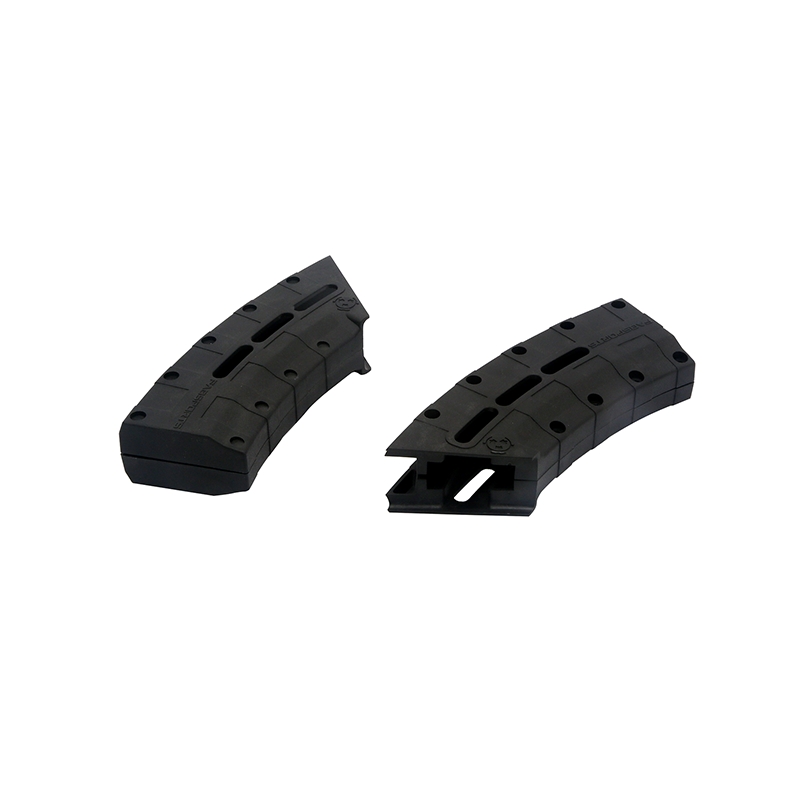
In fiercely competitive sectors, development speed directly dictates market share. Agile workflows empowered by physical models allow engineering teams to design, build, test, and refine multiple iterations within a single week. By dramatically compressing this feedback loop, companies finalize their product architectures months ahead of competitors. Those competitors remain bogged down by traditional sluggish iterative cycles.
Furthermore, while digital simulations like Finite Element Analysis provide valuable data, they cannot entirely replace the nuances of physical testing. Discovering a fatal design flaw after a steel mold has been manufactured can cost tens of thousands of dollars to rectify. A weak snap-fit joint breaking under pressure or unforeseen thermal interference are common late-stage nightmares. Fabricating a tangible model early mitigates this massive financial risk. It allows teams to validate form, fit, and function long before committing heavy capital to mass production infrastructure.
A physical object conveys a depth of information that two-dimensional drawings or rotating digital renderings simply cannot match. Placing a tactile model in the hands of cross-functional teams triggers organic and immediate feedback. This physical interaction is crucial for evaluating human ergonomics. It helps secure necessary funding and ensures every stakeholder shares a unified realistic vision of the final product.
The consumer electronics sector operates on notoriously short product lifecycles. This demands continuous innovation to capture consumer interest. Hardware developers heavily rely on iterative testing to refine ergonomic outer casings. They must ensure the precise alignment of snap-fit enclosures and validate the thermal management of internal battery compartments. Testing how a new smart home hub dissipates heat requires materials that accurately mimic final production plastics. Advanced fabrication becomes indispensable for identifying these thermal bottlenecks.
In industries where weight reduction and structural integrity are matters of life and death, rapid manufacturing is non-negotiable. Automotive engineers frequently fabricate lightweight engine components, custom dashboard fixtures, and aerodynamic wind-tunnel models to optimize fuel efficiency. Similarly, aerospace companies utilize high-performance machining and advanced composite printing to test structural brackets. These components undergo brutal stress testing and thermal cycling. They must meet strict safety standards prior to full-scale deployment.
The medical field is bound by rigorous regulatory frameworks and uncompromising biocompatibility requirements. Early-stage fabrication accelerates the iterative design of ergonomic surgical tools, patient-specific prosthetics, and functional housings for diagnostic equipment. Because these devices often interact directly with the human body, the physical models must closely replicate the final product material properties. Surgeons and healthcare professionals handle these test units in simulated clinical environments. This provides tactile feedback and reduces the risk of costly regulatory approval delays.
The intended use-case of the part always dictates the required material. This subsequently narrows down the viable manufacturing processes. Does the component demand high tensile strength, extreme thermal resistance, or electrical conductivity? If so, milling metals like Aluminum 6061 or Titanium is the logical path. Conversely, if the design requires rubber-like flexibility, optical transparency, or specific color matching, casting specialized polyurethane resins will yield the most accurate testing data. Obtaining a high-fidelity rapid prototype ensures your lab results accurately mirror real-world field performance.
Project budgets and strict launch deadlines frequently force engineering teams to make strategic compromises. Basic extrusion printing is undeniably the fastest and most budget-friendly method for rough volumetric testing. It often delivers parts overnight. However, these quick prints usually lack the mechanical sheer strength required for functional load testing. On the other hand, precision machining commands a higher initial setup cost and a slightly longer lead time. Yet it delivers uncompromising durability and dimensional accuracy. Weighing the specific phase of your product lifecycle will dictate whether rapid turnaround or structural integrity takes precedence.
Fidelity refers to how closely the test unit resembles the final manufactured product. You must clearly define whether the project requires a visual model for a trade show presentation or a functional model for a mechanical stress test. When exceptional cosmetic finish and specific textures are paramount, silicone molding processes excel. Alternatively, machined parts can undergo secondary surface treatments like bead blasting, anodizing, or powder coating to achieve a flawless production-grade appearance.
| Manufacturing Process | Best Suited For | Typical Lead Time | Cost Level | Surface Finish Quality |
|---|---|---|---|---|
| Additive Resin and Powder | Complex geometries, visual models, rapid iteration. | 1 - 3 Days | Low | Good. Resin is smooth while powder is porous. |
| Subtractive Machining | High precision, tight tolerances, functional metal parts. | 3 - 7 Days | Medium to High | Excellent. Can be polished or anodized. |
| Silicone Mold Casting | Low-volume runs mimicking injection molding. | 7 - 10 Days | Medium | Excellent. Matches the master pattern exactly. |
Artificial Intelligence is fundamentally rewiring how components are conceptualized before a machine ever powers on. Generative design software utilizes complex algorithms to optimize part weight, load-bearing paths, and material usage based on strict predefined constraints. Instead of an engineer manually drafting a single iteration, the software autonomously generates thousands of potential geometric solutions. This synergy between software and advanced fabrication results in incredibly lightweight structures that were previously impossible to conceive.
Historically, iterative testing was limited to basic fragile plastics and easily machinable alloys. Today, the material science landscape is expanding exponentially. Industry analysts note a significant surge in continuous composite printing. This embeds carbon fiber or fiberglass directly into the polymer matrix. It yields parts that rival the tensile strength of aluminum at a fraction of the weight. Furthermore, the rapid development of high-temperature resins is pushing boundaries in the medical and aerospace sectors. Engineers can now fabricate end-use parts capable of surviving extreme environmental stressors.
As manufacturing hardware becomes exponentially faster and highly automated, the traditional boundary separating early-stage modeling from mass production is rapidly dissolving. Techniques once strictly reserved for rough concept validation are now aggressively utilized for low-volume manufacturing and bridge production. This industry-wide shift toward on-demand manufacturing empowers companies to bypass expensive injection mold tooling entirely for niche products. It fosters a vastly more agile and resilient global supply chain.
Even with a flawlessly optimized design file, the physical success of your model hinges entirely on execution. When evaluating potential manufacturing partners, prioritize facilities equipped with comprehensive in-house capabilities. A vendor that houses additive, subtractive, and casting technologies under one roof will provide objective recommendations tailored to your specific geometry. They will not force your project into the only machine they own. Insist on partners with documented quality certifications, robust data security protocols, and a proven history of holding tight dimensional tolerances.
A premium manufacturing partner delivers far more than a basic print-and-ship service. You require a dedicated team that provides proactive design for manufacturability feedback. Before any material is cut, their engineers should meticulously analyze your digital files to flag potential manufacturing roadblocks. They look for walls that are structurally too thin, deep undercuts that cannot be milled, or tolerances that are unnecessarily tight and expensive. This upfront engineering collaboration prevents costly scrap, ensures structural integrity, and streamlines the entire fabrication workflow.
The ultimate objective of physical testing is to confidently transition into full-scale production. A strategic forward-thinking partner possesses the infrastructure to help you navigate this scale-up seamlessly. By collaborating with a comprehensive service provider, you can transition a successful single-unit design into a low-volume run of several hundred parts. This critical bridge production phase allows your company to generate early revenue. You gauge actual market demand and refine supply chain logistics long before investing heavily in high-volume multi-cavity steel tooling.
Accelerated fabrication has cemented itself as an indispensable pillar of modern engineering and product development. Integrating these agile technologies allows businesses to dramatically accelerate innovation, slash development costs, and eliminate the guesswork from mechanical testing. The ultimate success of your project relies heavily on selecting the correct fabrication method and aligning with a highly capable manufacturing partner. Whether you are refining a complex aerospace bracket or launching the next generation of consumer electronics, transforming your digital concepts into high-precision physical models is the most reliable path to market dominance. To ensure your designs are executed with absolute precision and backed by deep engineering expertise, explore the comprehensive manufacturing solutions at Yeeshine and take your product development to the next level.
Costs fluctuate significantly based on the selected technology, production volume, material grade, and geometric complexity. A simple low-fidelity printed model might incur a cost of merely fifty dollars. Conversely, a highly complex tight-tolerance part machined from aerospace-grade titanium can range from several hundred to over a thousand dollars. To secure an accurate and actionable estimate, it is highly recommended to submit your digital files for a comprehensive engineering review.
While frequently used interchangeably in casual conversation, these terms represent distinct concepts. The latter is the broad overarching methodology of rapidly fabricating a physical model from a digital design to validate an idea. Additive manufacturing is simply one specific tool within a much larger arsenal used to achieve that goal. It operates alongside other distinct processes like subtractive machining and urethane casting.
Delivery timelines are heavily dependent on the specific manufacturing process required. Basic additive methods are exceptionally fast, frequently delivering parts within one to three days. Subtractive machining requires meticulous toolpath programming and machine setup, generally extending the timeline to three to seven days. Casting processes involve the intermediate step of curing a silicone master mold. This typically requires seven to ten days to produce a complete batch of identical parts.
Casting is the optimal choice when a project dictates a low volume of parts. This typically ranges from ten to fifty units. These parts must closely replicate the mechanical properties, color, and pristine surface finish of injection-molded plastics. This approach allows engineering teams to completely bypass the massive upfront capital investment and extensive lead times inherently associated with cutting hard steel or aluminum tools for traditional mass production.
Modern fabrication accommodates an extensive array of engineering-grade materials. Subtractive machining utilizes structural metals like aluminum, stainless steel, brass, and titanium, alongside rigid plastics such as POM, PEEK, and ABS. Additive processes employ photosensitive resins, nylon powders, and thermoplastic filaments. Meanwhile, urethane casting uses specialized liquid resins engineered to simulate the exact hardness, transparency, and thermal properties of production-grade plastics and elastomers.
Physical modeling fundamentally transforms product design by replacing theoretical assumptions with tangible data. Engineers can physically interact with a model to assess ergonomic comfort, verify intricate assembly fits, and conduct real-world load testing. Identifying mechanical interferences or aesthetic flaws early in the design phase prevents costly tooling modifications later. This iterative feedback loop guarantees a highly refined and user-centric final product.


