Email: admin@yeeshine-tech.com WhatsApp: +86-13712868936

- All
- Product Name
- Product Keyword
- Product Model
- Product Summary
- Product Description
- Multi Field Search

Views: 0 Author: Site Editor Publish Time: 2026-10-22 Origin: Site


In modern hardware development, waiting weeks for a test model kills innovation. You have a concept. You need it physical. Fast. But when you talk to suppliers, the terminology often gets muddy. Engineers, industrial designers, and purchasing managers frequently search for alternative terms to describe this fast-paced fabrication process. Knowing the exact industry terminology is non-negotiable if you want to request proper services and communicate effectively with your supply chain.
This comprehensive guide strips away the marketing fluff. We will clarify these technical terms, explore the core technologies driving them, and explain how these agile processes transition seamlessly into market-ready production without breaking your budget.
When designers ask for a different name for this fast-paced fabrication, the answer depends heavily on the industry context and the underlying technology being utilized. While the standard terminology serves as a broad umbrella, several specialized phrases are used interchangeably on the factory floor.
Additive Manufacturing is the most technical, industrial, and scientifically accurate synonym. Defined by standards organizations like ISO and ASTM, it describes the precise process of joining materials to make parts from 3D model data, usually layer upon layer. The word prototyping describes the intent, which is making a test model quickly. Additive manufacturing describes the actual method. Industrial sectors, such as aerospace and medical device engineering, almost exclusively use this term when referring to production-grade layered fabrication.
In public discourse and mainstream media, 3D printing is the most recognizable alternative name. Technically, it is a subcategory of additive manufacturing. Originally referring specifically to binder jetting processes, the term has evolved to encompass Fused Deposition Modeling, Stereolithography, and Selective Laser Sintering. A hobbyist might say they are printing a part, whereas an industrial engineer will state they are utilizing 3D printing for design validation.
This is a comprehensive phrase encompassing the entire hands-on process of creating a physical model. Unlike additive manufacturing, which strictly involves adding material, this term includes subtractive methods like CNC machining as well as formative methods. It is frequently used in traditional engineering environments where a test unit might require welding, complex assembly, and manual surface finishing to achieve a fully functional state.
As technologies have advanced, the line between testing and final production has blurred. This shift gave rise to a new approach that represents the evolved form of prototyping. Instead of merely creating a model for evaluation, teams use the exact same high-speed technologies to produce final, end-use parts. Consequently, it eliminates the need for expensive traditional tooling, making it a highly viable strategy for bringing niche products to market quickly.
Hardware is unforgiving. In software development, building a quick model refers to creating user interface wireframes or writing foundational code to test digital functionality. In contrast, hardware development involves physical materials, material shrinkage, and real-world physics. Understanding this distinction prevents cross-industry miscommunication during multidisciplinary product development.
| Terminology | Primary Context | Production Method | Focus Area |
|---|---|---|---|
| Rapid Prototyping | General Engineering | Agnostic | Speed and Iteration |
| Additive Manufacturing | Industrial/Aerospace | Layer-by-layer addition | Technical Precision |
| 3D Printing | Consumer/Commercial | Extrusion, Resin, Powder | Accessibility |
| Prototype Fabrication | Traditional Manufacturing | Additive & Subtractive | Functional Assembly |
| Rapid Manufacturing | Supply Chain / Production | Agnostic | End-use Parts |
The concept of speed is relative and must be quantified against traditional manufacturing timelines. Historically, validating a product design required machining heavy steel or aluminum molds for injection molding. That grueling process typically takes four to eight weeks and requires significant capital investment. In our modern context, rapid refers to reducing that agonizing timeline from months down to a matter of hours or days.
Today, a mechanical engineer can export a CAD file, process it through slicing software, and send it to a machine that produces a tangible part within 24 to 72 hours. This drastic reduction in lead time fundamentally alters how teams approach problem-solving. It shifts the development model from a rigid, linear progression to an agile, cyclical process.
The true value of this speed lies in the enablement of iterative design. Getting a physical part fast allows for immediate, low-cost failure. In engineering, early failure is a massive asset because it highlights structural flaws before capital is committed to mass production. Teams can test a custom bracket on Monday, identify a stress-point weakness, redesign the geometry on Tuesday, and hold a revised, stronger physical unit by Thursday.
Despite massive advancements in 3D CAD modeling, finite element analysis, and digital twin simulations, digital environments remain constrained. They simply cannot replicate complete physical reality.
Imagine trying to evaluate the tactile click of a medical device button or the balance of a heavy power tool just by spinning a 3D model on your monitor. A screen cannot accurately convey ergonomics, weight distribution, surface texture, or the nuanced feel of a product. Digital simulations operate in sterile, mathematically perfect environments. They often fail to account for real-world variables such as friction during physical assembly or material flex under non-standard loads. Utilizing professional prototype fabrication bridges the gap between theoretical design and practical, real-world application.
Beyond engineering validation, physical models are invaluable for gathering authentic user feedback. When conducting market research, presenting a tangible object yields significantly more reliable data than showing a digital render. Consumers interact with products using multiple senses. A physical unit allows users to gauge its weight and test its usability organically. From a business perspective, founders who present a functional, tangible model to investors are far more likely to secure funding. A physical object demonstrates technical competence and reduces perceived execution risk.
Modern agile development is not a single process but a suite of distinct manufacturing technologies. Selecting the correct method depends entirely on the required material properties, dimensional tolerances, and aesthetic requirements of your specific iteration.
As the most recognizable subset of the industry, 3D printing is divided into several distinct technologies. Fused Deposition Modeling extrudes thermoplastic filaments layer by layer, making it highly cost-effective for basic spatial validation. Stereolithography uses a UV laser to cure liquid resin, producing parts with exceptional surface finish ideal for visual presentation. Meanwhile, Selective Laser Sintering fuses polymer powder to create complex, functional mechanical geometries without the need for support structures.
While often associated with mass production, Computer Numerical Control machining is a vital subtractive method. Watching a 5-axis mill carve complex geometries out of a solid block of AL7075-T6 aerospace-grade aluminum is a testament to its precision. It provides unparalleled accuracy with tolerances reaching ±0.01mm. This allows engineers to test parts in the exact end-use material, such as titanium, brass, or engineering-grade polycarbonate.
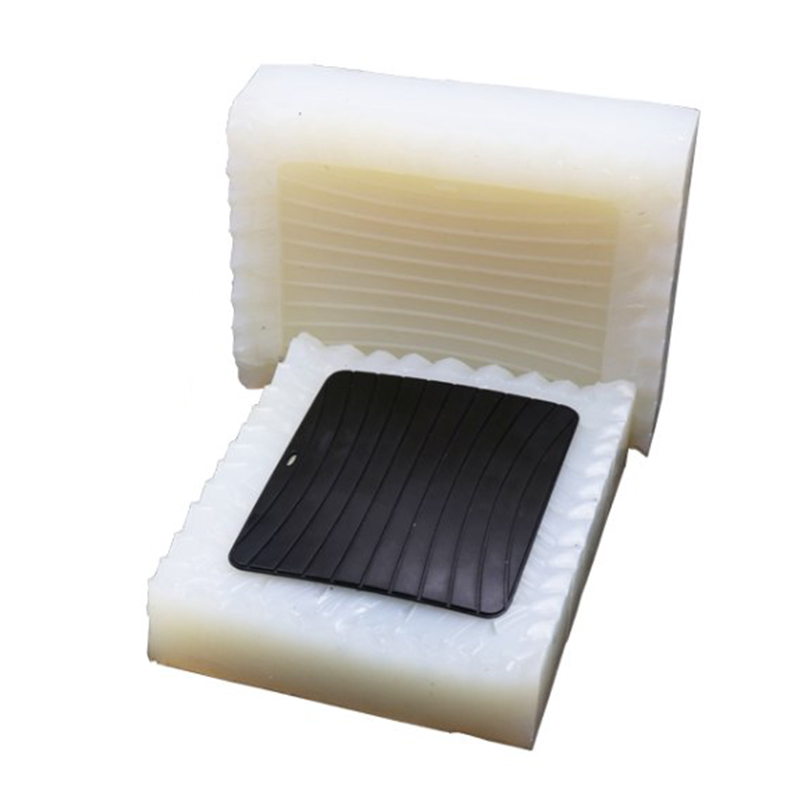
Also known as urethane casting, vacuum casting is a highly specialized process that serves as the perfect intermediate step between 3D printing and injection molding. A technician carefully pours liquid silicone around a high-quality master pattern to create a flexible mold. Once cured, liquid polyurethane resins are poured into the cavity under a vacuum to prevent microscopic air bubbles. This method is exceptional for creating batches of 15 to 20 high-quality parts per mold that perfectly mimic the mechanical properties and matte textures of ABS or PC plastics, entirely bypassing the high financial barrier of cutting steel tooling.
For products requiring enclosures, brackets, or structural chassis, sheet metal fabrication is heavily utilized. This involves rapid laser cutting, CNC bending, and stamping. Modern software allows flat patterns to be generated instantly from 3D models, enabling the quick creation of metal components that are structurally robust and ready for harsh environmental testing.
Once a design has been validated through rigorous testing, the product development cycle enters a critical transitional phase. The objective shifts from merely proving a concept to preparing for market entry. Historically, moving from a single functional model to mass manufacturing involved a massive financial leap. Today, the landscape has fundamentally changed.
The modern manufacturing ecosystem utilizes low volume production as a strategic bridge. Typically defined as a production run ranging from 50 to 100,000 units, this phase allows companies to manufacture end-use parts without committing to the exorbitant costs and extended lead times of high-volume mass production tooling. By producing a smaller batch of products, engineering teams can conduct comprehensive beta testing with actual consumers. If a design flaw is discovered during this early market release, the financial impact is minimal because the company has not yet invested in permanent, unalterable steel molds.
This seamless transition is made possible by advanced rapid manufacturing. While traditional testing was strictly for creating physical drafts, this evolved approach employs the exact same agile technologies to produce final, market-ready goods. For instance, a company might use additive manufacturing to create a custom enclosure for a specialized medical device. Because the annual volume is low, it is far more cost-effective to utilize agile techniques rather than investing in traditional injection molding.
| Production Phase | Typical Volume | Primary Technologies Used | Tooling Investment |
|---|---|---|---|
| Concept Validation | 1 - 10 units | 3D Printing, Basic CNC | None |
| Bridge Production | 50 - 100,000 units | Urethane Casting, Advanced CNC | Low to Moderate |
| Mass Production | 100,000+ units | Steel Injection Molding, Die Casting | Very High |
Recent industry analyses and search trends reveal a fascinating shift in how professionals talk about product development. Engineers are increasingly moving away from the basic concept of prototyping and searching for terms like agile hardware development or direct digital manufacturing. This shift highlights a broader industry consensus. Driven by the need for global supply chain resilience, companies are leveraging these technologies to bypass traditional tooling entirely, essentially merging the design and production phases into one fluid operation.
In practice, Artificial Intelligence is fundamentally altering how engineers approach CAD modeling. Generative design software uses AI algorithms to optimize part geometry based on specific constraints, generating organic structures that maximize strength while minimizing weight. These complex shapes are often impossible to manufacture via traditional subtractive methods, making advanced additive techniques the only viable option.
Simultaneously, the material catalog has expanded exponentially. Industrial machines can now process advanced composites, including carbon-fiber-reinforced polymers, which offer strength-to-weight ratios rivaling aerospace-grade aluminum. The integration of smart factory principles is also streamlining the production floor. Sensor networks monitor CNC machines in real-time, predicting maintenance needs and ensuring that dimensional tolerances remain strictly within specification.
Selecting a manufacturing method is a critical decision that directly impacts your time-to-market and product quality. Stop guessing and use concrete engineering thresholds to make your decision.
If you need one to five units purely for visual checking and spatial fit, choose Stereolithography 3D printing. It is fast, cheap, and provides a smooth surface finish. However, the parts will be brittle.
If you require tight mechanical tolerances, threaded holes, or need to test the exact end-use metal or engineering plastic, you must choose CNC machining. Demand a vendor capable of holding tolerances of ±0.01mm to ±0.05mm to ensure proper assembly fitment.
When you need 10 to 50 functional units for beta testing or a crowdfunding campaign, urethane casting is the undisputed champion. It delivers parts that mimic the physical properties of ABS or elastomers without the tens of thousands of dollars required for injection mold tooling.
Pacing should never come at the expense of dimensional accuracy. A professional manufacturing partner must operate under strict Quality Management Systems. Always request detailed material data sheets and First Article Inspection reports to verify complex geometries.
3D printing is a specific manufacturing technology that builds parts layer by layer. The latter is the broader, overarching process of quickly creating a physical model to test a design. While 3D printing is one of the most common tools used in this process, the broader term can also involve CNC machining, sheet metal fabrication, or urethane casting.
The three primary categories are visual models, functional units, and pre-production samples. Visual models are used to evaluate aesthetics, ergonomics, and overall shape. Functional units are built with durable materials to test mechanical performance and moving parts. Pre-production samples are created using the intended final manufacturing processes to validate the assembly line and tooling before mass manufacturing begins.
It drastically reduces the financial risk associated with new product development. By creating physical models early in the design phase, engineering teams can identify structural flaws, test ergonomics, and gather user feedback before investing heavily in expensive permanent tooling like steel injection molds.
Costs vary wildly based on the technology, material, and part size. A simple 3D printed plastic bracket might cost less than fifty dollars and be ready in a day. Conversely, a high-precision, 5-axis CNC machined titanium component for aerospace testing could cost several hundred to over a thousand dollars. The key is matching the fabrication method to the specific requirements of your current design phase.
This process is highly favored because it produces parts with excellent surface finishes and mechanical properties that closely mimic traditional injection molding. By using cost-effective silicone molds instead of expensive steel tools, it provides an incredibly economical solution for producing small batches of high-quality units, making it ideal for market testing and bridge production.
Turning innovative ideas into physical reality requires a delicate balance of speed and precision. Whether you refer to it as additive manufacturing, 3D printing, or agile hardware development, the ultimate goal remains the same. You need to accelerate the iteration cycle to build better products faster.
Choosing the right manufacturing partner is critical to your success. A capable partner ensures a smooth transition from a single test model right through to market-ready batches. If you are ready to move your project from a digital screen into the physical world, evaluate your material and volume needs carefully. Visit Yeeshine to explore professional fabrication services and find the exact manufacturing solution that aligns with your specific engineering requirements.


