Email: admin@yeeshine-tech.com WhatsApp: +86-13712868936

- All
- Product Name
- Product Keyword
- Product Model
- Product Summary
- Product Description
- Multi Field Search

Views: 0 Author: Site Editor Publish Time: 2026-10-24 Origin: Site


Modern manufacturing relies heavily on smart automation to bring complex designs to life with unprecedented speed. Manual tools simply cannot meet today strict dimensional standards. This creates a massive demand for superior production methods. To bridge this gap, industries have turned to computer-guided technology. In this comprehensive guide, we will explore the core concept of automated machining, examining how this revolutionary technology shapes industrial materials and drives global supply chains.
To truly comprehend modern industrial production, it is necessary to establish a clear definition of its foundational technologies. Subtractive manufacturing stands as a primary pillar of this ecosystem. It is characterized by a process where material is systematically removed from a solid block to achieve a desired final shape. Think of it as a sculptor carving marble, but executed by high-torque spindles and carbide cutters.
In practical terms, this technology refers to the automated control of machining tools—such as drills, boring tools, and lathes—by means of a computer. Rather than relying on human intuition, a machine processes a piece of material to meet strict specifications by following coded programmed instructions. These instructions are typically referred to as G-code and M-code.
These codes dictate every variable of the cutting environment. G-code controls the geometry and physical movement. This includes the tool path, feed speed, and positioning along the X, Y, and Z axes. Meanwhile, M-code manages hardware functions like spindle rotation, coolant flow, and automated tool changes. By relying entirely on digital instructions, the process removes human error from the physical cutting phase. This ensures exact adherence to the digital design.
Historically, metalworking was a highly tactile, manual process. Operators wrestled with handwheels, levers, and dials to guide cutting tools across metal workpieces. Veteran machinists could achieve impressive results, but the manual method was inherently slow. It was also subject to natural human inconsistencies. Consequently, large-scale production of identical parts was both difficult and expensive.
The transition to automated systems fundamentally altered the manufacturing landscape. Factories replaced manual handwheels with precision servo motors driven by digital coordinates. This allowed them to achieve a level of consistency previously thought impossible. Today, this technology allows for continuous production, where facilities can operate overnight with minimal human supervision.
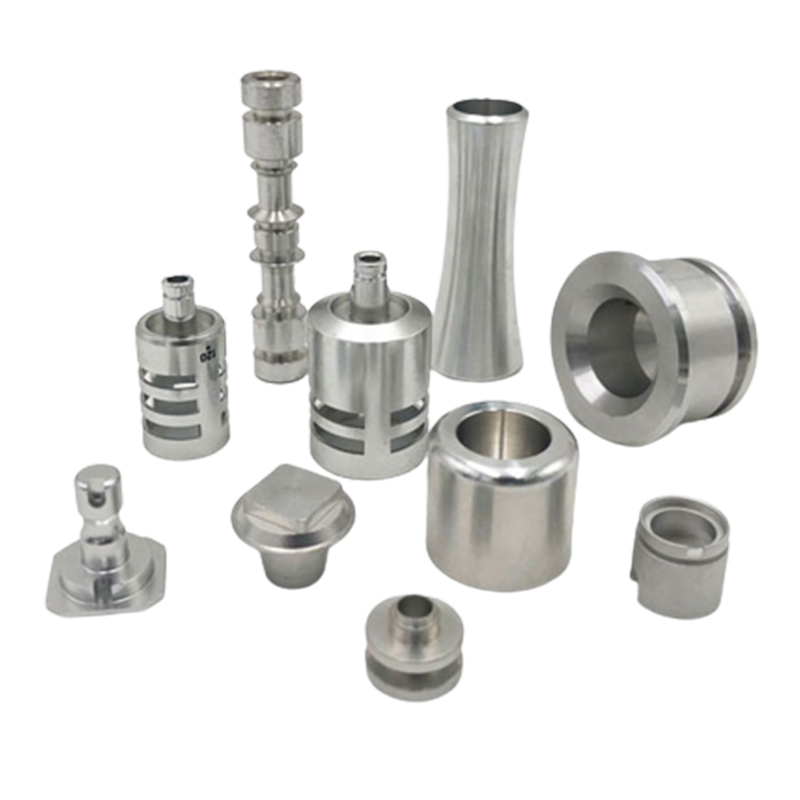
The journey from a conceptual idea to a physical, machined component follows a strict, sequential workflow. This seamless digital-to-physical translation ensures that the final product exactly matches the original engineering specifications.
The process begins in the digital realm with Computer-Aided Design software. Design engineers create highly detailed 2D vector drawings or 3D solid models of the required part. Imagine an engineer meticulously defining the exact geometry, dimensions, tolerances, and even the material properties of a turbine blade on their screen. The accuracy of this digital model is critical. Any geometric flaw at this stage will inevitably be replicated by the machine later on.
Once the digital model is finalized, it is exported into Computer-Aided Manufacturing software. This system acts as the vital translator between the digital model and the physical machine on the shop floor. It analyzes the complex geometry and generates the optimal toolpaths required to shave away material efficiently.
During this stage, manufacturing engineers define specific cutting parameters. They set the spindle speed in revolutions per minute, adjust the feed rate, and determine the depth of cut. The software then compiles this data into a standard machine language, creating a step-by-step instructional file ready for execution.
Before a single chip of metal is cut, a human operator must perform the physical machine setup. This involves securing the raw material, also known as the blank, into the machine using heavy-duty vises, clamps, or custom fixtures. The operator loads the necessary cutting tools into the machine carousel and establishes the zero reference points for the axes.
Once the setup is verified, the program is initiated. The machine executes the code autonomously. It moves the cutting tools across the workpiece in a synchronized dance to carve out the final shape, often reaching spindle speeds of up to 24,000 RPM in modern horizontal centers.
The umbrella of automated subtractive manufacturing encompasses several different types of equipment. Each is engineered to handle specific geometries and operational requirements. Understanding these distinct technologies helps product teams select the appropriate method for their specific component.
When evaluating subtractive methods, CNC milling stands out as arguably the most versatile process available. In a milling setup, the workpiece is held securely in place on a machine bed. A multi-point cutting tool rotates at incredibly high speeds above it. The machine moves the spinning tool across the workpiece along multiple axes to shave away material.
Standard milling centers operate on three primary axes: X, Y, and Z. This allows for the creation of slots, holes, and flat surfaces. Advanced milling centers feature 4-axis or 5-axis capabilities. This means the machine bed or the tool head can also tilt and rotate. Consequently, the cutting tool can reach complex angles and undercuts without the need to manually reposition the workpiece.
While milling involves a spinning tool and a stationary workpiece, turning operates on the exact opposite principle. In a lathe, the raw material is secured in a chuck and rotated at high speeds. A stationary single-point cutting tool is then fed into the spinning material to peel off layers.
Turning is the optimal process for creating symmetrical, cylindrical parts such as drive shafts, custom bushings, and threaded rods. It is generally much faster and more cost-effective than milling when producing round components.
| Feature | Milling | Turning (Lathe) |
|---|---|---|
| Workpiece Status | Stationary (clamped to bed) | Spinning (held in chuck) |
| Tool Status | Spinning at high speed | Stationary |
| Ideal Geometries | Flat, asymmetrical, complex 3D shapes | Symmetrical, round, cylindrical shapes |
| Common Products | Engine blocks, brackets, custom enclosures | Drive shafts, threaded rods, bushings |
For enterprises evaluating their manufacturing supply chain, the adoption of computer-controlled subtractive manufacturing offers quantifiable advantages. The strategic investment in precision machining is easily justified by several operational and financial benefits. It directly addresses the common pain points of high scrap rates and unpredictable lead times.
The primary advantage of automated equipment is its flawless dimensional accuracy. Modern industrial horizontal machining centers can routinely hold tolerances as tight as ±0.005 mm, depending on the material and environmental calibration. This microscopic level of precision ensures that components fit together perfectly in complex, high-stakes assemblies.
The digital nature of the process guarantees absolute repeatability. Whether producing ten prototype units or ten thousand production parts, the first piece will be dimensionally identical to the last. This effectively eliminates the part-to-part variation that plagues manual production.
Automation directly drives efficiency. Once the initial programming and physical setup are complete, these machines can run continuously. This operational capability drastically reduces lead times. It bridges the gap between rapid prototyping and low-to-mid volume production. Companies can scale their output predictably without needing to invest in the expensive custom molds required by processes like injection molding.
One of the most significant strengths of subtractive manufacturing is its incredibly broad material compatibility. The selection of raw material dictates the cutting parameters, the type of tooling required, and ultimately, the functional performance of the final part.
Among all available metals, aluminum is the most frequently machined material across global industries. It offers a unique combination of physical properties that make it highly desirable. Providing exceptional machinability, aluminum CNC machining remains an industry standard because the metal can be cut aggressively without causing excessive wear on carbide cutting tools.
This excellent machinability translates directly to faster production times and lower overall costs. Aluminum offers a high strength-to-weight ratio, natural corrosion resistance, and excellent thermal conductivity. Common industrial grades include 6061-T6 for general-purpose structural strength, and 7075-T6, an aerospace-grade alloy used in high-stress applications.
Specific engineering requirements often necessitate other materials. Stainless Steel grades like 304 and 316 are frequently selected for superior corrosion resistance in medical and marine environments. Titanium is heavily utilized in aerospace and surgical implants due to its extreme temperature resistance and biocompatibility. However, it requires slower, more deliberate machining.
Industrial plastics are frequently machined for applications requiring electrical insulation or extreme friction reduction. Materials like POM, commonly known as Delrin, and PEEK are standard for custom gears, bearings, and high-temperature seals.
The reliability and dimensional control of subtractive manufacturing make it an indispensable technology across critical sectors. In these industries, component failure is simply not an option. Empirical data from manufacturing audits consistently shows that automated subtractive manufacturing reduces human error rates to near zero.
The aerospace industry operates under some of the most rigorous quality standards in the world, such as the AS9100 standard. Every part must be manufactured to exact specifications to withstand extreme atmospheric pressures. Aerospace engineers frequently rely on automated machining to produce high strength-to-weight ratio parts. This includes turbine blades, engine mounts, and custom structural airframes.
The automotive sector utilizes this method for both rapid research prototyping and end-use production. Engine blocks, complex transmission housings, and custom suspension components are frequently machined out of solid billets. This ensures maximum structural integrity under heavy dynamic loads.
In the medical sector, biocompatibility and microscopic precision are paramount. Medical device manufacturers use these processes to create surgical instruments, titanium bone screws, and complex housings for diagnostic equipment like MRI machines. The tight tolerances required for medical implants can only be consistently achieved through highly calibrated, multi-axis equipment.
For the electronics industry, heat dissipation and electromagnetic shielding are critical design factors. Machined aluminum enclosures and intricate heat sinks with ultra-thin fins are standard applications. They ensure sensitive internal circuitry remains protected and operates within safe thermal ranges.
As global manufacturing evolves, the core principles of subtractive machining are being augmented by next-generation technologies. Recent market analyses indicate a massive shift toward predictive machining environments. Manufacturers are moving beyond basic automation to smart machining, integrating Artificial Intelligence and the Internet of Things within machine shop frameworks.
We are seeing algorithms actively monitoring spindle vibration, thermal expansion, and tool wear in real-time. This dynamic adjustment prevents micro-deviations during long production runs and drastically reduces unexpected downtime. Furthermore, hybrid manufacturing systems are gaining traction. These advanced platforms combine subtractive cutting methods with additive 3D printing in a single machine setup. Engineers can build complex internal lattice structures additively, and then immediately machine the exterior mating surfaces to exacting tolerances.
Transitioning a product from a digital file to a physical component requires a reliable CNC machining service capable of executing complex engineering directives. For businesses looking to scale production, selecting the right manufacturing partner is a critical supply chain decision.
When evaluating potential manufacturing partners, procurement managers should base their decisions on empirical engineering capabilities rather than just pricing:
Computer-guided machining has undeniably transformed modern manufacturing through intelligent, scalable automation. By replacing manual guesswork with digital precision, it offers unmatched accuracy for complex industrial parts across a variety of metals and plastics. The machinery itself is powerful, but choosing the right manufacturing partner ensures consistent project success. The expertise of seasoned machinists and rigorous quality control protocols make a significant difference in the final product.
When you are ready to transition from a digital design to a flawless physical component, exploring professional solutions is your next logical step. We encourage you to visit yeeshine-tech.com to find the exact industrial machining services and products tailored to your specific project requirements.
The fundamental difference between these two processes lies in the kinematics of the machine. Specifically, it depends on which part is moving and which part is stationary. In milling operations, the raw material is securely clamped to a stationary bed. A high-speed rotating cutting tool descends upon the material, moving across the X, Y, and Z axes to carve out the desired shape. Conversely, turning involves securing the workpiece into a chuck that rotates at high speeds. A stationary cutting tool is fed into the spinning material to shave off layers. Milling is best for flat, asymmetrical parts, while turning is ideal for cylindrical components.
Neither technology is universally better; they serve entirely different engineering purposes. Subtractive manufacturing removes material from a solid block. This generally offers superior mechanical properties because the internal grain structure of the billet is uniform and isotropic. It also provides significantly tighter dimensional tolerances. 3D printing builds parts layer by layer. This can result in weaker structural points along the layer lines. However, 3D printing excels at creating complex internal geometries, like closed lattice structures, that are physically impossible for a standard cutting tool to reach.
Standard commercial tolerances typically hover around ±0.125 mm. However, precision industrial machining centers can routinely achieve much tighter tolerances. Depending on the material, the rigidity of the setup, and the specific machine used, tolerances of ±0.010 mm to ±0.005 mm are achievable for critical aerospace or medical components. Achieving these ultra-tight tolerances usually requires slower feed rates and multiple finishing passes, which can increase production time.
Cost reduction starts in the design phase. To minimize expenses, design parts with standard internal radii so machinists do not need to use custom or fragile micro-tooling. Avoid deep pockets that require excessive material removal. Whenever possible, design the part so it can be machined from a single setup, reducing the manual labor required to unclamp and reposition the workpiece. Finally, choosing a highly machinable material like Aluminum 6061 over difficult-to-cut metals like Titanium will significantly lower tool wear and cutting time.
There is no single best material. The optimal choice is always dictated by the mechanical and environmental requirements of the final application. For general-purpose components, Aluminum 6061 is widely considered the industry standard due to its excellent balance of high machinability, low material cost, and natural corrosion resistance. If the application requires extreme strength and corrosion resistance, Stainless Steel is preferred. For applications where the highest strength-to-weight ratio or biocompatibility is mandatory, Titanium is the optimal choice.


