Email: admin@yeeshine-tech.com WhatsApp: +86-13712868936

- All
- Product Name
- Product Keyword
- Product Model
- Product Summary
- Product Description
- Multi Field Search


Did you know that selecting the wrong factory tool can completely ruin a project budget? Many engineers and procurement managers struggle to specify the exact manufacturing process needed for their parts. This misstep frequently leads to compromised tolerances, scrapped material, and severely delayed timelines. To navigate this complex landscape, understanding the distinct operational mechanics of different equipment types is absolutely vital. In this technical guide, we will break down various machine configurations and help you pinpoint the ideal setup for your next production run.
At its core, Computer Numerical Control represents a transformative manufacturing method where pre-programmed software dictates the precise movements of factory tools. The workflow initiates with a 3D Computer-Aided Design model. This digital blueprint is subsequently translated into machine code, typically G-code, using Computer-Aided Manufacturing software. This code acts as the brain of the operation. It controls the exact spindle speed, feed rate, and the intricate coordination of the linear and rotational axes.
The historical shift from manual operations to automated systems has completely revolutionized modern production floors. Manual fabrication relied heavily on the physical dexterity of a machinist. That reliance naturally introduced human error and bottlenecked production rates. In contrast, automated systems deliver unmatched repeatability. They operate at blistering speeds with consistent accuracy, all while significantly enhancing workplace safety by keeping operators distanced from active cutting zones.
For product developers and procurement managers finalizing supply chain strategies, grasping this underlying technology is critical. Knowing the exact capabilities of different machines empowers you to communicate effectively with service providers. It helps optimize designs for manufacturability and ultimately secures the highest return on investment for custom parts.
When exploring subtractive manufacturing, you quickly realize the acronym covers a remarkably broad spectrum of equipment. Understanding the mechanical nuances and ideal applications for each variant is essential for making informed sourcing decisions.
As one of the most prevalent subtractive processes in the industrial sector, CNC milling serves as the absolute backbone of modern machine shops. Picture a solid block of aluminum securely clamped to a rigid cast-iron bed. Above it, a multi-flute end mill rotates at 12,000 RPM, methodically carving away material to reveal a finished part. Standard mills operate along three linear axes, allowing the tool to maneuver left and right, forward and backward, and up and down.
These highly versatile centers are the go-to choice for machining slots, tapped holes, deep pockets, and complex 3D contours in rigid materials. They are indispensable for rapid prototyping, injection mold tooling, and manufacturing custom brackets or electronic enclosures with standard tolerances around ±0.01mm.
Operating on a reverse kinematic principle compared to milling, CNC turning involves securing the raw material in a chuck and rotating it at high velocities. A stationary cutting tool is then fed into the spinning workpiece to shave off material. This continuous rotational cutting is remarkably efficient for chip evacuation.
Turning remains the most precise method for generating cylindrical profiles, symmetrical components, and intricate internal threading. Common applications include the fabrication of drive shafts, custom bushings, aerospace fasteners, and hydraulic fittings. Furthermore, advanced turning centers frequently incorporate live tooling. This grants them the ability to execute basic milling operations without requiring the operator to transfer the part to a secondary machine.
Functioning similarly to milling centers, routers are specifically optimized for slicing through softer substrates like wood, high-density foams, plastics, and composite boards. They typically feature a sprawling gantry-style design. This provides a significantly larger working envelope compared to standard metal-cutting equipment.
Because routers leverage exceptionally high spindle speeds, they can rapidly profile large-scale panel work, custom cabinetry, architectural signage, and thermoforming molds. However, they intentionally trade structural rigidity for speed. This means they lack the robust framework necessary to cut dense metals like steel or titanium without severe tool deflection.
Designed exclusively for severing electrically conductive metals like carbon steel, stainless variants, aluminum, and brass, plasma cutters are absolute workhorses in heavy industry. The system forces a high-velocity jet of ionized gas through a constricted nozzle. This generates localized temperatures exceeding 20,000 degrees Celsius to instantly liquefy the metal. Simultaneously, a blast of compressed air clears the molten slag from the kerf.
This technique is heavily favored in structural construction, shipbuilding, and automotive repair for its ability to rapidly and cost-effectively slice through thick steel plates. That said, it does not yield the ultra-fine edge tolerances achievable through milling or laser processing.
Utilizing a highly focused, computer-directed beam of light, laser cutters melt, burn, or vaporize the target material with pinpoint precision. The industry primarily relies on two variants. CO2 lasers excel at processing organic materials and acrylics. Fiber lasers are fiercely efficient at slicing through sheet metals.
Laser processing guarantees exceptional dimensional accuracy, yielding clean, burr-free edges with virtually zero material waste. Because the cutting mechanism is entirely non-contact, it completely eliminates the risk of mechanical distortion on fragile or paper-thin components.
When engineers specify exceptionally hard alloys that traditional carbide tools simply cannot penetrate, Electrical Discharge Machining provides the ultimate solution. This process employs controlled electrical sparks to erode the material at a microscopic level.
Because this method exerts absolutely zero physical cutting force on the component, it is irreplaceable in the aerospace sector and for fabricating complex, fragile injection mold cavities.
Waterjet systems harness a pressurized stream of water frequently exceeding 60,000 PSI and injected with crushed garnet abrasive. This obliterates the molecular bonds of almost any material on earth, including armor-plated steel, ballistic glass, granite, and advanced ceramics.
The standout advantage of waterjet processing is its cold-cutting nature. It generates no Heat Affected Zone, guaranteeing that the structural integrity, temper, and metallurgical properties of the raw material remain completely undisturbed. Consequently, it is heavily utilized for processing temperature-sensitive aerospace alloys.
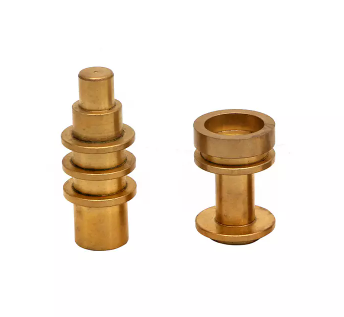
As modern engineering demands continuously push the boundaries of spatial design, conventional 3-axis kinematics occasionally fall short. This is where advanced precision technologies step in to bridge the gap and streamline production.
While a traditional mill moves linearly along the X, Y, and Z planes, a 5 axis CNC machining center introduces two additional rotational axes. This sophisticated articulation allows the cutting tool to approach the workpiece from virtually any vector.
The operational benefits here on the shop floor are massive. By maneuvering around the part, complex components can be machined on five distinct sides in a single, continuous operation. This done-in-one philosophy eradicates the compounding tolerance errors associated with an operator manually unclamping, repositioning, and re-indicating the part. It is the mandatory standard for carving complex organic geometries like turbine impellers, artificial bone implants, and aerodynamic aerospace brackets.
In stark contrast to massive industrial mills, micro CNC machining focuses on the fabrication of vanishingly small, high-precision components with features measured in micrometers. Hearing the distinct, high-pitched whine of a specialized spindle spinning at 100,000 RPM is common in these pristine environments. Here, cutting tools can be as minuscule as 0.01 millimeters in diameter.
This technology is the lifeblood of industries where miniaturization is strictly non-negotiable. It is heavily relied upon to produce life-saving medical devices, microscopic surgical effectors, and ultra-fine fiber-optic connectors.
The specific substrate you select drastically alters the necessary machine architecture, tooling geometry, and operational parameters.
Rigorous metal machining requires immense structural stability. Machine beds cast from massive blocks of iron are necessary to absorb the violent vibrations generated when high-torque spindles force carbide cutters through dense atomic lattices. For instance, processing AL6061-T6 requires different feeds and speeds compared to tougher alloys.
Transitioning to engineering plastics like PEEK, Delrin, ABS, and Polycarbonate introduces a completely different set of manufacturing hurdles. Plastics possess drastically lower melting points than their metallic counterparts. If an operator sets the spindle speed too high or the feed rate too slow, the resulting friction will instantly melt the plastic. This gums up the flutes of the cutting tool and permanently warps the component. Machinists must meticulously calibrate their parameters while utilizing razor-sharp, highly polished tooling designed for rapid chip evacuation.
The global manufacturing landscape is currently experiencing a massive shift driven by supply chain volatility and the demand for rapid iteration. Recent industry analyses highlight a surging need for high-mix, low-volume production capabilities. Rather than relying on massive overseas runs of a single component, modern procurement teams are favoring localized, highly adaptable manufacturing hubs.
To meet this demand, equipment manufacturers are heavily integrating artificial intelligence and sensor arrays directly into the machine spindle. These smart systems monitor vibration and thermal expansion in real-time, automatically compensating for tool wear before a part falls out of tolerance. Furthermore, the seamless integration of automated pallet changers and robotic loading arms allows modern shops to achieve lights-out manufacturing, running complex aerospace and medical parts 24/7 without direct human supervision. This blend of software intelligence and mechanical rigidity is drastically reducing lead times across the entire sector.
Selecting the appropriate manufacturing equipment is a critical strategic decision. It directly impacts your project overall return on investment, production timeline, and final product quality. When outsourcing fabrication services, aligning your part specifications with the correct machinery ensures optimal efficiency and eliminates unnecessary overhead costs.
The physical shape and geometric complexity of your component dictate the required machine kinematics. If your blueprint features primarily cylindrical or concentric elements like custom bolts, drive shafts, or hydraulic flanges, turning centers offer the most efficient route. Conversely, if your design incorporates multi-sided prismatic geometries, deep undercuts, or sweeping organic contours, standard 3-axis equipment will struggle. In these scenarios, a multi-axis machining center is required to access every necessary surface without costly manual repositioning.
Manufacturing precision varies wildly based on machine rigidity, thermal stability, and the quality of the control systems. Standard commercial brackets generally allow for looser tolerances, easily achieved on entry-level mills or routers. However, critical applications in the medical and optical fields often demand ultra-tight tolerances occasionally reaching ±0.001 millimeters. Achieving this level of exactitude requires highly rigid machining centers equipped with glass linear scales and active thermal compensation software.
Your intended production volume determines whether you should prioritize rapid setup times or rapid cycle times. For low-volume custom prototypes or one-off fixtures, standard 3-axis mills are highly cost-effective due to their simpler programming and workholding requirements. However, as production scales into the tens of thousands, cycle time optimization dictates profitability. High-volume runs demand automated solutions, such as Swiss-type lathes equipped with continuous bar feeders, which can slash cycle times to mere seconds per part.
Cost evaluation extends far beyond the raw material invoice. The final quote from a manufacturing partner is heavily influenced by machine hourly rates, programming complexity, and cutting tool depreciation. Advanced equipment carries steep capital costs and requires highly trained programmers. Consequently, their hourly operational rates are substantially higher. You should only specify these advanced processes if the part geometry strictly demands it, or if consolidating multiple manual setups into a single automated run yields a net financial saving.
| Part Characteristic | Primary Requirement | Recommended Machine Type | Typical Industry Application |
|---|---|---|---|
| Symmetrical / Cylindrical | High concentricity, threading | Lathe / Turning Center | Automotive shafts, fasteners |
| Prismatic / Flat | Slots, holes, basic 3D profiles | 3-Axis Mill | Consumer electronics enclosures |
| Complex / Multi-sided | Single-setup precision, undercuts | 5-Axis Mill | Aerospace impellers, medical joints |
| Microscopic Features | Ultra-tight tolerances | Micro Machining Center | Medical micro-implants, optics |
| Ultra-Hard Metals | Cutting without mechanical force | Wire / Sinker EDM | Injection molds, aerospace alloys |
| Sheet Materials | Rapid 2D profile cutting | Laser / Plasma / Waterjet | Architectural panels, HVAC parts |
The world of automated machining offers remarkably diverse manufacturing solutions, ranging from basic wood routers to highly advanced multi-axis centers capable of micron-level accuracy. Understanding the distinct mechanical advantages of each system ensures that you match the correct technology to your specific material, geometric complexity, and budget requirements. However, achieving ultimate success relies on much more than just the equipment. It heavily depends on the seasoned expertise of the machinists and engineers orchestrating the process.
Stop guessing which specific setup your project requires. By partnering with a dedicated manufacturing expert, you can secure custom design analysis and top-tier services tailored perfectly to your production goals. Whether you need rapid 3-axis aluminum prototyping or complex 5-axis titanium aerospace components, visit Yeeshine Technology today to streamline your supply chain and bring your most complex designs to life with uncompromising precision.
The fundamental difference lies in the kinematics of the cutting process. In milling, the workpiece remains firmly secured to a stationary or articulating table, while a multi-point cutting tool rotates at high speeds to shave away material. This process is ideal for flat, prismatic, or block-like parts. Conversely, in turning, the raw material is held in a chuck and rotated at high speeds, while a stationary, single-point cutting tool is fed into the material to shape it. Turning is strictly utilized for creating cylindrical, axisymmetric components.
You should specify multi-axis technology when your component design features highly complex, organic geometries that cannot be accessed from a single linear direction. It is also the correct choice when your part requires machining on four or five distinct sides. Using traditional 3-axis equipment for such parts requires operators to manually unclamp, rotate, and re-clamp the part multiple times. This introduces a severe risk of alignment errors. Upgrading eliminates these manual interventions, ensuring superior spatial accuracy and significantly reducing overall lead times.
Yes, modern manufacturing technologies can process virtually any metallic alloy, though the specific machine type must be carefully matched to the material properties. Standard mills and lathes easily handle aluminum, brass, and mild steels. However, when engineering requirements call for ultra-hard superalloys like Inconel, hardened tool steels, or aerospace titanium, traditional cutting tools may degrade too rapidly. In these instances, non-traditional methods like Electrical Discharge Machining or Abrasive Waterjet cutting are employed. This allows manufacturers to slice the hardest metals on earth without inducing thermal damage or mechanical stress.
The 3-axis milling machine remains the absolute workhorse of the global manufacturing industry. Its prevalence is due to its exceptional versatility, straightforward programming requirements, and overall cost-effectiveness. A standard 3-axis mill can successfully manufacture the vast majority of standard mechanical brackets, electronic enclosures, engine components, and tooling fixtures required by the automotive and consumer goods sectors. While it lacks the advanced capabilities of hybrid machines, its reliability makes it the foundational cornerstone of almost any modern machine shop.
Hourly rates vary significantly based on the complexity of the machine and local labor costs. A standard 3-axis mill might cost between $40 and $75 per hour to operate. In contrast, advanced 5-axis centers or specialized Swiss lathes can range from $85 to well over $150 per hour due to higher capital depreciation and the need for highly skilled programmers. Material costs, tooling wear, and setup times are billed additionally, which is why optimizing your design for the simplest machine possible is crucial for budget control.
For rapid prototyping and beginner operators, a standard 3-axis vertical machining center is universally recommended. The programming logic is straightforward, tooling is inexpensive, and workholding is generally as simple as clamping a block into a standard machine vise. It allows engineers to quickly prove out a concept in aluminum or plastic before committing to the expensive setups required by multi-axis or high-volume production equipment.


