Email: admin@yeeshine-tech.com WhatsApp: +86-13712868936

- All
- Product Name
- Product Keyword
- Product Model
- Product Summary
- Product Description
- Multi Field Search

Views: 0 Author: Site Editor Publish Time: 2026-10-23 Origin: Site


In modern hardware development, speed dictates market dominance. Getting a physical part on the test bench quickly enables immediate validation. However, selecting an incompatible fabrication method drains budgets and delays launches. Imagine needing to test a snap-fit enclosure before committing tens of thousands of dollars to steel tooling. This exact scenario highlights why selecting the correct physical modeling technique saves both the project timeline and the bottom line.
This comprehensive guide explores the various rapid manufacturing technologies available today. By understanding the distinct engineering nuances of these processes, teams can identify the exact right fit for unique budget constraints, material demands, and strict deadlines.
To fully grasp how to select the right process for a specific hardware project, engineers must first understand the foundational manufacturing categories. Every prototyping technology falls under one of three main manufacturing umbrellas. Each takes a fundamentally different approach to transforming a digital computer-aided design file into a tangible object.
Recent industry analyses tracking hardware development trends highlight a significant shift in how engineering teams approach these technologies. The global market is rapidly moving away from relying rigidly on a single method from concept to production. Instead, the prevailing trend favors a hybrid manufacturing strategy. Teams are increasingly leveraging additive methods for rapid iterative form-finding. They then swiftly transition to subtractive or formative processes for rigorous functional validation. Furthermore, sustainability and material efficiency have become major driving forces, pushing manufacturers to optimize waste reduction across all prototyping phases. This agile, multi-process approach drastically reduces time-to-market and mitigates late-stage design failures.
Additive manufacturing builds a component by depositing material one microscopic layer at a time. This category, universally recognized as 3D printing, is highly efficient regarding material waste. Because the machine only places material exactly where the digital model dictates, engineers can generate highly complex internal geometries. Features like lattice structures or enclosed conformal cooling channels would be physically impossible to carve out with traditional machining tools.
As the name implies, subtractive manufacturing works in the exact opposite manner. The process begins with a solid block, or billet, of raw material. Specialized cutting tools, guided by computer numerical control, systematically shave away the excess material until only the final shape remains. This technology is highly valued in the engineering sector. It provides exceptional dimensional accuracy and allows parts to be milled from the exact same solid metals or plastics intended for mass production.
Formative manufacturing neither builds in layers nor carves away material. Instead, it relies on shaping liquid or pliable raw materials using a pre-made mold or matrix. The material is poured or injected into the mold cavity and allowed to cure or harden. Processes like casting and rapid injection molding fall into this category. Formative methods are generally utilized when a project requires multiple identical copies of a part. The initial time investment of creating the mold pays off through drastically faster per-unit production times.
When most product managers hear the term rapid prototyping, their minds immediately jump to additive technologies. Over the past two decades, this sector has revolutionized early-stage product development by offering unparalleled speed and geometric flexibility. However, exploring the nuances reveals that not all additive technologies yield the same results.
Stereolithography is one of the oldest yet most precise additive technologies available. The process utilizes an ultraviolet laser to meticulously cure liquid photopolymer resin layer by layer. After peeling the part off the build plate and washing it in isopropyl alcohol, the resulting model is renowned for its incredibly smooth surface finish, high feature detail, and tight tolerances.
Because the layers are chemically bonded during the curing process, these parts exhibit high isotropy. This means their strength is relatively uniform in all directions. Consequently, this method stands out as the absolute best choice for visual models and ergonomic testing. It is also the industry standard for creating a highly detailed SLA prototype that will later be used as a master pattern in formative manufacturing.
Fused deposition modeling is the most widely recognized and budget-friendly additive method. This printer works by melting a continuous thread of thermoplastic filament, such as PLA or ABS, and extruding it through a heated nozzle onto a build platform.
While these parts generally display visible layer lines and possess lower dimensional accuracy compared to resin-based methods, the process is incredibly cheap and fast. It is the ideal technology for basic proof-of-concept models and rough sizing checks. Early-stage iterations where aesthetics take a backseat to basic form verification rely heavily on this method.
Selective laser sintering utilizes a high-powered laser to fuse small particles of polymer powder, typically nylon, into a solid structure. The most significant advantage here is that the unsintered powder acts as a natural support structure for the part being built.
This unique characteristic eliminates the need for breakaway or dissolvable supports. Engineers can print highly complex, interlocking, or moving parts in a single build. Parts created this way possess excellent mechanical durability. Therefore, the method is ideal for functional prototypes, snap-fit enclosures, and living hinges.
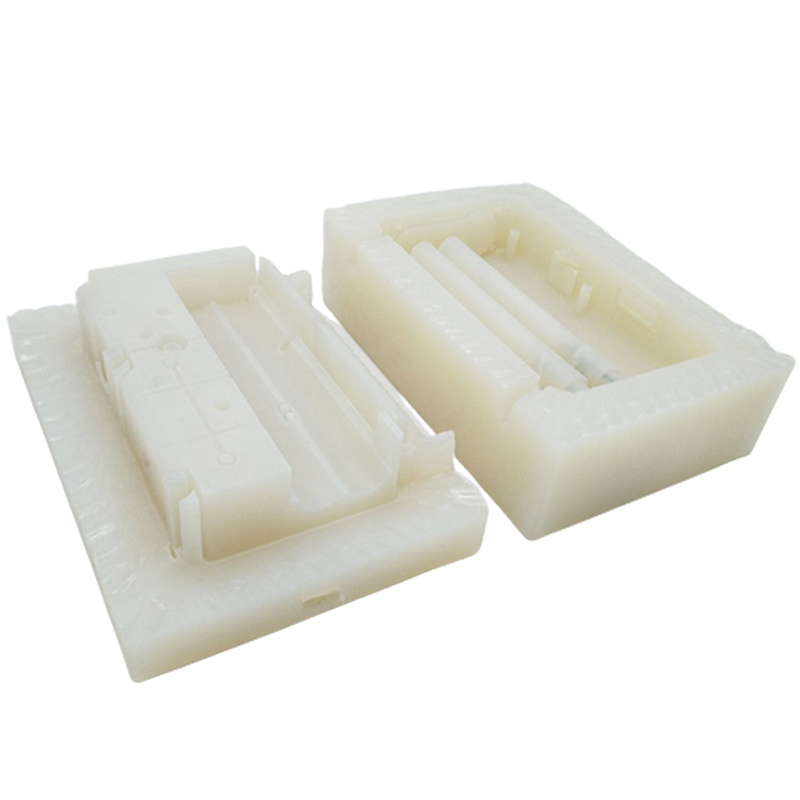
While additive manufacturing is excellent for speed and form-finding, it often falls short during rigorous mechanical, thermal, or chemical testing. This is exactly where subtractive manufacturing steps in to bridge the gap.
Utilizing high-speed milling and turning centers, CNC prototyping cuts parts directly from solid blocks of material. The primary reason hardware teams choose this route over additive methods is material fidelity. Setting up workholding fixtures and dialing in tool offsets takes a bit more time. However, it allows teams to test designs using the exact material intended for final production. Whether a project requires aerospace-grade Aluminum 6061, corrosion-resistant Stainless Steel 316, lightweight Titanium, or engineering-grade plastics like Delrin and PEEK, subtractive machines can handle it seamlessly.
Specifically, subtractive fabrication offers advantages that additive methods simply cannot match. It consistently achieves extremely tight tolerances, routinely hitting ±0.01mm to ±0.05mm. This precision ensures that complex assemblies fit together perfectly. The mechanical strength of a machined part is superior because the raw billet has a continuous internal grain structure, untainted by layer adhesion weaknesses. Therefore, it remains the definitive choice for functional testing, custom metal brackets, and parts requiring precision-cut threads.
There is a distinct gap in the product development cycle between needing a single prototype and needing ten thousand production units. If a project requires 10 to 50 high-quality parts for a beta launch, machining them individually might blow the budget. Conversely, printing them might not yield the required aesthetic or material properties.
The solution to this low-volume production challenge is a highly efficient formative manufacturing process. The workflow begins by creating a highly accurate master pattern, typically a meticulously polished resin prototype or a precision machined component. This master pattern is suspended in a vat, and liquid silicone is poured around it. Once the silicone cures, operators carefully extract the delicate master from the block, leaving behind a perfect negative cavity. This technique is widely known as silicone mold casting.
Next, liquid polyurethane resins are mixed and poured into the mold inside a vacuum chamber. The vacuum environment is critical. It actively draws out all trapped air bubbles from the liquid resin, ensuring the final cast part is dense, structurally sound, and free of surface defects. This vacuum casting process perfectly replicates complex textures, specific Pantone colors, and varying levels of material flexibility. It is the ultimate method for producing beta testing units, high-fidelity marketing samples, and functional prototypes for crowdfunding campaigns.
When the required volume exceeds the lifespan of a soft mold, which typically degrades after 20 to 25 casts, a new strategy is required. If the project is not yet ready for the massive capital expenditure of hardened steel production molds, rapid injection molding becomes the logical next step.
This process utilizes the exact same principles as traditional mass-production injection molding, but with a strict focus on speed and cost reduction. Instead of machining molds from expensive, difficult-to-cut P20 or H13 tool steel, rapid molds are typically milled from high-grade aluminum alloys like Alumec 89. Aluminum is much softer and faster to machine than steel. This material choice drastically reduces both the tooling cost and the lead time.
While an aluminum mold cannot withstand millions of injection cycles, it is more than capable of producing hundreds or even thousands of parts. The primary advantage here is allowing engineers to use actual production-grade thermoplastic pellets. This ensures the component undergoes the exact same thermal and molding stresses as the final product. It validates the design for mass manufacturability and identifies potential sink marks or warp issues early in the engineering phase.
Selecting the optimal manufacturing process requires an objective evaluation of mechanical requirements, dimensional accuracy, and production volume. Engineering teams cannot rely on a universal approach. Instead, they must analyze the empirical data associated with each technology.
To facilitate this decision-making process, the following decision matrix outlines the standard parameters for the most common fabrication technologies.
| Manufacturing Method | Primary Advantage | Typical Tolerance | Ideal Volume | Surface Finish Quality |
|---|---|---|---|---|
| CNC Machining | High precision and real materials | ±0.01mm to ±0.05mm | 1 - 50 parts | Excellent, Machined or Polished |
| SLA Printing | Intricate details and smooth surface | ±0.1mm to ±0.15mm | 1 - 10 parts | Very High, Minimal layer lines |
| FDM Printing | Cost-effective speed | ±0.2mm to ±0.5mm | 1 - 10 parts | Moderate, Visible layer lines |
| SLS Printing | Complex geometries without supports | ±0.1mm to ±0.3mm | 1 - 20 parts | Moderate, Slightly porous |
| Polyurethane Casting | Production-grade aesthetics | ±0.15mm to ±0.3mm | 10 - 50 parts | Excellent, Replicates master pattern |
When comparing subtractive to additive manufacturing, the primary differentiator lies in material properties and structural integrity. Subtractive methods involve carving a part from a solid block of extruded or cast billet material. This yields parts with isotropic properties where mechanical strength is uniform in all directions. Engineers typically specify this when components must undergo rigorous functional testing, load-bearing assessments, or chemical resistance trials.
Conversely, additive methods build parts layer by layer. This nature often results in anisotropic properties, where the vertical build direction is structurally weaker due to inter-layer adhesion limits. In contrast, additive printing excels in creating complex internal geometries that are physically impossible to machine with standard tooling.
The debate between these two methods usually centers around batch size and surface finish requirements. For a single proof-of-concept model, resin-based printing is highly efficient and produces parts with exceptional resolution. Yet, if a project requires 20 identical units for a focus group, printing them individually becomes time-consuming and expensive.
This is where formative casting becomes the superior choice. By using a single high-resolution printed model as the master pattern to cure a soft mold, operators can rapidly produce 15 to 25 identical parts. The resulting cast parts mimic the exact texture of the master pattern and can be color-matched. This offers a final-product aesthetic that raw printed parts cannot achieve without extensive post-processing.
Product managers and hardware engineers must evaluate multiple variables before initiating a build. Making an evidence-based decision requires analyzing the following four critical factors to ensure alignment with project goals.
The intended use case dictates the necessary manufacturing technology. If the goal is purely aesthetic, such as evaluating ergonomics or overall proportions, dimensional strength is secondary. High-resolution additive methods or formative casting are ideal here because they provide a smooth surface ready for painting. On the other hand, when testing how multiple components interact mechanically, subtractive machining provides the tight tolerances required. This verifies snap fits, sliding mechanisms, and fastener alignments perfectly.
Material selection is intrinsically linked to the fabrication method. If a design requires Aluminum, Stainless Steel, Brass, or Titanium, subtractive machining is the most reliable method. For parts requiring specific thermal or chemical resistance, like PEEK, Ultem, or Teflon, machining remains the primary option. Alternatively, if the assembly needs flexible parts like gaskets or soft-touch grips, silicone casting is highly effective. It utilizes specialized polyurethanes that simulate various Shore A hardness levels.
Understanding the cost-per-part curve is essential for budget optimization. For quantities of 1 to 5, additive printing requires zero tooling. This makes the setup cost negligible and serves as the most economical choice. As volumes increase to the 10 to 50 range, the per-unit cost of printing remains static, while machining setup costs can make small batches expensive. Formative casting bridges this gap perfectly by amortizing the initial mold cost over 20 to 30 parts. For volumes exceeding 100 parts, rapid injection molding using aluminum tooling becomes the most financially viable option.
Time-to-market pressures often force compromises. Basic filament or resin printing can yield physical parts within 24 to 48 hours. Subtractive machining typically requires 3 to 7 days, as it involves CAM programming, fixture setup, and tool changes. Formative casting generally takes 7 to 10 days. This accounts for the sequential steps of printing a master pattern, curing the mold, and casting the final polyurethane parts. Teams must balance the urgency of the deadline against the required fidelity of the model.
Transitioning a digital CAD file into a physical object requires more than just access to manufacturing equipment. It demands deep engineering expertise. Because no single technology solves every hardware development challenge, partnering with a manufacturer that houses multiple technologies under one roof is highly advantageous.
When a supplier offers subtractive machining, additive printing, and formative casting simultaneously, they provide objective, unbiased recommendations. These suggestions are based strictly on project geometry, material, and budget requirements, rather than pushing clients toward the only machine they own.
When evaluating potential manufacturing partners, look for specific indicators of quality and reliability. ISO 9001 certification demonstrates a documented commitment to quality management systems. Robust coordinate measuring machine capabilities ensure that parts are rigorously inspected against the original data before shipment. Furthermore, a reliable partner will offer proactive design for manufacturability feedback. Identifying potential machining risks or wall-thickness issues before production begins saves both time and capital.
Physical modeling during product development is not a universal process. Selecting the ideal method significantly accelerates the product development cycle while mitigating financial risks. Whether utilizing subtractive machining for robust metal parts, a resin-based printed model for intricate geometric details, or soft mold casting for low-volume aesthetic runs, evaluating specific project needs carefully is paramount.
Are you ready to bring your engineering concepts to life? Visit Yeeshine Technology to explore comprehensive manufacturing solutions. Upload your CAD files today for a detailed quote, and let experienced engineering experts guide your hardware journey from initial concept to market-ready reality.
Cost-effectiveness is entirely dependent on the required production volume and material. For a single basic proof-of-concept model, fused deposition modeling printing is definitively the cheapest option. It utilizes inexpensive thermoplastic filaments and requires zero tooling. However, economies of scale shift rapidly. If an engineering team requires a batch of 20 to 50 high-quality parts with smooth surface finishes, printing each part individually becomes cost-prohibitive. In this scenario, formative casting becomes much more cost-effective per unit. The cost of a single soft mold is distributed across the entire batch.
Yes, within the industrial manufacturing sector, these terms are used interchangeably to describe the exact same process. The procedure begins by placing a master pattern inside a vat and pouring liquid silicone around it to create a negative cavity. The term vacuum casting highlights the subsequent step where liquid polyurethane resin is injected into this mold inside a vacuum chamber. This vacuum environment forces trapped air out of the resin. It ensures the final cast part is dense, structurally sound, and free of surface voids or internal bubbles.
The lead time for a machined prototype is dictated by the geometric complexity of the part, the selected material, and the current capacity of the machine shop. Generally, standard milled parts can be programmed, machined, inspected, and shipped within 3 to 7 business days. Components requiring complex 5-axis machining, deep cavity milling, or specialized post-processing treatments like Type III hard anodizing will naturally extend the lead time. Many professional services offer expedited options, delivering simple milled parts in as little as 48 hours.
Stereolithography is selected primarily for its superior resolution and exceptional surface finish. Unlike filament-based printing, which extrudes melted plastic through a nozzle and leaves distinct visible layer lines, this resin-based method uses a precise ultraviolet laser to cure microscopic layers of photopolymer. This results in highly accurate parts with tight tolerances and a smooth glass-like finish. It is the industry standard for creating detailed visual models and the flawless master patterns required for formative casting workflows.
Rapid prototyping is a broad product development strategy aimed at quickly fabricating a scale model or physical part to test a design. 3D printing is simply one of the specific manufacturing tools used to achieve that goal. While additive printing is the most common tool used for quick modeling, rapid prototyping also heavily utilizes subtractive machining and formative casting. The overarching concept focuses on speed and iteration, whereas printing refers only to the layer-by-layer additive process.
Material selection depends directly on the testing environment the part will face. If the component requires functional load-bearing tests or high thermal resistance, engineers must select real engineering-grade metals or plastics via subtractive machining. For purely visual or ergonomic models, standard photopolymer resins or polyurethanes used in casting are sufficient. Always align the material choice with the specific validation goals of the current development phase to avoid overspending on unnecessary material properties.


