Email: admin@yeeshine-tech.com WhatsApp: +86-13712868936

- All
- Product Name
- Product Keyword
- Product Model
- Product Summary
- Product Description
- Multi Field Search


Engineers, designers, and product developers often stare at a completed CAD file and face a critical crossroad. Which manufacturing method will bring this digital concept into the physical world? Both processes rely on computer-controlled automation and digital blueprints. This leads many to wonder if these technologies achieve the same end result.
The short answer is absolutely not. They share digital origins but represent exact opposites in modern parts manufacturing. Choosing the wrong method can easily ruin project budgets. It can delay timelines and result in catastrophic part failure during field testing. In practical terms, one process builds a component from the ground up. The other violently yet precisely carves it out of a solid block of metal or plastic.
To truly understand why these two technologies dictate different project outcomes, you must look at how they manipulate raw materials. The method of forming the final geometry changes everything about the part's physical behavior.
What is Additive Manufacturing?
This process creates objects entirely from scratch. The machine reads a digital file and deposits material. This is typically melted thermoplastic filament, liquid photopolymer resin, or sintered metal powder. Each pass bonds to the one beneath it until the complete three-dimensional shape emerges. It is a process of sheer addition. You build complex geometries by placing material strictly where the design requires it.
What is Subtractive Manufacturing?
In stark contrast, subtractive manufacturing begins with a solid, uniform block of raw material. We call this a blank or workpiece on the shop floor. Computer-controlled cutting tools systematically chip away excess material. Picture a classical sculptor carving a statue from a single block of marble. The machine cuts away everything that is not part of the final engineered design. The result is a highly durable part retaining the original grain structure of the raw material.
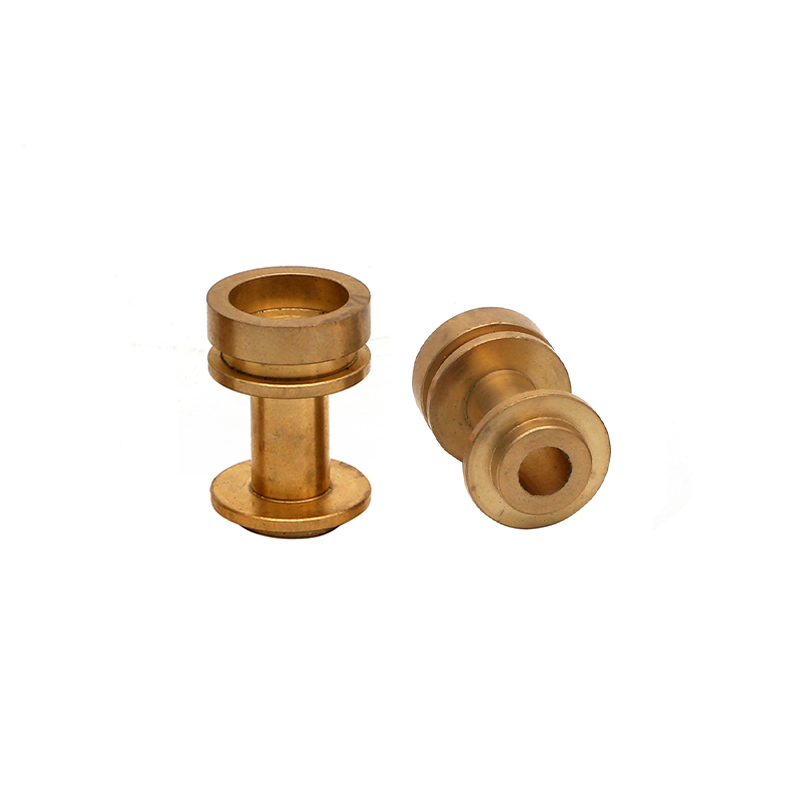
Walk into any modern machine shop. You will immediately hear the hum of spindles and the sound of carbide cutting metal. This ecosystem is highly automated, incredibly rigid, and built for precision. While specific machines vary across mills and lathes, the foundational workflow remains consistent.
First, an engineer drafts a 3D model using professional CAD software. They define every curve, tapped hole, and surface finish requirement. Next, the digital model moves into CAM software. Here, programmers calculate optimal cutting routes and translate them into G-code. This programming language dictates the exact spindle RPM, feed rates, and coordinate movements.
The physical setup comes next. A skilled machinist secures the raw material block into a heavy-duty workholding fixture. Absolute rigidity is mandatory to prevent chatter. The necessary cutting tools are then loaded into the automatic tool changer. Finally, the machine runs the G-code. It spins cutters at blistering speeds to shear the material away with microscopic precision.
Beyond standard three-axis cutting, industrial equipment has evolved dramatically. Today, 5 axis machining represents the pinnacle of this technology. The cutting tool and the workpiece articulate across five different axes simultaneously. This dynamic movement allows the cutter to reach deep undercuts and intricate angles. A technician never needs to manually unclamp and reposition the heavy billet. This drastically increases geometric capabilities while maintaining flawless alignment.
While also relying on automation, the execution here bridges the gap between digital design and physical reality through a completely different methodology. It requires less heavy machinery and focuses on material deposition.
The initial CAD file is processed through specialized slicing software. This program mathematically dissects the 3D model into hundreds of flat, 2D cross-sectional layers. The printer reads these planar layers and begins the physical build. Depending on the machine, you might smell melting PLA plastic or watch a laser cure a vat of liquid resin.
Several standard technologies dominate this space. Fused Deposition Modeling extrudes melted filament through a heated nozzle. Stereolithography uses an ultraviolet laser to cure liquid resin. Selective Laser Sintering utilizes a high-powered laser to fuse micro-particles of polymer powder into a solid mass. The massive popularity of 3D printing stems from its low barrier to entry. Engineers can iterate designs rapidly without programming complex tool paths or designing custom workholding jigs.
When making an engineering decision, looking past the initial hype is critical. You must focus on empirical data. Both technologies have distinct operational parameters and ideal use cases. Let us look at the hard numbers.
| Feature | Subtractive Machining | Additive Manufacturing |
|---|---|---|
| Material Integrity | Isotropic. Uniform strength in all directions. | Anisotropic. Weaker along the Z-axis layer lines. |
| Standard Tolerances | Extremely tight. Typically ±0.01 mm to ±0.05 mm. | Moderate. Typically ±0.1 mm to ±0.2 mm. |
| Surface Finish | Smooth right off the machine. Can achieve Ra 0.8 easily. | Visible stair-stepping. Requires heavy post-processing. |
| Ideal Production Volume | Functional prototypes to high-volume mass production. | Single units and low-volume visual models. |
Material behavior under stress comes down to how it was formed. Machined components come from forged or extruded solid billets. Because the internal grain structure remains uninterrupted, the final part exhibits isotropic properties. It has uniform tensile strength and durability in every direction. Furthermore, subtractive equipment effortlessly processes a vast array of industrial-grade materials. This includes aerospace-grade Aluminum 7075, Stainless Steel 316, Titanium, and high-performance plastics like PEEK.
Conversely, additive parts are built in layers. This creates anisotropic properties. The bond between the printed layers along the Z-axis is inherently weaker than the continuous material within a single horizontal plane. Under heavy mechanical stress, an additively manufactured part is significantly more likely to delaminate or fracture.
For industries like aerospace, medical device manufacturing, and automotive engineering, dimensional accuracy is non-negotiable. Subtractive manufacturing is the undisputed winner here. A well-calibrated 5-axis industrial mill can hold dimensional tolerances as tight as ±0.01 mm. The cutting tools leave a remarkably smooth surface finish, often achieving Ra 0.8 or better straight off the machine bed.
Additive methods struggle to achieve this level of microscopic accuracy. Thermal expansion, plastic shrinkage during cooling, and the physical thickness of the extruded layers limit tolerances. Additive parts almost always feature visible stair-stepping layer lines. Achieving a professional look requires intensive manual sanding or chemical vapor smoothing.
Looking at recent shifts in the global manufacturing sector, the narrative has moved entirely away from a winner-takes-all battle. Current market analysis reveals a surging demand for integrated, smart factory ecosystems. The conversation is no longer about which technology is better. It is about how they integrate to solve complex engineering problems.
Traditional machining centers are becoming exponentially smarter. The integration of AI-driven predictive maintenance, automated robotic part loaders, and real-time tool wear sensors pushes efficiency to unprecedented heights. Industry consensus indicates that additive methods will continue to dominate hyper-customized, low-volume sectors. Think of bespoke medical implants and lightweight drone brackets. Meanwhile, subtractive machining retains its iron grip on mass-market automotive components and heavy industrial parts where material density and rapid scaling are paramount.
Understanding specific strengths allows engineering teams to deploy technology where it provides the highest return on investment. Stop guessing and look at your project requirements.
You should opt for additive methods when:
You should choose subtractive machining when:
Consumer-focused media heavily hypes the novelty of building parts layer by layer. This has created a prevalent myth that traditional machining will eventually become obsolete.
This is fundamentally false. From a frontline engineering standpoint, they are complementary technologies. The physics of melting and re-solidifying materials simply cannot replicate the sheer density, fatigue resistance, and structural integrity of a forged block of metal. The immense material versatility and blistering production speed of a carbide end-mill cannot be matched by a laser slowly sintering micro-layers of powder. Machining will remain the backbone of global manufacturing for the foreseeable future.
Both processes magically turn digital files into physical objects, but their execution could not be more different. One removes material to uncover a precise shape. The other adds material to build it from nothing.
Use additive methods for quick visual models and early-stage conceptualization. Choose subtractive machining when your project demands uncompromising accuracy, superior material integrity, and functional durability in the field. By understanding the unique roles each plays on the factory floor, you can protect your budget, accelerate your timeline, and ensure the success of your next engineering endeavor.
Ready to bring your engineered designs to life? Whether you need rapid prototyping or high-precision volume production, choosing the right partner is critical. Explore industry-leading manufacturing solutions and strict quality control standards at Yeeshine Technology to get your project moving today.
It entirely depends on the production volume and the required material. For a single basic plastic prototype, additive methods are almost always cheaper due to the lack of setup time. However, if you need parts made from industrial metals or are ordering a batch of ten or more units, traditional machining quickly becomes significantly more cost-effective per unit.
Subtractive machining is objectively far more accurate. A standard industrial mill can easily hold tolerances of ±0.01 mm to ±0.05 mm, achieving perfectly smooth surface finishes. Standard printers generally struggle to achieve tolerances better than ±0.1 mm and typically leave visible layer lines.
Traditionally, no. The two processes require entirely different hardware. One uses high-torque spindles and sharp cutting tools, while the other relies on heated extruders or lasers. However, the industry has recently seen the introduction of highly specialized hybrid machines. These industrial-scale units combine an additive extrusion head with a subtractive milling tool in one enclosed system.
It is a functional test version of a component created by carving away material from a solid block. Because it is machined from the exact raw material that will be used in final mass production, it possesses the exact mechanical properties required for rigorous thermal, chemical, and physical stress testing.
While both can process plastics and metals, their capabilities differ greatly. Additive focuses heavily on PLA, ABS, Nylon, and specific metal powders like titanium or stainless steel for sintering. Subtractive methods can handle almost any solid material. This ranges from soft plastics like Delrin to incredibly hard superalloys like Inconel and Tool Steel, without changing the core chemistry of the material.
Machined parts typically come off the bed with a smooth, professional finish. Depending on the toolpath and feed rate, you can achieve a mirror-like finish without extra work. Additive parts almost universally come off the build plate with a rough, stepped texture due to the layer-by-layer deposition. They require sanding, bead blasting, or chemical smoothing to look like a finished consumer product.


