Email: admin@yeeshine-tech.com WhatsApp: +86-13712868936

- All
- Product Name
- Product Keyword
- Product Model
- Product Summary
- Product Description
- Multi Field Search

Views: 0 Author: Site Editor Publish Time: 2026-10-26 Origin: Site


Does operating a machine count as actual engineering? The line between a floor operator and a design engineer blurs daily as modern technology advances. Many wonder if Computer Numerical Control belongs strictly in the realm of trades. Has it earned its place as a true engineering discipline? The reality is clear. It solves complex production issues using deep technical skills, rigorous mathematics, and material science.
You will learn exactly how this automated process works from an engineering perspective. We will explore its vital role in modern production, dissect the technical mechanics on the shop floor, and clarify why mastering these systems is crucial for today's mechanical designers.
To accurately answer whether this field qualifies as engineering, we must establish objective definitions. Engineering is the application of empirical evidence, mathematics, and scientific principles to solve real-world problems. Conversely, automated machining is a manufacturing process where pre-programmed computer software dictates the precise movement of factory tools.
While the machining process itself is a manufacturing method, the two concepts are deeply interconnected. The highly specialized skill set required to manipulate these systems falls squarely under the broader umbrellas of mechanical and manufacturing disciplines. You do not merely push a green button to run a cycle. A true professional in this space must possess a rigorous understanding of metallurgy, tool kinematics, thermal dynamics, and spatial geometry.
Consider the reality of translating a theoretical blueprint into a physical part. It requires profound engineering judgment. Programmers must calculate optimal feed rates to prevent tool deflection. They adjust spindle speeds to avoid work hardening. They map out tool paths that ensure efficient chip evacuation. Therefore, while the machine is the instrument, the programming, optimization, and troubleshooting of that instrument are fundamentally engineering tasks.
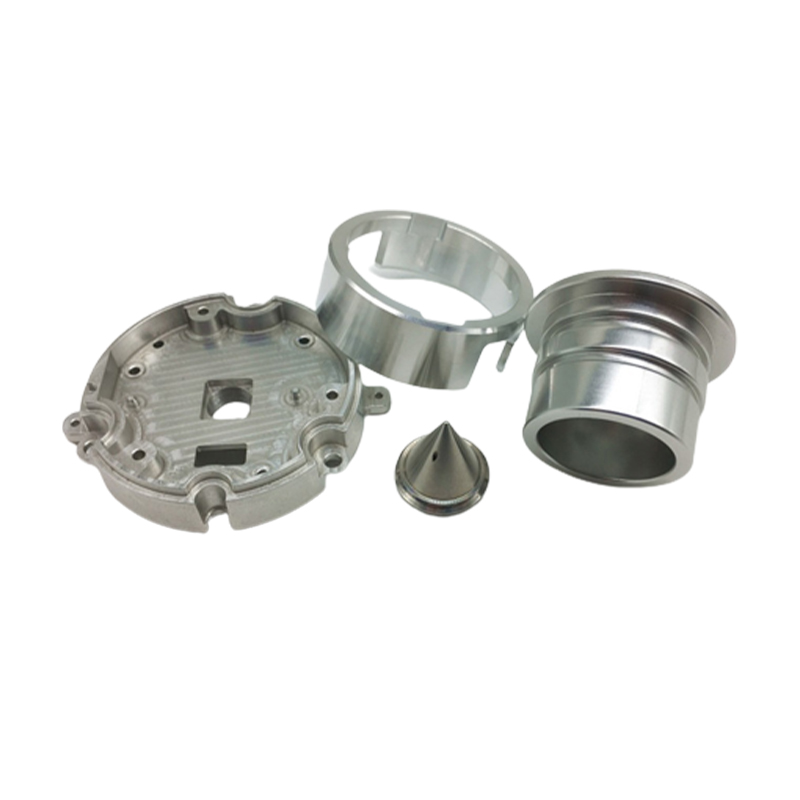
Manufacturing engineering focuses on designing, analyzing, and optimizing production workflows. Within this ecosystem, automated machining serves as the critical bridge between a digital concept and tangible application.
When mechanical designers draft a new component, that design initially exists only as a perfect digital model. However, theoretical perfection often clashes with physical reality. During the prototyping phase, automated subtractive methods allow teams to produce a physical model using the exact end-use material. This capability is vital for empirical testing. It enables engineers to evaluate stress resistance, thermal conductivity, and mechanical fit long before committing massive budgets to mass-production tooling like injection molds.
High-stakes environments demand exact specifications. A few microns off? That means catastrophic failure in a high-speed mechanical assembly. Traditional manual machining inevitably introduces a margin of human error, regardless of the machinist's skill level. Automated systems fulfill these strict requirements through precision machining, consistently achieving tolerances as tight as ±0.002 mm for demanding industrial applications. By utilizing closed-loop feedback systems that adjust for microscopic tool wear in real-time, the equipment ensures the ten-thousandth part produced is geometrically identical to the first.
Understanding the technical mechanics requires breaking down the workflow. The entire system operates on a subtractive principle. Material is systematically carved away from a solid metal or plastic billet to reveal the final shape.
The journey begins on a screen. Using sophisticated Computer-Aided Design software, engineers create a highly detailed 3D solid model. This digital twin defines the geometric shape, the specific tolerances, surface finishes, and material properties required for the component's end-use application.
Machinery cannot read raw design files. The digital model must be processed through Computer-Aided Manufacturing software. This translates the geometry into proprietary languages known as G-code and M-code. G-code controls the physical kinematics, dictating where the spindle moves, how fast it travels, and what path it follows. M-code handles hardware functions, such as toggling high-pressure coolant, executing tool changes, or braking the spindle.
Before any metal is cut, a technician must physically prepare the environment. This involves critical workholding strategies. Raw material is secured into the machine using custom soft jaws, modular vises, or dedicated fixtures to prevent chatter and vibration. The operator loads the required end mills and drills into the tool magazine. Finally, they calibrate the system by finding the zero point using an electronic edge finder, establishing the exact spatial coordinates from which all movements will be calculated.
Once calibrated and verified, the program executes. Advanced centers operate on multiple axes simultaneously. This is especially true when executing custom micro CNC machining for intricate industrial equipment. The cutting tool approaches the workpiece from virtually any angle, carving out complex undercuts and internal cavities without requiring the operator to manually unclamp and reposition the part.
The terminology encompasses a wide variety of specialized equipment. Depending on the part's geometry, material hardness, and production volume, engineers must specify the correct machinery for the job.
Milling utilizes rotating multipoint cutting tools to remove material from a stationary workpiece. It remains the standard choice for creating flat surfaces, deep pockets, and complex 3D contours.
Unlike milling, turning spins the workpiece at high speeds while a single-point cutting tool remains stationary. The tool glides parallel to the axis of rotation. This method is exceptionally efficient for producing symmetrical, cylindrical parts such as drive shafts, threaded rods, and custom fasteners. Furthermore, modern turning centers often feature live tooling. This integrates small milling spindles right into the lathe to drill off-center holes without moving the part to a second machine.
To accommodate extreme materials or unique shapes, the industry utilizes specialized variants. Routers are optimized for slicing through softer materials like engineering plastics over large surface areas. Plasma and Laser Cutters utilize ionized gas jets or focused optics to slice through heavy steel plates rapidly. Electrical Discharge Machining uses controlled electrical sparks to erode material at a microscopic level. It is crucial for machining ultra-hardened tool steel or creating delicate micro-features that would instantly snap a standard carbide end mill.
When engineering teams evaluate production methods, the decision between computer-controlled systems and manual fabrication is driven by empirical data, project scale, and risk mitigation. Traditional fabrication relies heavily on the physical skill, muscle memory, and experience of the machinist. While manual methods remain relevant for rough initial prototyping, they introduce unpredictable variables.
By removing human kinetic variability from the cutting process, automated systems provide highly predictable outcomes. To understand why modern workflows prioritize this technology, consider these operational metrics:
| Comparison Metric | Traditional Fabrication | Automated CNC Machining | Engineering Impact |
|---|---|---|---|
| Accuracy & Tolerance | Moderate; typically limited to ±0.005 inches depending on operator skill. | Extremely high; capable of holding tight tolerances down to ±0.0001 inches or ±0.002 mm. | Ensures critical components fit perfectly in complex mechanical assemblies. |
| Consistency | Variable; human fatigue leads to slight deviations across a batch. | Near-perfect; the machine follows the exact code for every single cycle. | Eliminates batch-to-batch variation, which is crucial for quality control. |
| Production Speed | Slower; requires manual tool changes, measurements, and constant monitoring. | Highly efficient; capable of continuous operation with automatic tool changers. | Accelerates time-to-market and reduces the marginal cost of high-volume runs. |
| Geometric Complexity | Limited; multi-axis curves and intricate internal cavities are nearly impossible. | Advanced; 5-axis machines easily navigate complex, organic geometries. | Frees mechanical designers from traditional manufacturing constraints. |
The application of numerical control technology extends far beyond basic metal cutting. It is a foundational pillar for industries where failure is simply not an option. The principles of CNC engineering are applied rigorously across high-stakes sectors, each demanding strict regulatory compliance.
Components in the aerospace sector endure extreme thermal fluctuations and intense mechanical stress. Designers frequently specify notoriously difficult-to-machine superalloys like Titanium and Inconel. Subtractive manufacturing is utilized to produce turbine blades and structural airframes, strictly adhering to quality standards to prevent material deformation.
In the medical device industry, absolute precision and biocompatibility are non-negotiable. Highly calibrated multi-axis machines carve surgical instruments, orthopedic bone screws, and complex diagnostic housings from surgical-grade stainless steel and PEEK plastics. The ability to consistently reproduce micro-components without deviation ensures compliance with rigid medical standards.
From consumer vehicles to professional motorsport racing, the automotive industry utilizes this technology for rapid iteration and end-use production. Engine blocks, custom transmission gears, and fluid housings require exact geometrical alignments. Automated machining allows automotive teams to transition seamlessly from a digital aerodynamic concept to a physical testable part in mere hours.
Transitioning a product from a digital file to a tangible component requires more than just access to a spindle. It requires a capable manufacturing partner. For procurement officers and lead designers, selecting a vendor is a critical supply chain decision that impacts product viability and launch timelines.
When evaluating a potential partner, prioritize their Quality Management Systems. Look for facilities holding relevant ISO certifications. A reliable vendor will maintain a dedicated quality assurance department equipped with Coordinate Measuring Machines to verify that the finished parts perfectly match your drawing's tolerances. You need a partner who can guarantee a surface finish of Ra 0.8 or better when the print calls for it.
Material versatility is another critical indicator. Your chosen facility should demonstrate a proven track record of handling the specific materials your project requires. Different alloys behave uniquely under cutting loads, and an experienced engineer will know exactly how to adjust parameters to prevent thermal distortion.
Most importantly, the best manufacturing partners act as an extension of your own team. Before a single piece of metal is cut, their programmers should analyze your files to offer proactive Design for Manufacturability feedback. They will identify unnecessarily tight tolerances or deep pockets that could inflate costs. For teams seeking a seamless transition from prototype to production, collaborating with a highly vetted industrial CNC service is a strategic imperative. Accessing expert capabilities ensures your mechanical designs are realized with uncompromising quality and efficiency.
While subtractive manufacturing is an established technology, it is continuously evolving. Industry analysis reveals a significant shift in perception. The broader manufacturing community now recognizes this as a sophisticated engineering domain, heavily integrated with digital twin technology and the Internet of Things.
One of the most profound trends we see on the shop floor is the integration of Artificial Intelligence and Machine Learning into programming software. Traditionally, an engineer relied on experience to calculate cutting speeds. Today, predictive AI algorithms analyze thousands of previous machining cycles to anticipate tool wear. They automatically adjust feed rates in real-time to optimize surface finish and prevent catastrophic tool breakages during high-value runs.
Additionally, the shift toward fully automated manufacturing is accelerating. By combining automated pallet changers, robotic part-loading arms, and closed-loop laser inspection systems, modern machine shops operate continuously. The equipment monitors its own thermal expansion and automatically offsets coordinates to maintain strict tolerances, even as ambient factory temperatures fluctuate overnight.
Hybrid manufacturing systems represent another massive leap forward. These advanced units combine additive 3D printing with subtractive machining within the same enclosed envelope. An engineer can program the machine to build up a complex internal cavity using laser metal deposition, and immediately use a milling spindle to refine the exterior mating surfaces. This hybrid approach shatters traditional constraints, opening up entirely new possibilities for component design.
Computer Numerical Control technology is the undisputed foundation of modern manufacturing. It serves as the vital link that translates digital design directly into physical reality. Mechanical designers and project managers rely heavily on this process to achieve the accuracy and material integrity required for critical applications.
By mastering the engineering principles behind these systems, design teams can drastically improve product scalability, reduce waste, and ensure consistent quality. Choosing a reliable manufacturing partner who understands both the software programming and the physical metallurgy is the best way to bring your innovative concepts to life. If your project demands strict tolerances, complex geometries, and reliable scalability, explore the advanced manufacturing solutions at Yeeshine Tech to ensure your next engineering design is executed flawlessly.
While holding a bachelor's degree in mechanical or manufacturing engineering provides a strong theoretical foundation in materials science and physics, it is not strictly required. Many highly skilled programmers enter the field through technical trade schools, apprenticeships, and years of hands-on experience as machine operators. However, engineers who understand programming possess a distinct advantage, as they can design parts that are inherently easier and more cost-effective to manufacture.
The distinction lies in the scope of responsibility and technical input. An operator is primarily responsible for the physical execution on the factory floor. This includes loading raw billets, securing the workholding, measuring tool offsets, and ensuring the machine runs safely. A programmer or manufacturing engineer works upstream. They analyze the design models, select the appropriate carbide cutting tools, calculate the complex mathematical parameters for speeds and feeds, and write the code that dictates the machine's exact movements.
Yes, possessing practical knowledge of subtractive manufacturing is an incredibly valuable asset for any mechanical designer. Engineers who understand how parts are actually cut are capable of applying Design for Manufacturability principles effectively. This prevents the common scenario where an engineer designs a theoretically perfect part that is physically impossible or prohibitively expensive to machine. Bridging the gap between software design and factory floor reality makes an engineer highly sought after.
The versatility of modern cutting tools allows for the machining of a vast array of materials. Common metals include various grades of Aluminum, Stainless Steel, Brass, Copper, and high-strength alloys such as Titanium and Inconel. Additionally, the process is highly effective for engineering-grade plastics, including PEEK, Acetal, Nylon, and Polycarbonate. The choice is dictated entirely by the project's requirements for tensile strength, thermal resistance, and environmental exposure.
It reduces costs by optimizing tool paths to minimize cycle times and significantly reducing material waste. Because the process is highly automated and repeatable, it lowers the labor cost per part on medium to high-volume runs. Furthermore, applying engineering principles during the programming phase extends the life of expensive cutting tools and prevents costly scrap rates caused by human error.
Engineers typically rely on robust Computer-Aided Design platforms like SolidWorks, AutoCAD, or Fusion 360 to create the initial 3D models. To translate those models into machine instructions, they use Computer-Aided Manufacturing software such as Mastercam, Siemens NX, or HSMWorks. Mastery of these software suites is essential for generating efficient, collision-free tool paths.


