Email: admin@yeeshine-tech.com WhatsApp: +86-13712868936

- All
- Product Name
- Product Keyword
- Product Model
- Product Summary
- Product Description
- Multi Field Search


Step onto a modern manufacturing floor, and your senses instantly ignite. You smell the distinct, metallic tang of synthetic cutting fluids. You feel the deep rumble of heavy industrial spindles tearing through solid steel blocks. Watch a technician calmly navigating a massive multi-axis control panel behind safety glass. It makes you wonder. Do the people running these machines tackle the toughest job in the facility?
At its core, Computer Numerical Control, widely known as CNC, serves as the technological backbone of modern civilization. This field shapes everything from critical aerospace turbine blades to intricate molds for everyday consumer plastics. But is mastering this trade truly out of reach for the average person? The reality on the shop floor is clear. Building a career here brings rigorous cognitive and physical challenges. The exact difficulty depends heavily on your specific role, your inherent spatial reasoning, and your adaptability to new technologies. A steep learning curve undoubtedly exists. Yet, this trade offers a highly logical, structured, and lucrative path for those willing to put in the work.
Before diving into granular technical requirements, we must establish what makes this profession demanding. The difficulty is rarely a single metric. It is a complex blend of cognitive load and technical responsibility.
To objectively evaluate the job's difficulty, we must demystify the daily grind. The environment is highly structured. Tasks vary wildly depending on the production stage and specific machinery utilized.
At a foundational level, daily CNC machine operation involves a rhythmic sequence of tasks. You begin by loading raw stock material, perhaps a block of 6061 aluminum or a 4140 steel slug, into pneumatic vises or hydraulic chucks. Once locked in, the operator initiates the automated cutting cycle.
The job is never simply pushing a green button. A competent operator actively listens to the machine. A high-pitched squeal of chatter indicates rapid tool wear. A sudden grinding noise signals improper cutting feeds. After the cycle completes, the critical phase of metrology begins. Operators use delicate measurement instruments to verify exact specifications. You feel the subtle click of a micrometer. You sweep a dial indicator across a flat surface. If a dimension begins to drift, you input minor numerical offset adjustments into the control panel immediately. Failing to do so ruins the next part.
Historically, shaping metal exhausted the body. Machinists relied on intense hand-eye coordination, cranking heavy handwheels to feed cutting tools into resistant materials. The physical barrier to entry was formidable.
Modern manufacturing has transformed drastically. Today, sophisticated computers and high-torque servo motors execute physical movements. This automation shifted the burden from muscle to mind. Human oversight in precision machining is more critical than ever. Machines execute command codes blindly. They do not know if a part is loaded slightly crooked. They cannot sense if a carbide drill has snapped in half. A technician must possess a deep, intuitive understanding of the cutting process to anticipate errors and prevent catastrophic spindle crashes.
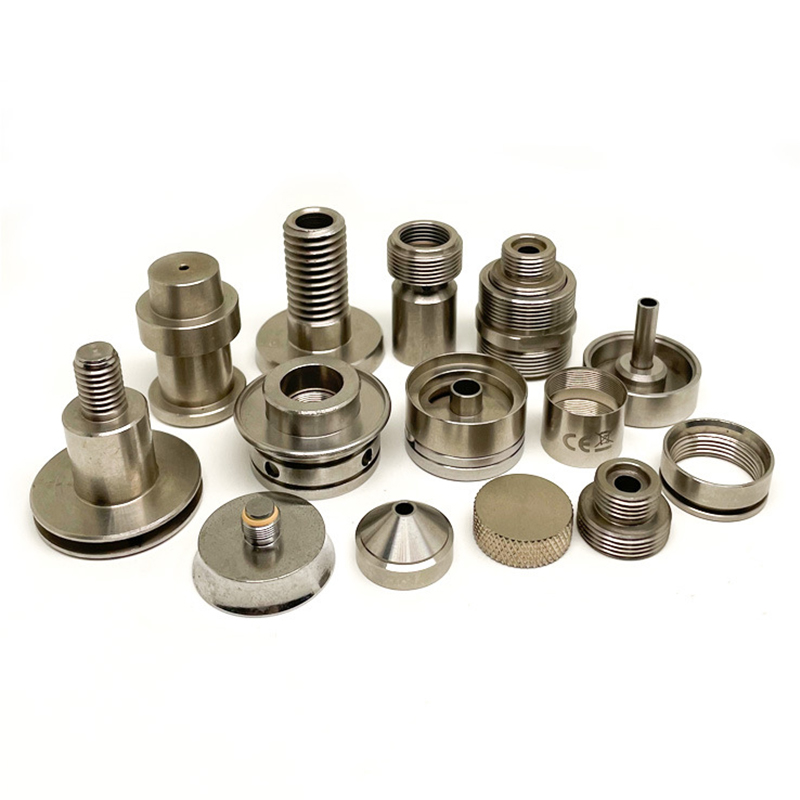
Recent industry analyses reveal a massive shift in shop floor dynamics. With the rapid integration of advanced technologies, the definition of a difficult job is changing. Top-tier facilities now integrate internet-connected sensors, automated robotic pallet pools, and artificial intelligence tool monitoring systems.
Consequently, the modern machining technician acts more like a process manager and data analyst than a manual laborer. The physical exhaustion of wrestling heavy parts is fading. In its place comes the cognitive strain of managing multiple automated cells simultaneously. The real skills gap today is not finding people willing to get their hands dirty. The challenge lies in finding technically savvy minds capable of troubleshooting complex software interfaces and optimizing automated workflows. This shift makes the job less physically brutal but significantly more intellectually demanding.
Is the trade hard to learn? The barrier to entry is primarily academic and logical. It focuses heavily on spatial visualization.
Prospective entrants often fear the mathematical requirements. You do not need to be a theoretical physicist. However, a highly functional grasp of applied math is non-negotiable. Daily tasks require basic algebra to calculate cutting speeds. You need geometry to understand part features. Trigonometry determines complex angles and hole coordinate locations.
Mastering blueprint reading, specifically Geometric Dimensioning and Tolerancing, is equally challenging. This international engineering language uses specific symbols to communicate allowable deviations from theoretical perfection. Grasping concepts like true position, runout, and flatness takes significant study. Misinterpreting a single datum reference can scrap an entire batch of aerospace components.
Industrial machines operate using a coordinate-based programming language known as G-code. Staring at a screen filled with alphanumeric blocks feels alien initially. The code dictates precisely where the tool moves, how fast it travels, and when to activate high-pressure coolant.
Modern Computer-Aided Manufacturing software generates most of this code visually. Still, a skilled professional must read and manually edit raw text at the terminal. Knowing the crucial difference between a rapid traverse movement and a controlled linear feed prevents violent machine collisions. Transitioning from software reliance to confident raw code manipulation represents a major career milestone.
Beyond the educational curve, daily execution presents relentless technical pain points. Overcoming these challenges separates average floor workers from highly sought-after craftsmen.
In modern aerospace and medical device manufacturing, tolerances are brutal. We routinely work within tolerance windows of plus or minus 0.005mm to 0.01mm. That is roughly a fraction of a human hair's thickness. Maintaining this microscopic accuracy is objectively difficult.
As a cutting tool aggressively shears away metal, it generates immense friction and heat. This thermal energy causes raw material to expand. A part measuring perfectly warm inside the machine enclosure may shrink out of tolerance once it cools on a bench. Add in machine vibration, tool deflection, and ambient shop temperature changes. The process becomes a highly stressful balancing act. Operators must constantly monitor these shifting variables, tweaking coolant flow and cutting parameters to maintain absolute consistency.
The specific material being cut drastically alters task difficulty. The realm of CNC metal machining encompasses a vast spectrum. Materials range from soft brass to incredibly tough superalloys.
When tackling hard metals like Titanium, Inconel 718, or hardened tool steels, tool wear becomes your dominant adversary. Cutting inserts degrade rapidly under extreme stress. Failing to monitor tool life accurately results in mid-cycle fractures. A shattered tool ruins expensive raw material and damages internal machine tapers. Swapping out cutting tools just moments before they fail requires years of active observation.
Understanding equipment capability is crucial for engineering success. The difficulty of the manufacturing job dictates the technology required. Below is a practical guide matching project complexity with the right machining service parameters.
| Project Complexity | Recommended Equipment | Typical Tolerance Capability | Ideal Applications |
|---|---|---|---|
| Basic 2D Profiles & Flat Parts | 3-Axis Milling | +/- 0.05mm | Aluminum enclosures, simple mounting brackets |
| Complex Cylindrical Features | Turning with Live Tooling | +/- 0.01mm | Custom drive shafts, specialized threaded fasteners |
| Intricate 3D Geometries | 5-Axis Machining Centers | +/- 0.005mm | Aerospace turbine impellers, titanium medical implants |
Selecting the correct process minimizes production headaches and reduces overall costs. Aligning your part's geometry with the appropriate machine tier ensures optimal surface finish and dimensional stability.
Difficulty is not static. It scales based on your specific job title and willingness to take on risk.
Starting out as a basic operator represents the lowest barrier to entry. These workers primarily load blanks, press the cycle start button, and deburr sharp edges. Mental stress is low, though physical repetition can be tedious.
Evolving into a true operator requires proactive effort. You must understand how to properly seat a part to avoid chip interference. You need to interpret blueprints for specific jobs and confidently make offset adjustments to keep processes centered.
The leap from standard operator to setup specialist is substantial. Setup personnel receive a blueprint, a cart of raw material, and an empty machine. They tear down the previous job and build the new one from scratch.
This intricate process involves indicating vises perfectly parallel to machine axes. You load dozens of specific cutting tools and meticulously touch off each one to establish exact lengths in the computer. Running the first article of a new production run is nerve-wracking. The specialist runs the program at a fraction of normal speed, hand hovering over the emergency stop button, ensuring no programming errors cause a devastating crash.
Programmers sit at the apex of the difficulty hierarchy. Utilizing advanced software, they design digital toolpaths bringing 3D models to life. They carry ultimate responsibility for process efficiency and safety.
A programmer determines the optimal sequence of operations and calculates aggressive yet safe feeds and speeds. A simple mathematical error regarding a clearance plane can cause a spindle crash costing tens of thousands of dollars in repairs. This role demands intense mental focus, creativity, and deep mechanical expertise.
Cognitive demands dominate the conversation, but physical realities contribute heavily to the profession's overall difficulty.
Never underestimate the physical toll. Most manufacturing shifts run 8 to 12 hours. You spend the vast majority of this time standing on unyielding concrete floors. Proper ergonomic footwear helps, but leg and back fatigue are common realities.
The shop floor is inherently industrial. Technicians face constant exposure to lingering coolant mists. Wiping away lubricating oils and handling sharp metal chips happens daily. Heavy machinery hogging out steel generates intense noise, requiring strict adherence to personal protective equipment protocols.
Production quotas add a dense layer of psychological pressure. Manufacturing is fiercely deadline-driven. Companies rely on strict schedules to deliver critical parts.
When a machine unexpectedly breaks down, the pressure to identify the root cause is palpable. The financial weight of handled materials induces anxiety. Scrapping a large block of aerospace-grade titanium due to a momentary lapse in concentration is a notoriously costly mistake. Managing this stress and maintaining unwavering focus are essential survival skills.
Given the steep educational curve and high-stress environment, does the effort yield a proportionate reward? Objective industry data suggests financial benefits strongly align with the role's difficulty.
The global manufacturing sector experiences a severe compounding skills gap. Older generations of master craftsmen are retiring. Younger workers entering the trade with requisite technical aptitude are scarce. Because the job is technically demanding, proficient individuals are highly valued.
Skilled setup specialists and programmers are rarely out of work. High demand translates directly into robust job security and highly competitive base salaries. Overcoming initial challenges unlocks specialized career paths. Mastering 5-axis machining opens doors to roles like Application Engineers or Field Service Technicians. These traveling professionals solve high-level engineering problems on the fly and rank among the most respected, well-compensated individuals in the industry.
If intellectual challenges and career stability appeal to you, two primary pathways exist.
Enrolling in a technical college program provides a structured, safe environment. You gain foundational knowledge in math and manual turning before touching a multi-axis controller. Formal education dramatically accelerates your transition to a setup role.
Alternatively, many start via on-the-job apprenticeships. Due to labor shortages, shops often hire individuals with zero experience. You earn a paycheck immediately, but training can be fragmented by production demands. Success here requires a highly proactive mindset. You must ask questions constantly and study manuals on your own time.
Is a career in this field genuinely hard? Yes, but it is a highly rewarding kind of hard. It requires a unique blend of strong logical thinking, spatial awareness, and mechanical sympathy. Daily tasks demand intense mental focus and a willingness to learn as technology evolves. For detail-oriented minds who enjoy transforming raw materials into precise functional components, mastering this trade offers excellent long-term job security, financial stability, and the deep satisfaction of building the modern world.
Yes, but you do not need advanced calculus. A solid, functional grasp of basic algebra, geometry, and trigonometry is sufficient for daily operations. You rely on these principles to calculate tool paths, determine cutting speeds, and verify complex dimensions using precision instruments.
It certainly can be. Complex machine setups, proving out new programs, and machining exceptionally expensive raw materials generate pressure. However, comprehensive training, experience, and strict adherence to shop safety protocols mitigate the vast majority of this stress over time.
Yes, especially as you advance past entry-level roles. Due to the global shortage of skilled technicians, experienced setup specialists and programmers command highly competitive salaries, excellent benefits, and abundant overtime opportunities. Specialized roles like 5-axis programmers or traveling application engineers offer extremely lucrative compensation packages.
Like any industrial job, there are risks, but modern shops prioritize safety. Standing on concrete for long shifts causes fatigue, requiring good ergonomic footwear. Exposure to coolant mists and loud noises is managed through proper ventilation systems and strict use of personal protective equipment, such as custom earplugs and safety glasses.
No. Robotic loading systems and AI-driven monitoring are becoming common, but they still require highly skilled technicians. Humans must program them, set up complex workholding devices, and troubleshoot unpredictable issues like material inconsistencies. Automation shifts the job to be more tech-focused; it does not eliminate the need for human expertise.
It typically takes six months to a year of consistent work to become a self-sufficient operator. Transitioning into a proficient setup specialist who handles complex jobs independently requires three to five years. Achieving expert programmer status generally takes over five to seven years of dedicated industry experience.
Whether you are designing complex aerospace components or critical medical devices, the success of your project relies heavily on the technical expertise behind the machine. If you need precision parts manufactured to exacting tolerances, partnering with an experienced team is vital. Explore advanced manufacturing solutions and custom fabrication options at Yeeshine Tech to bring your most challenging designs to life with uncompromising quality.


