Email: admin@yeeshine-tech.com WhatsApp: +86-13712868936

- All
- Product Name
- Product Keyword
- Product Model
- Product Summary
- Product Description
- Multi Field Search

Views: 0 Author: Site Editor Publish Time: 2025-04-12 Origin: Site


Injection Molding and Blow Molding are two common plastic molding processes that differ significantly in their manufacturing processes, application scenarios, and product characteristics. Injection molding is mainly used to produce precise, complex plastic parts, while blow molding is more suitable for manufacturing hollow containers such as bottles and industrial containers. Injection molding can also produce hollow products, such as through cores or slide molds, but at a higher cost, while blow molding is more economical. When choosing the right plastic molding process, production requirements, material properties, and cost-effectiveness need to be considered. This article will provide an in-depth comparison of the key differences between injection molding and blow molding to help you better understand the advantages and applications of both plastic molding processes.
Injction Molding is a highly efficient plastic molding process widely used to produce precise and complex plastic parts. The basic process involves heating and melting plastic, injecting it under high pressure into a metal mold, and removing the finished product after the material has cooled and solidified. Injection molding can achieve a high degree of automation, suitable for mass production, ensuring accurate product dimensions and high consistency, and can process a variety of plastic materials such as PP, ABS, PC, and POM. The process is widely used in automotive parts and electronic product housings, and is an indispensable molding technology in modern manufacturing


Injection Molding is widely used in a variety of industries due to its efficient and precise manufacturing characteristics. Its main advantages include fast production speeds, high product accuracy, suitability for high volume manufacturing, and the ability to process a wide range of plastic materials to ensure consistency and quality stability. However, the process also has some limitations, such as high mold costs, large initial investment, and high cost per piece for small batch production. Therefore, for small batch or prototype production, alternative methods like 3D printing or vacuum forming are often preferred. Design modification is difficult, as mold alterations require EDM or wire cutting, which is time-consuming and costly. Therefore, when choosing injection molding, manufacturers need to consider the cost, production requirements, and product complexity to ensure the best manufacturing solution.
Blow Molding is a molding process used to manufacture hollow plastic products. The basic principle involves blowing a molten plastic parison with compressed air to conform to the mold, and then cooling it to solidify. This process is widely used in packaging containers (such as PET beverage bottles, HDPE chemical drums), automotive parts (fuel tanks), and other fields. It is favored for its low cost, high production efficiency, and suitability for high volume manufacturing. Understanding the working principle of blow molding helps to optimize product design, choose the appropriate manufacturing method, and improve production efficiency and product quality.
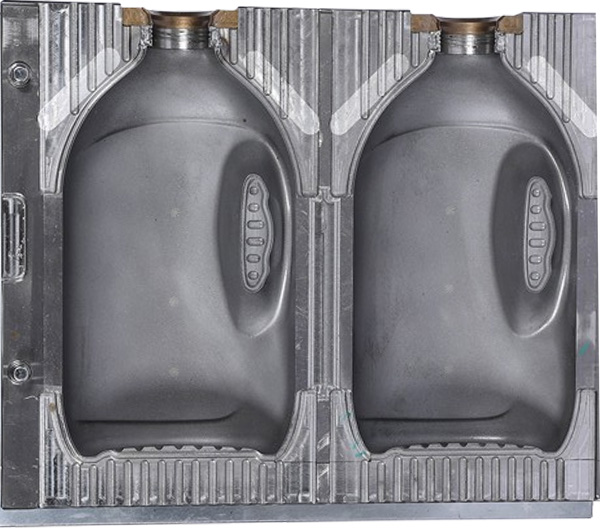
Blow molds are usually made of aluminum and have low production costs, about 30% to 50% of the cost of injection steel molds. No runner waste, high material utilization, and suitable for lightweight hollow designs. Suitable for medium volume production compared to injection molding's high volume production. Enables the easy manufacture of seamless, integrated hollow structures, such as automotive fuel tanks, without welding or assembly.
However, blow molding has some limitations. The material stretches unevenly during the blowing process, resulting in thicker bottoms/necks and thinner sidewalls, often requiring simulation software for verification. 3 Compared to injection molding, there are limited types of plastics that are applicable. While blow molding may not achieve the same precision as injection molding, material strength can be enhanced through stretching processes like injection stretch blow molding, as seen in PET bottles. 4 For manufacturers, the choice of blow molding or injection molding requires weighing production needs, material properties, and product quality to ensure optimal manufacturing results.
Injection Molding and Blow Molding are two common plastic molding processes, each suitable for different types of products. Injection molding is suitable for the manufacture of precise, robust plastic parts such as threaded bottle caps, multi-cavity connectors, and mobile phone housings, while blow molding is more suitable for the production of hollow products such as PET bottles and pipes. From a technical point of view, injection molding uses high pressure to inject molten plastic into the mold, resulting in products with precise structures and accurate dimensions, but with higher mold costs. Blow molding, on the other hand, shapes the plastic through air pressure, which is less expensive and more productive, but wall thickness control is more difficult and the range of applications is narrower. When choosing a molding process, manufacturers need to make reasonable decisions based on product characteristics, production scale, and cost budget to ensure optimal manufacturing results.
Injection Molding and Blow Molding each have their own advantages in terms of cost and production speed, depending on the type of product and scale of production.
Cost Comparison: Injection Molding has a higher initial tooling cost and is suitable for high volume production to dilute the tooling investment. The unit cost of injection molded parts decreases with higher volume production, making it suitable for precision parts manufacturing. In contrast, blow molding has lower tooling costs and is particularly suited for manufacturing hollow products such as bottles and tanks, but unit production costs can increase due to material waste and difficulty in controlling wall thickness.
The mold material is usually steel, which has high precision machining costs and is suitable for high volume production with lower unit product costs. Blow molds are typically made of aluminum, which simplifies the structure and processing, and has lower precision requirements. Blow molding has higher requirements for materials, requiring high melt strength, while injection molding can handle a wider variety of materials, including engineering plastics.
Production speed: Injection molding has a high degree of automation, and injection molding production cycles are usually shorter for small parts, making it suitable for mass production of precision, high-quality parts. Blow molding allows for the rapid manufacture of large quantities of hollow plastic products.
When choosing between Injection Molding or Blow Molding, the key lies in the product's shape, application, and production needs. Injection molding is suitable for precision parts such as threads and clips, ensuring high strength and complex structures, while blow molding is more suitable for lightweight, hollow plastic containers such as bottles and cans. Considering mold cost, productivity, and material properties, manufacturers should choose the best molding process for their specific project needs. Whether pursuing high precision or low-cost mass production, choosing the right plastic molding method will improve product quality, optimize production efficiency, and achieve optimal manufacturing results.


