Email: admin@yeeshine-tech.com WhatsApp: +86-13712868936

- All
- Product Name
- Product Keyword
- Product Model
- Product Summary
- Product Description
- Multi Field Search

Views: 0 Author: Site Editor Publish Time: 2025-06-21 Origin: Site


Compression Molding is a processing method in which silicone or rubber material is placed in a mold cavity and molded by applying pressure and heat to the upper and lower molds. It is widely used in the manufacture of low to medium complexity, robust products, especially for silicone and rubber parts. Its main advantages include low mold costs, low material waste, suitability for small to medium volume production, and the ability to mold larger parts. It is widely used in the automotive, electronics, electrical insulation and medical device industries. For example, products such as automotive gaskets, plugs, and switch covers are often molded using this process. Understanding compression moulding helps companies choose more appropriate production methods, improve efficiency and product quality, is a stable and mature molding technology in the manufacturing industry.

The compression molding process mainly includes preheating the material, placing it into the mold, heating and pressurizing, holding pressure and cooling, and demolding. During the operation, a fixed amount of raw material is put into a heated mold, and high pressure is applied through the mold closure to fill the cavity and solidify the material. Compared to injection molding, compression molding is suitable for silicone rubber materials, features a simpler mold structure, and is less costly, though it has a longer molding cycle time. It is particularly suitable for thick-walled and larger-sized parts. Injection molding, on the other hand, is suitable for thermoplastic materials and allows for high precision and efficient mass production. Understanding how compression molding works and its specific process flow can help companies make the optimal process choice between product mix and production volume requirements. Compression molding maintains cost-effectiveness while remaining highly adaptable and stable.
The compression molding process mainly consists of six key steps: mold design, raw material preparation, heating, compression molding, cooling and curing, and demolding. First, the mold is designed according to the product structure and is usually made of metal to ensure stability under high temperature and pressure. The raw material is typically a silicone rubber sheet, which needs to be preheated to the right temperature before pressing. The material is then placed into the mold cavity, and pressure is applied by closing the mold while the upper and lower molds are heated, causing the material to soften and fill the cavity. After holding pressure for a period of time, the material cures. Finally, the mold is opened and the product is removed, completing the entire compression molding workflow. Understanding how molds are created for compression molding helps to grasp the key control points of the process and improve product consistency and performance.
The core equipment commonly used in compression molding is the compression molding machine, also known as the press (compression molding press). This equipment mainly consists of upper mold, lower mold, heating system, hydraulic device and control panel. By applying high pressure, the press makes the heated raw material flow and form in the mold cavity. Different types of presses can be operated vertically or horizontally and are commonly used to manufacture large or complex parts. For molding composite materials, they are also equipped with precise temperature control and automatic loading systems to ensure even distribution and product consistency. Understanding compression molding machine parts and how they operate can help you choose the right machine for efficient production. Proper configuration of the compression molding press is the key to ensuring product quality and molding efficiency.
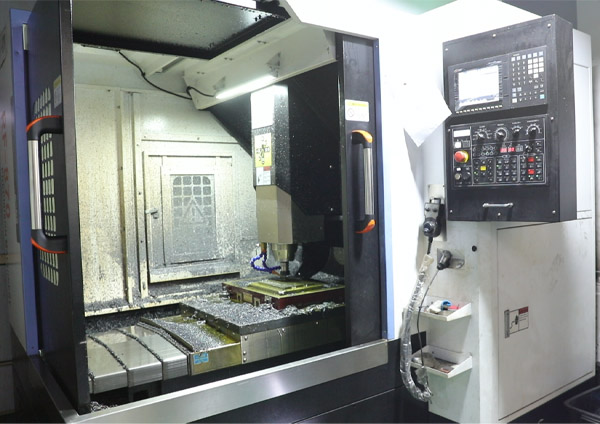
Compression molding applications demonstrate remarkable adaptability across various industries, particularly for processing elastomeric materials like silicone rubber.
In the medical field, compression molding frequently produces silicone seals and other components requiring high cleanliness, biocompatibility, and high-temperature resistance.
Within the automotive industry, this process is extensively used to manufacture seals, dust covers, shock absorbers, and engine peripheral parts. These components offer exceptional reliability in harsh environments thanks to their superior high-temperature and oil resistance, alongside high structural strength.
For kitchen products such as silicone cake molds, pot holders, and cup lids, compression molding ensures products are soft, non-slip, and heat-resistant, making them user favorites.
Compared to other molding methods, compression molding for medical components and compression molding in automotive parts provide enhanced shape retention and material compatibility. This makes it an ideal choice for manufacturing functional silicone rubber products, especially well-suited for medium-volume, high-quality applications.
Compression molding has several advantages in the manufacture of silicone rubber products. These advantages include a simple mold structure, low manufacturing costs, and suitability for small to medium-volume production, especially for large-sized or thick-walled parts. As the material is compressed in the mold, it develops minimal internal stress, which is conducive to improving the dimensional stability and mechanical properties of the products. Additionally, compression molding can be applied to thermosetting and high-viscosity silicone rubber materials, which are typically challenging to process with injection molding.
However, the process also has disadvantages. Its long molding cycle time and low degree of automation make it unsuitable for high-volume and high-efficiency production. Furthermore, some parts with complex structures or intricate details are difficult to mold in one shot. Compared to injection molding, compression molding has a slight disadvantage in terms of production speed and consistency.
Understanding the pros and cons of compression molding can help companies choose the right process based on product structure, performance requirements, and production scale. If high precision and high-volume efficiency are sought, consider injection molding; however, if material compatibility and cost control are paramount, compression molding is often the ideal solution.
With the continuous progress of material science and manufacturing technology, compression molding is evolving towards smarter and more efficient processes. One of the future trends in compression molding is the enhancement of automation and digitalization, through the introduction of advanced sensing systems and automated control equipment. This enables real-time monitoring of the molding process and parameter optimization, thereby improving molding accuracy and stability.
In terms of technological innovation, machine learning in compression molding is gradually being applied to data analysis and fault prediction. This helps operators adjust process parameters in advance, reducing scrap rates and improving production efficiency. Furthermore, the widespread use of new composite materials is driving innovations in mold design and molding technology, making compression molding even more promising in the aerospace, medical, and new energy industries.
Aligned with the development of sustainable manufacturing concepts, compression molding is also advancing in the direction of energy saving and material recycling. In the future, technological advancements in compression molding will drive the widespread adoption of the process in mid- and high-end manufacturing, making it a key component of the smart manufacturing system.


