Email: admin@yeeshine-tech.com WhatsApp: +86-13712868936

- All
- Product Name
- Product Keyword
- Product Model
- Product Summary
- Product Description
- Multi Field Search

Views: 0 Author: Site Editor Publish Time: 2025-08-25 Origin: Site


Automotive Injection Molding has transformed the way vehicles are designed, built, and optimized for performance. Once dominated by metal components, today’s cars and trucks rely heavily on advanced plastic parts that offer the same—if not better—strength and durability, while significantly reducing weight. This shift isn’t just about cutting costs; it’s about improving fuel efficiency, boosting performance, and meeting ever-stricter safety and environmental standards.
In this article, we’ll explore how high-quality automotive injection molding is helping manufacturers create lighter, stronger, and longer-lasting components, and why choosing the right manufacturing partner is critical to achieving these benefits.
Weight reduction has been a top priority for automakers over the past two decades. The reasons are simple:
Fuel Efficiency – The lighter a vehicle is, the less fuel it consumes. This holds true for both gasoline and electric vehicles, where reduced weight can also extend battery range.
Performance – Lower weight improves acceleration, braking, and handling, making cars more responsive and safer to drive.
Regulatory Compliance – Governments worldwide have implemented stringent CO₂ emissions regulations. Lightweight materials help automakers meet these targets.
Automotive injection molding enables the replacement of heavy metal parts with high-performance thermoplastics and composite materials that maintain—or even improve—mechanical strength. For example, an injection-molded reinforced nylon component can be up to 50% lighter than its steel counterpart, without sacrificing structural integrity.
Plastic doesn’t automatically mean weaker. In fact, with the right combination of advanced materials and precision molding techniques, today’s automotive-grade plastics can rival—or even surpass—certain metals in terms of strength, durability, and performance. Modern Automotive Injection Molding leverages decades of progress in materials science to produce components that stand up to the toughest conditions vehicles face.
Here’s how injection molding achieves this level of performance:
Reinforced Polymers – By incorporating glass fiber, carbon fiber, or even hybrid reinforcement materials into the resin, manufacturers can dramatically boost tensile strength and stiffness. This reinforcement helps the part resist stress, deformation, and wear over time, making it particularly valuable for load-bearing or structural applications such as bumper beams, seat frames, and engine covers.
Impact Resistance – High-performance thermoplastics such as polyamide (nylon) blends or polyetheretherketone (PEEK) can maintain toughness across a wide temperature range—from freezing winters to scorching summers. This resistance to cracking or shattering under sudden impact is especially important for components that may experience mechanical shocks or collisions.
Corrosion Resistance – Metals are vulnerable to oxidation, rust, and chemical degradation, especially when exposed to road salt, humidity, and engine fluids. In contrast, properly formulated plastics are inherently corrosion-resistant, which extends the lifespan of parts used in harsh environments, like under-the-hood housings, battery trays, or exterior trim.
UV and Heat Stability – For exterior automotive parts that face years of sun exposure, UV-stabilized resins and heat-resistant additives help maintain both appearance and mechanical integrity. This means bumpers, mirror housings, and grilles can retain their color, gloss, and structural performance without becoming brittle or faded.
Consistent Quality Through Precision Molding – Strength isn’t just about the material; it’s also about consistency in the manufacturing process. Advanced injection molding machines ensure that each part is produced with uniform wall thickness, precise tolerances, and optimized fiber orientation, all of which contribute to long-term durability.


A high-quality automotive injection-molded part begins with a precision-engineered mold. The mold determines shape, dimensional accuracy, and surface finish—all of which affect performance and appearance.
Key mold design considerations include:
Flow Simulation – Using advanced computer-aided engineering (CAE) tools, engineers can simulate how molten plastic fills the mold. This helps identify and prevent defects like air traps, weld lines, and sink marks.
Cooling System Optimization – Uniform cooling across the mold ensures parts solidify evenly, preventing warping and improving dimensional accuracy.
Gate Placement – The location where molten plastic enters the mold (the gate) directly impacts part strength and surface quality. Strategic gate placement minimizes stress points.
Material Shrinkage Compensation – Plastics shrink as they cool. Mold engineers must precisely calculate shrinkage rates to ensure the final part dimensions match the design.
Surface Texture Control – Mold surfaces can be treated or textured to achieve a specific finish, from glossy dashboards to matte interior trims.
This combination of science, engineering, and craftsmanship ensures the final automotive parts meet strict industry standards.
Choosing the right material is just as important as designing the mold. High-quality automotive injection molding uses materials tailored for the part’s functional requirements.
Common materials in automotive injection molding include:
Polypropylene (PP) – Lightweight, cost-effective, and chemically resistant; often used for bumpers, interior trims, and battery housings.
Acrylonitrile Butadiene Styrene (ABS) – Offers excellent impact resistance and a high-quality surface finish, ideal for dashboards and control panels.
Polyamide (PA, Nylon) – Known for its strength, heat resistance, and ability to be reinforced with glass fibers; used for engine components and structural parts.
Polycarbonate (PC) – Extremely tough and transparent; used for lighting components and instrument panels.
Thermoplastic Elastomers (TPE) – Flexible, rubber-like materials perfect for seals, gaskets, and soft-touch interior parts.
Advanced automotive manufacturers often use custom blends or composites to achieve the exact balance of strength, weight, and cost efficiency.
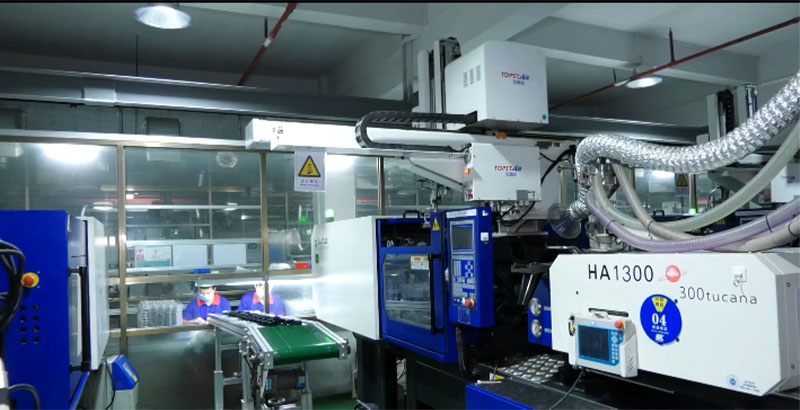
Even the best design and materials won’t guarantee performance if the manufacturing process isn’t tightly controlled. High-quality automotive injection molding involves:
Automated Molding Machines – Computer-controlled systems ensure consistent injection pressure, temperature, and cycle times.
In-Mold Quality Monitoring – Sensors detect variations in pressure or temperature, allowing real-time adjustments to prevent defects.
Strict Quality Inspections – Dimensional checks, tensile tests, and surface inspections ensure every part meets specifications.
Zero-Defect Approach – Lean manufacturing and Six Sigma methodologies help eliminate errors and reduce waste.
Today’s automotive industry is as focused on sustainability as it is on performance. Injection molding supports this by:
Recycling Scrap Material – Excess plastic from the molding process can often be reground and reused.
Designing for Longevity – Durable parts reduce the need for replacements, lowering resource consumption over time.
Lightweighting – Lighter cars require less energy to operate, reducing lifetime emissions.
In some cases, manufacturers use bio-based polymers or recycled plastics to further reduce environmental impact.
Some common automotive parts made using high-quality injection molding include:
Exterior – Bumpers, grilles, side mirrors, door handles, and light housings.
Interior – Dashboards, center consoles, door panels, cup holders, and switches.
Under-the-Hood – Air intake manifolds, engine covers, battery casings, and cooling system components.
Safety Systems – Airbag housings, seat belt components, and structural reinforcement parts.
In many cases, switching from metal to plastic not only reduces weight but also allows for more complex designs that would be difficult or impossible to achieve with metal stamping or machining.
The benefits of lighter, stronger, and more durable parts are only possible when you work with a manufacturer who has the right expertise, equipment, and quality systems.
A capable partner will:
Have extensive automotive industry experience.
Use state-of-the-art injection molding machines and tooling.
Offer material engineering support to select the best resin or composite.
Provide end-to-end services, from design and prototyping to mass production.
Maintain strict quality certifications, such as IATF 16949 for automotive manufacturing.
High-quality automotive injection molding is more than just a manufacturing method—it’s a technology that enables vehicles to be lighter, stronger, and more sustainable. From precise mold design to advanced materials and zero-defect production, this process ensures automotive parts perform flawlessly in demanding environments.
If you’re looking for a reliable partner to bring your automotive component designs to life with the highest standards of quality, Yeeshine Technology has the expertise, technology, and commitment to excellence you need. Their experience in precision automotive injection molding makes them a trusted choice for manufacturers worldwide.


