Email: admin@yeeshine-tech.com WhatsApp: +86-13712868936

- All
- Product Name
- Product Keyword
- Product Model
- Product Summary
- Product Description
- Multi Field Search
 |


| Quantity: | |
|---|---|
Product Description
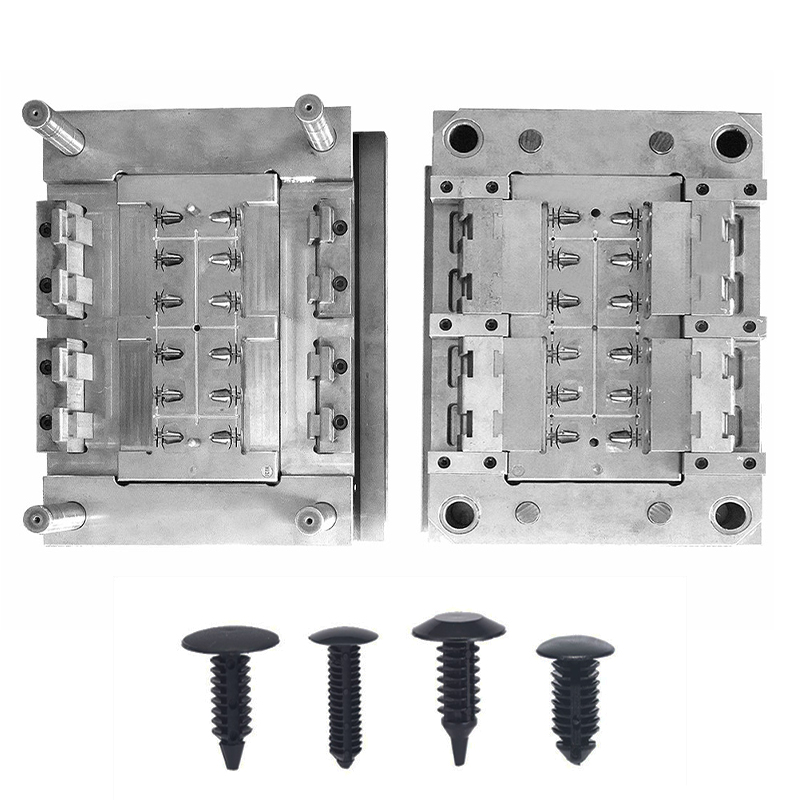
In the automotive industry, the assembly of components such as door panels is a critical process that requires precision and reliability. As the central tool in this process, automotive plastic molding ensure that each clip is produced to exacting design standards, securely holding components such as panels in place. These molds are widely used to produce plastic clips in a variety of sizes and shapes to meet the needs of different car models and manufacturers.
Automotive Clip Molding is designed with a combination of precision and innovation. Each clip is able to fit seamlessly into a car door panel or other component to ensure a strong and durable installation. Molds are typically designed using CAD/CAM software to accurately simulate the size and shape of the clips in a 3D model, and then CNC machined to achieve the precision required for manufacturing. This high-precision machining is able to meet strict tolerances, ensuring that each batch of snap products achieves consistency and meets the high standards of the automotive industry.
To enhance the durability of the molds during the manufacturing process, high-quality steel (such as P20 or H13) is often used as the primary material for the molds. Through heat treatment and surface hardening processes, the wear resistance and service life of the molds are dramatically increased, which allows them to maintain stable performance under high-intensity, high-volume production conditions.
Customization is one of the major advantages of automotive clips mould. Manufacturers can design molds in a variety of shapes, sizes and configurations to meet the specific needs of different car models. For example, the door panels, hoods or luggage compartments of different models may require specially shaped clips, and custom molds can accommodate these differences perfectly.
In addition, automotive clip mold offer a high degree of flexibility. A set of mold can be used to produce a wide range of snap sizes by adjusting settings or replacing some components. This flexibility not only helps manufacturers reduce production costs, but also improves their ability to respond to changes in market demand.
Quality control is an essential part of the production process for automotive clips injection moulding. Manufacturers perform several tests on their molds, including dimensional accuracy, surface finish, and structural integrity. Quality testing ensures that the clips produced by the mold meet the drawing standards every time, thus improving the reliability of the final product.
At the same time, regular maintenance and care is critical to the long-term use of the mold. Through regular cleaning and inspections, manufacturers can identify potential problems and repair them in a timely manner, thus avoiding excessive wear or damage to the mold that could affect productivity. This maintenance strategy significantly extends the life of the mold and ensures consistent quality of each batch of fasteners.
Plastic clips produced by molding have a variety of uses in the automotive industry. These clips are not only used for the fastening of door panels, but are also widely used in the assembly of hoods, luggage compartments, and other parts that require secure fastening. These mold produced clips play a vital role in the overall assembly of the vehicle.
Overall, Clip molds is an integral part of modern automotive production. With their high precision, durability and flexibility, these molds help manufacturers meet diverse production needs. Through constant innovation and strict quality control, automotive clips molds will continue to contribute to the production of high-quality vehicles in the future, pushing the automotive industry in a more efficient and sustainable direction.


