Email: admin@yeeshine-tech.com WhatsApp: +86-13712868936

- All
- Product Name
- Product Keyword
- Product Model
- Product Summary
- Product Description
- Multi Field Search

Views: 0 Author: Site Editor Publish Time: 2026-10-18 Origin: Site


Are you struggling to finalize the manufacturing process for your custom metal parts? Choosing the optimal method often feels like navigating a minefield, especially when technical boundaries blur on the shop floor. I frequently see engineers and procurement teams confuse structural shaping techniques with surface marking applications. Unfortunately, this simple misunderstanding routinely leads to delayed launch timelines and severely inflated production costs.
Choosing the wrong fabrication method does not just waste time; it destroys your tooling budget. In this comprehensive guide, we will break down the exact mechanics, cost structures, and practical applications of these two vital operations. By clearly comparing both processes, you will gain the field-tested insights needed to make confident, budget-friendly engineering decisions tailored perfectly to your specific production run.
To make an informed manufacturing decision, we must first look at the physical mechanics behind these operations. At its core, metal stamping is a heavy-duty cold-forming procedure designed to transform flat metal sheets into specific, three-dimensional geometric profiles. Picture a continuous coil of flat sheet metal being rapidly fed into a massive industrial press. Inside this machine, a specialized tool and die set applies immense tonnage to the substrate, forcing it to conform to a meticulously machined steel cavity.
Specifically, this operation relies entirely on plastic deformation. The press pushes the material past its yield strength so it permanently retains a new shape. However, a well-engineered die stops just short of the breaking point to prevent fracturing and maintain vital structural integrity. For instance, creating precision automotive chassis parts often requires presses exerting anywhere from 45 to over 800 tons of force to achieve tolerances as tight as ±0.01mm.
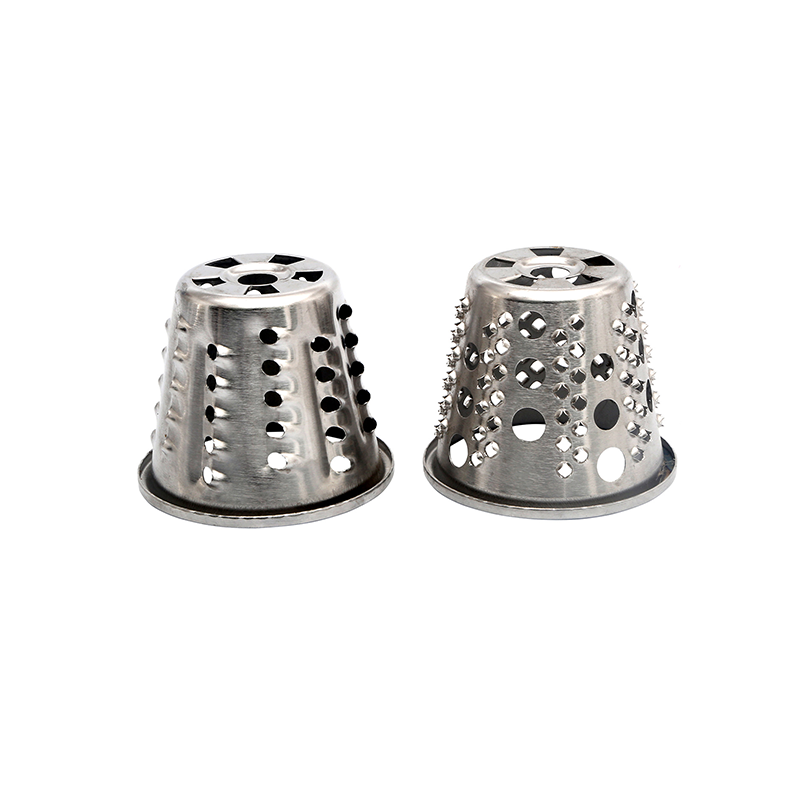
The heartbeat of this operation lies in the dynamic interaction between the upper tool attached to the moving press ram and the lower stationary die block. When production engineers discuss the nuances of press forming, they are generally referring to several distinct mechanical actions that occur within a fraction of a second during a single press cycle.
In modern industrial environments, this process serves as the undisputed backbone of mass production. Its primary advantage lies in unparalleled speed and repeatability. Once a progressive die is engineered, validated, and installed, a stamping press can churn out hundreds of identical parts per minute with extremely tight tolerances. This consistency makes sheet metal stamping indispensable for industries requiring millions of identical components, such as automotive body manufacturing, aerospace engineering, and consumer electronics shielding.
In stark contrast to the heavy-duty shaping of a mechanical press, metal engraving does not alter the fundamental geometry or structural integrity of the workpiece. Instead, it is defined as the precise practice of incising a design, text, or intricate pattern onto a hard, flat surface by selectively extracting microscopic layers of material. Consequently, it is an inherently subtractive process. We almost exclusively apply engraving to parts that have already been fully formed, machined, and cleaned.
Modern fabrication facilities typically rely on two primary methodologies for engraving metallic surfaces. Each method caters to distinct operational requirements and material hardness levels.
The primary purpose of engraving is surface-level marking. Unlike forming techniques that dictate the physical dimensions of the component, engraving is utilized strictly for cosmetic or informational additions. Common applications include etching permanent serial numbers for aerospace traceability, adding scannable QR codes to medical devices, or placing high-resolution corporate logos on consumer goods. Because it leaves the underlying geometry intact, we typically implement it as the absolute final step in the manufacturing pipeline.
While both methodologies manipulate metal, their underlying physics, intended outcomes, and practical applications diverge completely. Grasping these fundamental distinctions is essential for streamlining your production workflows and keeping manufacturing budgets under control.
The most profound technical difference lies in how we treat the raw material. Stamping relies on brute force and precision molds to bend, stretch, and shear the metal. It physically deforms the internal grain structure of the material to birth a entirely new three-dimensional shape. Furthermore, because press forming manipulates the entire cross-section of the metal, it is directly responsible for creating the functional part itself, like a structural bracket or an electronic enclosure.
Engraving, conversely, relies entirely on precision material removal. Whether through laser ablation or mechanical cutting, engraving selectively extracts micro-layers of the surface while leaving the underlying structural foundation completely undisturbed. Engraving cannot build or shape a functional part; it is strictly a secondary finishing operation. In practical terms on the shop floor: you stamp a piece of metal to turn it into a functional component, and you engrave that component to label it.
For procurement managers and lead engineers, the final decision often hinges on a rigorous cost-benefit analysis driven by anticipated production volumes. The financial barrier to entry serves as the most critical differentiator here.
High-precision forming requires a substantial initial capital investment. Custom progressive dies must be painstakingly engineered, CNC-machined from hardened tool steel, and rigorously tested before a single usable part rolls off the line. This tooling phase can easily span several weeks and incur costs ranging from thousands to tens of thousands of dollars.
On the flip side, metal engraving boasts virtually zero tooling expenses. Modern laser engravers are entirely software-driven, reading digital CAD or vector files directly. Initiating an engraving run simply involves loading the file into the system and securing the workpiece in a standard jig. This makes the setup incredibly swift and budget-friendly for low-volume runs.
While a mechanical press demands high initial capital, its per-part cost drops exponentially at scale. A progressive press can produce a complex automotive bracket in less than a second. If you are manufacturing fifty thousand to one million units, the hefty cost of the die is rapidly amortized across the volume. This results in a unit cost of mere pennies.
Engraving is highly economical for a single unit or small batches, say 1 to 500 units, due to the complete lack of custom tooling. However, the cycle time per part is significantly longer. It often takes several seconds to minutes to render a complex design. Therefore, engraving does not scale efficiently for massive mass production. The per-part cost remains relatively flat regardless of how many units you produce.
The intrinsic physical properties of your chosen alloy, specifically its ductility, surface hardness, and thermal conductivity, will largely dictate how favorably it responds to either shaping or subtractive marking.
Forming operations demand materials characterized by high ductility and malleability. These traits allow the substrate to stretch and bend seamlessly without fracturing under tonnage. Industry favorites include low-carbon cold-rolled steel, stainless steel, brass, and copper.
Furthermore, aluminum stamping has surged in popularity across modern manufacturing landscapes. Alloys such as 5052 and 6061 offer an exceptional strength-to-weight ratio, are highly formable, and inflict minimal wear on expensive die surfaces. This makes them the premier choice for custom automotive body panels and aerospace framing, where shedding excess weight is a non-negotiable engineering mandate.
In contrast, engraving is far less dependent on ductility. It can easily process metals that are far too hard or brittle for standard presses. Hardened tool steels, titanium, and tungsten can be laser engraved with exceptional precision. However, engineers must account for thermal dynamics. Laser engraving extremely thin metals can induce localized heat buildup, potentially causing the part to warp or lose its temper. In these delicate scenarios, the cold-forming benefits of a coining press might be preferred.
Analyzing the current industrial landscape reveals a clear trend: the rapid convergence of these distinct technologies. As global supply chain pressures mount and quality control standards tighten, modern manufacturers are increasingly moving away from siloed operations. Instead, there is a massive growing demand for hybrid manufacturing approaches that integrate high-speed structural forming with inline digital marking.
For instance, the explosive expansion of the electric vehicle battery market and the medical device sector has accelerated the need for absolute end-to-end traceability. Components must be structurally flawless while carrying permanent, scannable data for ISO compliance. Consequently, forward-thinking tier-one facilities are now pairing advanced stamping presses directly with automated laser engraving stations and optical inspection cameras. This synergy ensures parts achieve their necessary three-dimensional geometry and immediate compliance marking without creating bottlenecks on the production floor.
When navigating the complex landscape of industrial fabrication, product designers often encounter overlapping terminology. This ambiguity breeds fundamental misunderstandings regarding capabilities, costs, and project suitability. To guarantee strict adherence to your engineering requirements, we must debunk the most prevalent industry myths.
One of the most frequent misconceptions I encounter is the belief that coining is identical to metal engraving. While both processes can produce intricate designs, text, or logos on a metal surface, the underlying physics are entirely different.
Coining is a highly specific subset of precision stamping where a workpiece is subjected to immense pressure within a closed die. This extreme force causes the metal to undergo plastic deformation, effectively flowing into the microscopic cavities of the die to create a raised or indented surface. Coining compresses the material, which often results in work-hardening, thereby increasing the structural durability of the localized area.
Conversely, metal engraving relies purely on material removal. Whether utilizing a high-powered laser to vaporize micro-layers or a rotary tool to physically cut grooves, engraving subtracts material from the part. It does not compress or alter the internal grain structure of the metal in the way that coining does.
With the advent of advanced high-speed laser engraving machines, some product developers assume that engraving technology can bypass the need for traditional press forming, especially for smaller components. This myth stems from a fundamental misunderstanding of what each process is engineered to achieve.
Engraving is strictly a two-dimensional or surface-level process. It is designed to alter the cosmetic appearance or add traceability data to an existing flat surface. Engraving equipment cannot cut out complex three-dimensional geometries, nor can it bend, fold, or stretch sheet metal. If your project requires creating a physical bracket or a structural enclosure, you must utilize a press.
Selecting the appropriate manufacturing method is a pivotal decision that directly influences your project lead time, structural integrity, and bottom line. Making an astute choice requires a systematic evaluation of your component functional demands.
| Evaluation Criteria | Press Forming | Surface Engraving |
|---|---|---|
| Primary Objective | Altering physical shape, cutting, and structural bending. | Surface marking, cosmetic detailing, and traceability. |
| Material Action | Plastic deformation and shearing. No material is lost. | Material removal via thermal ablation or rotary cutting. |
| Production Volume | High to Ultra-High. Ideal for 10,000 to 1,000,000+ units. | Low to Medium. Ideal for custom batches of 1 to 5,000 units. |
| Upfront Tooling Cost | High. Requires custom machined hardened steel dies. | Virtually None. Fully software-driven using standard fixtures. |
| Per-Part Cost | Extremely Low at high volumes due to fast cycle times. | Moderate to High. Highly dependent on machine cycle time. |
| Design Flexibility | Rigid. Difficult and costly to change once the die is machined. | Highly flexible. Can seamlessly change variable data per unit. |
Do you need to change the physical shape of the metal?
If your part starts as a flat sheet and needs to be transformed into a three-dimensional object, such as a battery contact, a structural bracket, or an automotive panel, you must choose a forming operation. This process utilizes extreme mechanical force to bend and shape the raw material into its final structural form.
Are you adding text, logos, or serial numbers to a flat surface?
If the physical dimensions of your component are already finalized and you simply need to add permanent identification or aesthetic patterns, engraving is the optimal choice. It provides unparalleled precision for microscopic text and variable data without compromising the overall geometry of the part.
What is your anticipated production volume?
Volume serves as the ultimate deciding factor for cost-efficiency. If you are planning to manufacture tens of thousands of structural components, investing in custom dies is the most economically viable path. The high initial tooling cost is rapidly amortized across the massive yield. Conversely, if you are producing a limited run of bespoke prototypes, the minimal setup costs of engraving make it the undisputed winner.
Ultimately, metal stamping is engineered to shape structural components for mass production. It utilizes brute force and precision dies to transform flat sheets into complex geometries. In contrast, engraving is a subtractive, surface-level operation designed to add custom details, logos, and traceability marks without altering the physical structure of the part.
Recognizing the distinct mechanics, cost structures, and use cases of these two processes is your first line of defense against costly manufacturing errors. By aligning your project volume, budget, and geometric requirements with the correct methodology, you can significantly enhance product quality while optimizing your bottom line. If you are ready to scale your production and need precision structural components, explore the advanced custom manufacturing solutions at Yeeshine-tech to find the perfect fit for your next engineering project.
No, etching and engraving are fundamentally distinct operations, even though they yield visually similar results. Etching is primarily a chemical process involving masking a surface and using a corrosive acid to dissolve the exposed areas, creating shallow lines. Engraving is a physical or thermal process that utilizes a hardened rotary cutter or a focused laser beam to physically remove the material. Generally, engraving produces deeper, more resilient marks and bypasses the environmental hazards associated with chemical disposal.
The standout benefit lies in the exceptional physical properties of the material, specifically its superior strength-to-weight ratio. Aluminum is significantly lighter than steel, making it indispensable for aerospace, automotive, and consumer electronics applications where shedding weight is critical. Additionally, its high malleability means it responds beautifully to cold-forming without tearing. It also naturally develops a protective oxide layer that offers inherent corrosion resistance without the need for secondary plating.
Yes, you can press a logo into metal using a highly specialized technique known as coining. This involves using a heavy-tonnage press to force the substrate to flow into a precisely machined die cavity containing your design. The resulting mark is incredibly durable, highly tactile, and completely permanent. However, because coining necessitates the fabrication of expensive custom-hardened dies, it is only financially justifiable for massive production runs. For smaller batches, laser engraving remains far more economical.
The answer depends entirely on your current phase of production. For initial prototyping or tiny batches, engraving is exponentially faster. Driven by digital CAD files and requiring almost no physical setup, an engraved part can be finalized in mere hours. Conversely, for mass production scenarios involving hundreds of thousands of parts, traditional forming is vastly superior. Although you must wait weeks for the initial die fabrication, a fully operational press can output hundreds of completed parts per minute, easily outpacing the sequential nature of engraving.
Cost efficiency depends entirely on your production volume. For low-volume runs or single prototypes, engraving is significantly cheaper because it requires zero custom tooling. However, for high-volume mass production, stamping is far more cost-effective. Once the initial investment in the steel die is paid off, the cost to produce each individual stamped part drops to mere fractions of a cent, making it the most economical choice for large-scale manufacturing.
When performed correctly, engraving does not compromise the structural integrity of a metal component. Modern laser engraving removes only microscopic layers of material from the surface, typically penetrating less than a fraction of a millimeter. Because the underlying internal grain structure remains completely intact and undeformed, the part retains its original mechanical strength and load-bearing capabilities.


