Email: admin@yeeshine-tech.com WhatsApp: +86-13712868936

- All
- Product Name
- Product Keyword
- Product Model
- Product Summary
- Product Description
- Multi Field Search

Views: 0 Author: Site Editor Publish Time: 2026-10-23 Origin: Site


Have you ever looked at a complex metal enclosure and wondered how it started as a simple flat sheet? Transforming lifeless metal into perfectly contoured parts requires more than just brute force. It demands absolute precision. Whether you are mapping out a massive commercial manufacturing run or testing a new prototype, knowing your exact equipment requirements is the foundational step. In this guide, we will unpack the specific tools required today. We will bridge the practical gap between a basic artisan workbench and a fully automated factory floor.
Before diving into the machinery, we must look at where the fabrication industry is heading. The recent surge in electric vehicle production and renewable energy infrastructure is actively reshaping our factory floors. We are seeing a massive push toward lightweighting initiatives. Engineers are now tasked with forming high-strength, low-alloy steels alongside ultra-thin aluminum gauges. This shift means modern facilities can no longer rely on old mechanical brute force. They require intelligent, programmable servo technology capable of adapting to microscopic material variations in real-time.
At its core, this is a cold-forming manufacturing technique. You convert flat sheet metal, either in blank or continuous coil form, into specific three-dimensional shapes without melting it. We utilize immense mechanical pressure to push the alloy past its yield point. This causes plastic deformation. The metal permanently takes on the desired geometry while maintaining its underlying structural integrity.
The fundamental mechanics require two primary components: a punch and a die. You securely position the sheet metal between these two elements. Intense downward force pushes the punch into the matching cavity of the die. Depending on the specific engineering design, this single stroke can cut, bend, coin, or stretch the material. To prevent tearing or excessive burr formation, we must meticulously calculate the microscopic clearance between the punch and the die based on the exact thickness and tensile strength of the material.
While the physics of plastic deformation remain identical, the practical execution varies drastically. For a small artisan workbench, DIY applications rely on kinetic energy generated by human force. A simple hammer striking a hand-held punch is perfectly suitable for leaving superficial impressions on soft metals. In contrast, industrial manufacturing utilizes mechanized force. Electrical, mechanical, or hydraulic systems deliver thousands of tons of pressure. Modern industrial processes prioritize rapid cycle speeds, strict tolerance adherence, and automated material feeding.
For micro-scale prototyping or artisan jewelry work, the required equipment is highly accessible. The focus here shifts entirely away from heavy automation, leaning on manual control and basic kinetic force.
| Tool Category | Specific Item | Purpose & Technical Detail |
|---|---|---|
| Raw Material | Metal Blanks | Pre-cut shapes of soft metals like copper, aluminum, soft brass, or pewter. Attempting to strike harder metals will permanently damage your hand tools. |
| Force Generator | Brass or Dead-Blow Hammer | A specialized brass hammer absorbs shock and prevents the tool from bouncing. This ensures a clean, single impression without a ghosting double-strike effect. |
| Impact Surface | Steel Bench Block | A solid, hardened steel block provides a non-yielding surface to absorb the downward impact. It transfers the kinetic energy directly into the metal blank. |
| Forming Tool | Letter/Design Stamps | Hand-held, hardened steel punches featuring specific alphanumeric characters or decorative designs machined at the tip. |
Even at a purely manual scale, secondary accessories play a vital role. Stamping tape securely anchors the blank to the bench block while providing a straight visual baseline for lettering. Furthermore, safety glasses are absolutely mandatory. Striking hardened steel tools together can occasionally cause microscopic metal splintering. Finally, enamel markers or specialized oxidation solutions help darken the freshly stamped impressions, providing a stark visual contrast against the raw metallic surface.
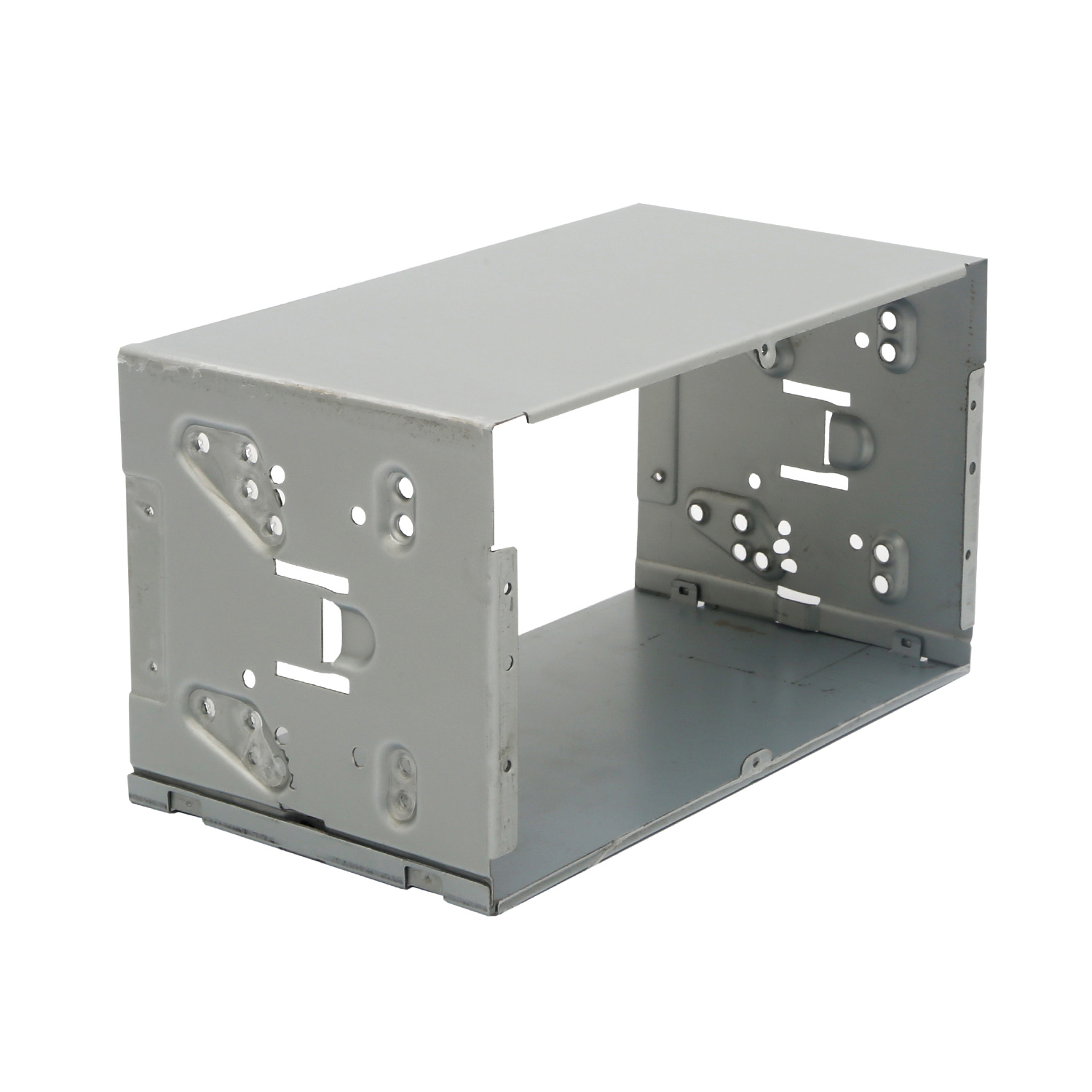
Industrial fabrication does not actually begin on the noisy factory floor. It starts in the quiet precision of the engineering department. Precise 2D and 3D CAD files dictate the exact geometries, bend radii, and tolerance thresholds of the final part. Advanced engineering teams utilize finite element analysis simulation software to accurately predict how the metal will flow and stretch. This identifies potential weak points or tearing risks well before physical manufacturing commences.
Unlike weekend DIY projects that utilize tiny pre-cut blanks, industrial facilities process material in massive bulk to maximize operational efficiency. Raw material typically arrives in giant, continuous coils weighing several tons. Automated uncoilers and mechanical straighteners feed these heavy coils directly into the pressing machinery. For highly specialized aerospace parts or low-volume runs, large pre-cut flat sheets may be utilized instead.
The beating heart of any commercial fabrication facility is the sheet metal press. This massive machinery provides the immense tonnage required to shear and form industrial-grade alloys rapidly. Industrial presses typically range from 20 to 800 tons of force, categorized by their internal mechanisms.
Mechanical presses utilize a heavy-duty motor connected to a spinning flywheel, transferring energy to a crankshaft. They deliver incredibly rapid production speeds, often exceeding 1,000 strokes per minute, making them ideal for high-volume blanking. Hydraulic presses utilize pressurized fluid to drive a massive internal cylinder. They offer consistent, unwavering force throughout the entire downward stroke, vastly superior for deep drawing operations. Servo presses, driven by high-capacity direct-drive motors, represent the cutting edge. They allow operators to program highly precise stroke speeds and dwell positions to handle complex modern alloys.
If the press acts as the muscle of the operation, the stamping dies are undoubtedly the brain. A die is a highly customized, precision-machined mold crafted from hardened tool steel. It is the specific, interchangeable component that comes into direct contact with the sheet metal. In practical engineering terms, these act as heavy-duty cookie cutters engineered to micro-tolerances, often holding dimensional accuracy to within ±0.01mm.
The geometric complexity of your required part dictates the specific die configuration. Single-stage dies perform one isolated operation per press stroke, like punching a circular hole or bending a 90-degree edge. They are highly cost-effective for simple parts. Progressive dies are engineered for high-volume, complex manufacturing. A progressive mold contains multiple distinct stations within a single, elongated tool block. As the continuous metal strip feeds through the press, each station performs a different operation simultaneously. By the time the metal reaches the end, a complete, multi-faceted part is severed from the scrap strip.
Securing high-quality stamping tooling represents the most critical upfront capital investment in your product lifecycle. Substandard tooling inevitably leads to rapid friction wear, dimensional inaccuracies, and unacceptably high defect rates. Premium tooling is meticulously machined from high-carbon tool steels like D2 or tungsten carbide. We frequently treat these molds with specialized chemical coatings like Titanium Nitride to drastically reduce friction. Proper investment ensures the tooling can comfortably withstand millions of punishing cycles.
Your material selection impacts everything from the sheer tonnage required by the machinery to the daily wear rate of your expensive molds.
Facilities process a wide variety of metals chosen for specific mechanical properties. Aluminum is exceptionally lightweight, highly malleable, and naturally corrosion-resistant. It is the go-to choice for aerospace components and modern automotive parts. Because it is a soft metal, it causes significantly less wear on machinery. Copper and brass are renowned for excellent electrical and thermal conductivity. These highly ductile materials are heavily utilized in electrical contacts and are relatively easy to form without cracking. Carbon steel offers an excellent balance of structural strength and cost-effectiveness for heavy machinery housings.
While aluminum is highly forgiving, stainless steel stamping presents a multifaceted engineering challenge. Medical and food-grade variations like 304 and 316 are highly sought after for exceptional tensile strength and superior corrosion resistance. However, these exact premium properties make them notoriously difficult to process efficiently.
Specifically, stainless steel features a high rate of work-hardening. As the metal deforms during the pressing process, its molecular structure changes. It rapidly becomes harder and more brittle. This phenomenon requires the equipment to exert significantly more force than it would for standard carbon steel of the exact same thickness. In addition, its high natural elasticity causes severe spring-back. After the metal is bent, it attempts to return to its original flat shape. Engineers counteract this frustrating trait by designing molds that intentionally over-bend the material by precise margins. Processing this rigid material demands heavy-duty machinery, extreme-pressure lubricants to prevent galling, and highly durable carbide tooling.
How do you choose the right setup for your commercial project? Transitioning a product from a rough prototype to high-volume production requires a concrete evaluation framework.
1. Volume vs. Tooling Cost: If your annual volume is under 10,000 units, single-stage operations or alternative methods like laser cutting might be more viable. The tooling costs remain low. However, for volumes exceeding 100,000 units, investing in a multi-station progressive die becomes mathematically essential. The high upfront mold cost is offset by exceptionally low per-part production costs.
2. Tolerance Requirements: High-precision components requiring ±0.02mm accuracy demand servo-driven presses and premium carbide tooling. Standard brackets or internal chassis components can often be processed reliably on traditional mechanical presses utilizing standard D2 steel molds.
3. Capital Allocation Strategy: Establishing a commercial-scale in-house operation requires staggering capital expenditure. A commercial-grade press easily costs hundreds of thousands of dollars. You must also account for deeply excavated reinforced concrete foundations, specialized high-voltage power grids, and skilled tool-and-die maintenance teams. Partnering with a dedicated manufacturing facility shifts this burden. It transforms a massive capital expenditure into a manageable, predictable operational cost while instantly granting you access to state-of-the-art machinery.
A common misconception is that a part is completely finished the exact moment it ejects from the machine. In reality, raw stamped parts almost always require secondary operations to successfully meet stringent safety and aesthetic consumer standards.
When a heavy punch violently shears through a sheet of metal, it frequently leaves behind microscopic sharp edges known as burrs. Parts coming directly off a press must undergo thorough deburring. Vibratory finishing places batches of parts into a large tub filled with abrasive ceramic media. The constant friction gently sands away sharp edges without altering the core dimensions. Thermal deburring ignites a pressurized gas mixture inside a sealed chamber, creating a millisecond flash of heat that instantly vaporizes thin burrs.
Most parts require a final protective surface treatment to shield them from environmental degradation. Electroplating applies a microscopic layer of zinc or nickel using a controlled electrical current in a chemical bath. This is the industry standard for automotive fasteners. Powder coating applies a dry colored powder electrostatically, which is then baked in a curing oven to form an incredibly durable skin. Anodizing is specifically utilized for aluminum components, electrochemically thickening the natural oxide layer to make it exceptionally scratch-resistant.
While metal forming requirements vary drastically by scale, the fundamental physics remain consistent. Artisan hobbyists can achieve great results with simple brass hammers and steel bench blocks. Commercial production, however, demands the immense power of advanced servo presses and precision-machined tooling. Simply having heavy machinery on the floor is not enough. Deep engineering expertise and a thorough understanding of material science are what truly guarantee manufacturing success. If you are looking to scale your production efficiently without the crushing burden of massive capital expenditure, partnering with an experienced manufacturer is the most strategic path forward. Explore the custom fabrication solutions and precision engineering at Yeeshine to bring your exact designs to life with confidence.
Generally, no. Stainless steel is an exceptionally hard material with a remarkably high yield strength. Attempting to form it manually or with light-duty hobbyist tools will almost certainly result in permanently damaged equipment and deformed metal. It typically requires the immense, highly controlled pressure of an industrial press and specialized, hardened steel molds to form correctly without fracturing the material.
The easiest way to understand the functional difference is to think of the press as the muscle and the die as the mold. The press is the large mechanical or hydraulic machine that generates and delivers the massive downward force. The die is the custom-machined, interchangeable tool securely placed inside the press. The die dictates the actual physical shape, precise cuts, and exact bends applied to the metal during the stroke.
Tooling costs vary widely based on the geometric complexity of the part, the hardness of the material, and the expected lifetime production volume. Simple, single-stage molds might cost a few thousand dollars to produce. Highly complex progressive molds, which move a continuous coil of metal through multiple cutting and bending stations in a fraction of a second, can easily cost tens of thousands of dollars. While this represents a significant upfront investment, the per-part cost drops to mere fractions of a cent during high-volume production runs.
Industrial presses can handle a remarkably wide range of thicknesses. They process everything from ultra-thin 0.1mm foils used in consumer electronics up to heavy 20mm steel plates required for automotive chassis components. The maximum thickness depends entirely on the press tonnage capacity and the specific shear strength of the alloy being processed.
The lifespan of a high-quality progressive mold depends heavily on the tooling material and the specific metal being formed. A well-maintained die crafted from D2 tool steel can easily produce one to two million parts when processing softer metals like aluminum. For harder materials like stainless steel, utilizing premium tungsten carbide components can extend the tool life significantly, provided the mold receives regular sharpening and proper extreme-pressure lubrication.
For DIYers using manual hand tools, soft metals like aluminum, copper, and pewter are by far the easiest materials to work with. They readily accept impressions from hand-held letter punches with minimal physical force and do not cause excessive wear on steel bench blocks. For industrial beginners testing a new prototype design on a machine, aluminum grades like 5052 or 6061 are often preferred. Aluminum is highly malleable, cost-effective, and allows engineering teams to test mold geometries with a significantly lower risk of causing catastrophic tooling damage.


