Email: admin@yeeshine-tech.com WhatsApp: +86-13712868936

- All
- Product Name
- Product Keyword
- Product Model
- Product Summary
- Product Description
- Multi Field Search

Views: 0 Author: Site Editor Publish Time: 2026-05-13 Origin: Site


Injection moulding products cover a wide range of industries, from everyday consumer products to complex industrial components. This process is ideal for mass production and high-volume manufacturing because it delivers strong repeatability and consistent quality. Common plastic injection moulding applications include housings, containers, automotive parts, medical devices, and electronic enclosures. Materials such as thermoplastics and elastomers, including polypropylene (PP), allow manufacturers to tailor strength, flexibility, and durability.
Injection moulding is especially suitable for precision parts and designs with complex geometries that would be difficult to achieve with other methods. Factors like shot weight, tooling economics, and production volume play a key role in manufacturing process selection. When large quantities and stable performance are required, injection moulding becomes a cost-effective solution for producing reliable and uniform parts.
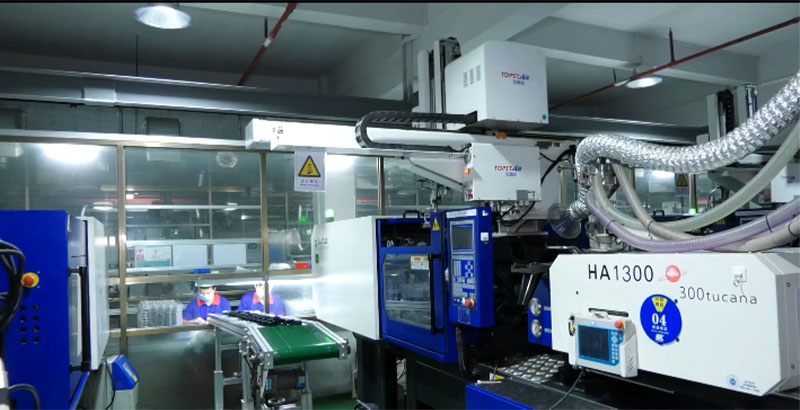
Injection moulding process adaptation starts with choosing the right machine selection and material selection based on product requirements. Different materials such as polypropylene (PP) or POM have unique flow behavior, crystallization characteristics, and shrinkage rates, which influence processing conditions. Machine capacity must match shot weight and cavity number to ensure stable filling and consistent output. Proper mould temperature control also supports material performance, helping achieve better surface finish and reducing internal stress. By aligning equipment and materials with product design, manufacturers can improve efficiency and part quality.
Adjusting process parameters is essential for producing parts with high dimensional accuracy and minimal defects. Key variables include melt temperature, injection speed, packing pressure, cooling time, and overall cycle time. For example, higher injection speed can improve flow in thin-wall designs, while proper packing pressure reduces shrinkage and voids. Cooling time must be balanced to avoid warpage control issues and maintain productivity. Careful tuning of these factors ensures consistent repeatability, especially for precision components and complex geometries.
Modern injection moulding supports advanced methods such as overmoulding, two-shot moulding, and insert moulding to create multi-material products. These techniques allow the combination of rigid and flexible materials in a single process, enhancing functionality and design flexibility. Mould design plays a critical role in managing bonding and temperature differences between materials. With proper process adaptation, manufacturers can achieve improved surface finish, strong material integration, and reliable performance in more sophisticated product applications.
Consumer electronics injection moulding is widely used to produce plastic electronic components with high precision and consistency. Typical products include charging adapters, connector housings, battery compartments, and LED light guides. These parts require tight tolerances to ensure proper fit and reliable electrical performance. Materials such as PC/ABS are commonly selected for their strength, heat resistance, and flame-retardant properties. In addition, careful wall thickness control helps prevent defects like warpage or sink marks, ensuring stable quality in mass production environments.
In consumer electronics, appearance is just as important as function. Injection moulding allows excellent surface finish and colour consistency, which are critical for visible components like device casings and covers. Advanced mould design and precise process control help achieve smooth textures and uniform coloring across large production runs. The ability to scale efficiently makes this process ideal for mass production, where millions of identical parts are required. As a result, injection moulding remains a key solution for producing durable, visually appealing, and high-performance electronic products.

Automotive injection moulding is widely used to produce a variety of automotive plastic parts for both interior and exterior applications. Common examples include dashboard panels, door handles, bumpers, light housings, cable clips, and seat belt components. These parts benefit from the process’s ability to achieve consistent shapes, smooth finishes, and tight dimensional control. Materials like PA66-GF30 are often chosen for their strength and temperature resistance, especially in areas exposed to heat or mechanical stress. This makes injection moulding a reliable solution for producing durable components in mass production.
With the growth of electric vehicles, automotive injection moulding is also essential for EV plastic components such as battery housings and charging ports. These parts require high precision, insulation performance, and long-term stability under varying conditions. Material selection focuses on strength, flame resistance, and dimensional consistency to ensure safety and functionality. Strict quality control processes are applied to maintain repeatability and reduce defects across large production volumes. As a result, injection moulding supports both traditional and electric vehicle manufacturing with efficient, scalable, and high-quality production capabilities.
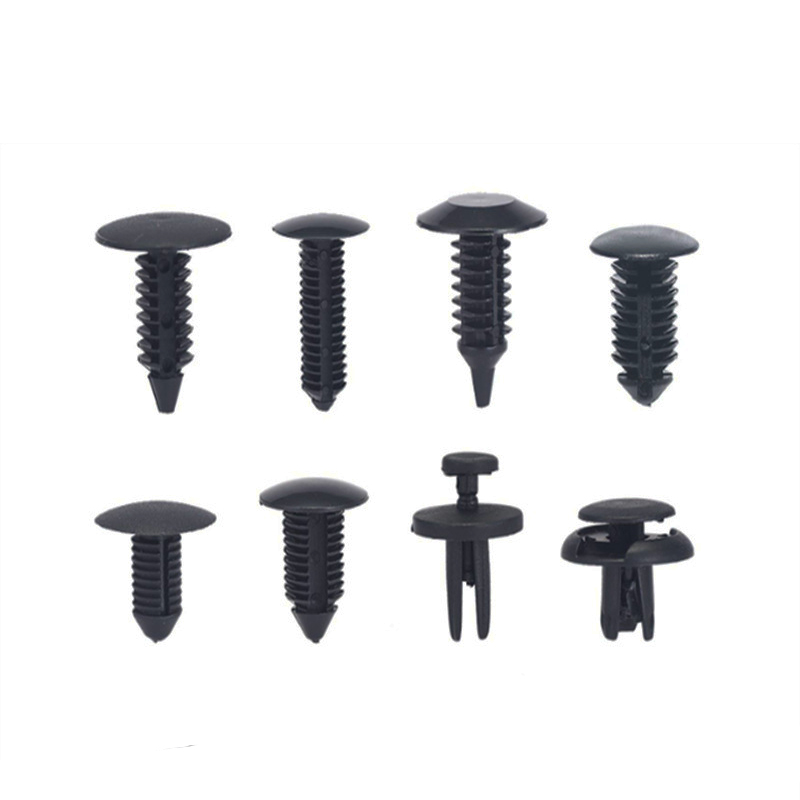
Industrial injection moulding products are widely applied in equipment and infrastructure where strength and reliability are critical. Typical examples include cable management systems, pump impellers, valve bodies, and conveyor components. These parts often use reinforced materials such as PA6-GF30 or PVC to achieve high impact strength and dimensional stability. In demanding environments, chemical resistance plastics are selected to withstand exposure to oils, solvents, and moisture. Injection moulding enables consistent quality and repeatability, making it suitable for high-volume production of durable industrial components with precise specifications.
Packaging injection moulding plays a key role in producing everyday items such as packaging preforms, bottle caps and closures, thin-wall containers, food trays, and cosmetic jars. These products require lightweight design, uniform wall thickness, and fast cycle times. Multi-cavity moulds are commonly used to increase output and reduce cost per unit. Process parameter adjustment, including cooling and injection speed, ensures stable quality and minimizes defects. This makes injection moulding highly efficient for large-scale packaging production where consistency and speed are essential.
Sustainability is becoming increasingly important in both industrial and packaging applications. Many manufacturers are adopting recyclable materials and designing products for improved recyclability. Injection moulding supports sustainable packaging by enabling precise material usage and reducing waste during production. Additionally, advanced material options allow the use of recycled plastics without sacrificing performance. By combining efficient processing with eco-friendly design strategies, injection moulding continues to evolve as a key solution for producing functional, cost-effective, and environmentally responsible products.

Injection moulding is not ideal when production volumes are low. The high tooling cost and long mould lead time make it difficult to justify investment for small batches or early-stage products. Tooling amortisation only becomes efficient when parts are produced in large quantities, so for prototyping or short runs, the cost-benefit analysis often favors alternative manufacturing methods. Options like CNC machining, 3D printing, or vacuum casting provide faster turnaround and lower upfront costs, helping reduce time to market while maintaining acceptable quality control during early development.
Certain product designs also challenge injection moulding capabilities. Geometry limitations such as complex undercuts, or large structures may require complicated mould mechanisms, increasing cost and risk. Flexible products can be difficult to demould and maintain dimensional stability. Applying DFM (design for manufacturing) principles can reduce these issues, but not all designs can be easily optimized. In such cases, processes like rotational moulding or CNC machining may offer better flexibility for producing complex components.
When design changes are frequent, injection moulding may slow progress due to rigid tooling requirements. Modifying a mould is time-consuming and expensive, which limits adaptability during product iteration. Hybrid manufacturing approaches can be more effective, combining methods like 3D printing for prototyping and CNC machining for functional testing. These alternatives allow faster validation, easier adjustments, and improved design refinement before committing to mass production. Choosing the right process depends on balancing cost, speed, scalability, and product complexity.


