Email: admin@yeeshine-tech.com WhatsApp: +86-13712868936

- All
- Product Name
- Product Keyword
- Product Model
- Product Summary
- Product Description
- Multi Field Search

Views: 0 Author: Site Editor Publish Time: 2025-12-18 Origin: Site


In injection molding, the mold cavity is the core space where molten plastic flows in and forms the final product. Different cavity configurations serve different production goals—for example, single cavities are ideal for small batches and high-precision parts, while multi-cavity molds are designed to increase output. Each type varies in molding efficiency, dimensional consistency, and overall cost. Understanding these differences helps engineers choose the right mold design, improve product quality, shorten production cycles, and optimize manufacturing costs.
In injection molding, the cavity is the internal space of the mold where the product is formed, and it is the core element of mold cavity design. Its shape is determined by the product's external geometry and structural features. Molten plastic is injected into the cavity under high pressure, then cooled and solidified to create the final part. The cavity is typically created by combining the core and cavity blocks—or by using inserts—and is manufactured through precise machining to ensure dimensional accuracy and surface quality.
The creation of a mold cavity involves product design, defining the parting line, planning machining operations, and applying processes such as CNC milling and EDM. The finished cavity must accurately replicate the product's profile while ensuring proper sealing, venting, and material flow. A well-designed cavity enhances part quality, reduces defects, extends mold life, and improves overall production efficiency.
In the injection molding process, the mold cavity is the core of the entire manufacturing sequence. From the moment molten material enters the cavity to the final part being released, the workflow includes three main stages: injection, cooling, and ejection. First, the plastic is heated to a molten state and delivered into the cavity under high pressure through molten injection, allowing the material to fill the mold rapidly. It then cools and solidifies inside the mold, a stage that determines dimensional stability. To reduce shrinkage and deformation, proper gate placement, holding pressure, and efficient cooling design are essential.
Once the part is fully formed, the mold opens and the ejection system performs part ejection. To prevent sticking or damaging the part, the cavity surface is often polished or treated, and appropriate draft angles and venting structures are incorporated. With proper process control and thoughtful mold design, common issues like sink marks, warpage, and sticking can be minimized, ensuring consistent product quality and appearance.
A single cavity mold (Single Mold Cavity) is the most basic type, producing only one part per injection cycle. Its structure is simple, with low manufacturing and setup costs, making it ideal for small-batch production, high-precision parts, or prototypes. Single cavity molds are easier to control in terms of cooling and runner design; the molten injection process is uniform, and solidification is stable, effectively reducing shrinkage and warpage. During ejection, part ejection is straightforward and smooth, with a low risk of sticking. The drawback is limited output and higher cost per part, but it remains advantageous for product validation, functional testing, or producing high-precision small components.

A multi-cavity mold can produce multiple identical parts in one cycle, suitable for mass production to reduce the cost per unit. Designing multi-cavity molds requires balancing the flow and cooling of each cavity to prevent uneven shrinkage or deformation. Efficient cooling systems and well-planned gate layouts ensure consistent dimensions and surface quality for all parts. The ejection stage typically uses synchronized or staged ejectors to remove all parts smoothly. Although the initial design and trial runs are complex, multi-cavity molds significantly improve efficiency and lower production costs in long-term manufacturing, making them ideal for large-scale production.
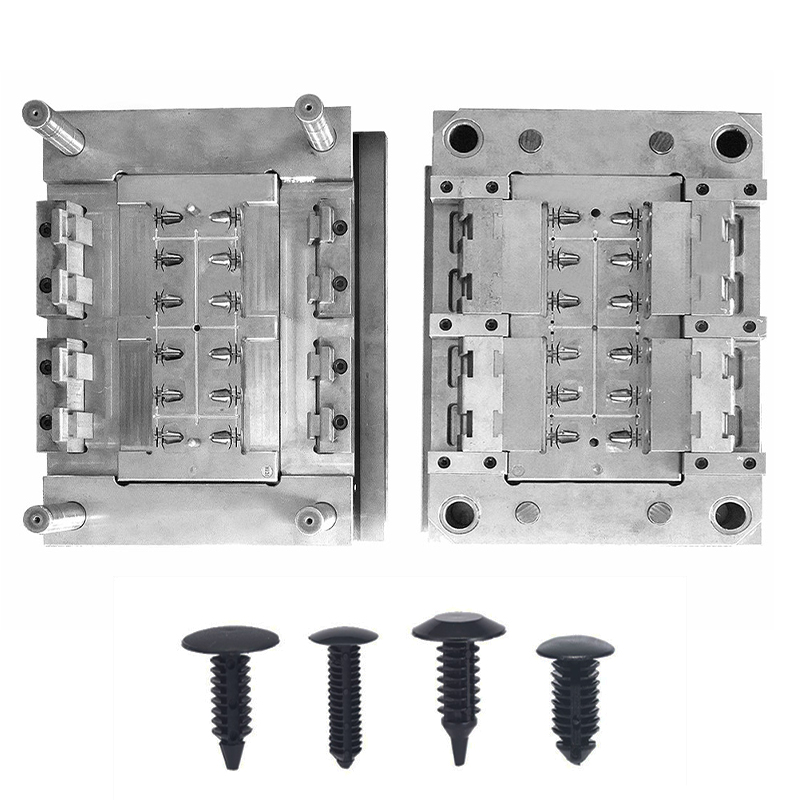
A family mold (Family Mold Cavity) can produce multiple different parts in one cycle, often used for assembly kits or combination products. The design must consider the size, shrinkage, and ejection direction of each part to ensure balanced molten injection, avoiding short shots or warpage. Ejection usually employs independent ejector pins or staged ejection to safely remove all parts without surface damage. Family molds save assembly time and production cycles but have higher requirements for design, cooling, and venting, requiring precise calculation and testing. They are suitable for batch production of complex kits or multi-part assemblies.

In terms of production volume and efficiency, multi-cavity molds are better suited for stable, high-volume manufacturing. Each cavity produces the same part, allowing consistent cycle times and easier automation, which results in high output and reliable quality. In contrast, family molds produce different parts in a single cycle. While this can reduce waiting time for assembly, variations in part requirements often limit cycle speed and efficiency. As a result, family molds are more suitable for small to medium production runs or kit-based products.
From a design perspective, multi-cavity molds mainly focus on balancing runners and cooling so that all cavities perform under identical conditions. Family molds are significantly more complex, as they must accommodate differences in part size, wall thickness, shrinkage rates, and ejection directions. Any instability in one part can affect the entire mold, which means family molds demand more advanced design experience and thorough validation during development.
Regarding tooling costs, multi-cavity molds usually require a higher initial investment, but the cost per part drops quickly with large production volumes. Family molds may appear to reduce tooling expenses by combining multiple parts into one mold, but their higher design, machining, and tuning complexity often increases overall cost and maintenance. For long-term mass production, multi-cavity molds are more cost-effective, while family molds are better suited for projects with fixed part combinations and moderate volumes.
Delivery time is one of the key factors when deciding the number of cavities in a mold. A higher cavity count allows more parts to be produced per injection cycle, which helps shorten the overall production timeline for large orders. However, increasing the number of cavities also extends mold design, manufacturing, and trial time, resulting in a longer upfront preparation period. If a project has a tight schedule and requires a quick production start, choosing fewer cavities—or even a single-cavity mold—can often get the process running faster. For stable, long-term production, multi-cavity molds improve efficiency over time and better support consistent delivery schedules.
Quality and tolerance requirements have a direct impact on cavity quantity. High-precision parts demand tight dimensional control and consistency, and as cavity count increases, it becomes more challenging to balance runners, cooling, and process conditions. Even small variations can lead to dimensional differences between parts. For components with strict tolerances or high cosmetic standards, fewer cavities help maintain better control and higher yield. When part geometry is simple and tolerance requirements are less demanding, a higher cavity count can increase output while maintaining acceptable quality.
Injection machine capacity is a critical technical limitation when determining cavity count. Clamping force, shot size, and plasticizing capacity must all be sufficient to fill all cavities simultaneously. An excessive number of cavities may result in short shots, unstable pressure, or uneven cooling, negatively affecting part quality. A practical approach is to calculate part weight, projected area, and required injection pressure based on the available machine, then determine a feasible maximum cavity number. Properly matching mold design with machine capability ensures stable production, higher efficiency, and reduced operational risk.
In injection molding, the choice of Mold Cavity directly affects product quality, production efficiency, and overall cost. The appropriate cavity configuration should be determined by evaluating part design, tolerance requirements, production volume, and machine capability together. Single-cavity molds offer better quality control, multi-cavity molds support large-scale production, and family molds are well suited for manufacturing matched sets of parts. By carefully assessing these factors during the design stage, manufacturers can reduce risk and achieve more efficient, stable production, ultimately selecting the mold solution that best fits their project needs.


