Email: admin@yeeshine-tech.com WhatsApp: +86-13712868936

- All
- Product Name
- Product Keyword
- Product Model
- Product Summary
- Product Description
- Multi Field Search

Views: 0 Author: Site Editor Publish Time: 2026-10-27 Origin: Site


Low volume manufacturing is a production approach that creates a limited number of parts, often around 50 to 100 units, depending on the product and manufacturing method. It fills the gap between prototyping and mass production, allowing businesses to make real products without committing to large orders. This approach is useful when demand is uncertain, designs are still being refined, or a product serves a specialized market.
One key advantage is production flexibility. Companies can adjust designs, materials, or quantities based on customer feedback and product testing. Producing smaller batches can also support cost reduction by limiting excess stock, reducing the risk of unsold products, and improving inventory management. With fewer units to manufacture at once, businesses can respond more quickly to market changes and achieve faster market entry. As demand grows, the process can transition toward scalable manufacturing, with production volume increasing when sales and product requirements become clearer. This makes small batch production a practical choice for managing costs while preparing for future growth.
High volume manufacturing is designed to produce large quantities of the same product over an extended period. By spreading tooling, setup, and operating expenses across many units, manufacturers can often achieve a lower cost per unit. However, this approach may require substantial upfront investment, particularly when specialized molds, automated equipment, or dedicated production lines are needed. It is generally suitable for established products with predictable demand and stable designs. In contrast, low volume manufacturing focuses on smaller batch sizes, allowing businesses to produce limited quantities without immediately committing to large orders. Although the unit cost may be higher, the initial financial commitment is often easier to manage. Tooling costs can also be reduced when suitable manufacturing methods require less expensive equipment or simplified tooling. For startups and companies launching new products, small batch production offers a practical way to control financial risk while evaluating demand before scaling up.
The main advantage of low volume manufacturing is its greater production flexibility. When a product is still being developed, manufacturers can accommodate design changes, material adjustments, and different customer requirements more easily between batches. This makes small-scale production useful for product testing and market validation, helping businesses collect feedback before committing to mass production. Depending on the process and tooling requirements, it may also shorten the initial lead time by avoiding complex production preparation. High-volume manufacturing, on the other hand, typically performs best when product specifications are stable and demand is sufficient to justify dedicated tooling and optimized production systems. Once the design is finalized, larger quantities can improve manufacturing efficiency and reduce unit costs. Some companies therefore begin with low-volume production and increase output as sales grow. Choosing the right approach depends on the product's development stage, available budget, expected demand, and need for customized solutions.
CNC machining is a reliable option for low volume manufacturing when parts require tight tolerances, consistent dimensions, and good surface quality. The process uses computer-controlled cutting tools to remove material from a solid workpiece, making it suitable for producing metal and plastic custom components. Common materials include aluminum, stainless steel, brass, POM, and nylon. One major advantage is precision machining, which supports functional parts that need accurate fits or must meet specific engineering requirements. Unlike processes that depend on dedicated molds, CNC machining usually requires no production mold, helping reduce initial tooling costs for small orders. It also allows engineers to adjust digital designs without rebuilding an entire mold. However, machining time and material waste can increase costs when parts have complex internal structures or large amounts of material must be removed. For prototypes, replacement parts, and small batch production, CNC machining offers a practical balance of accuracy, material versatility, and dependable part quality.

3D printing is widely used when businesses need rapid prototyping, intricate geometries, or frequent design changes. Instead of cutting material from a solid block or injecting molten plastic into a mold, this process builds parts layer by layer from a digital model. It can create complex shapes, internal channels, lightweight structures, and customized features that may be difficult or expensive to manufacture using traditional methods. Since most applications do not require dedicated production tooling, 3D printing can support low tooling costs and short lead times, particularly during early product development. Engineers can produce functional prototypes, check assembly fit, and evaluate design concepts before investing in larger production runs. Material choices depend on the printing technology and may include engineering plastics, flexible resins, and certain metals. However, surface finish, mechanical strength, dimensional accuracy, and production speed vary by process. For small quantities, prototype testing, and highly customized parts, 3D printing offers valuable design flexibility. It may be less economical than established manufacturing methods when hundreds or thousands of identical parts are needed.

Vacuum casting is a useful option for producing small quantities of parts when appearance, surface detail, and material characteristics are important. The process typically starts with a master pattern, often created through 3D printing or CNC machining. A silicone mold is then made from the master, and polyurethane resin is poured into the mold under vacuum to help reduce trapped air. Compared with conventional injection molding, vacuum casting usually has lower tooling costs because silicone molds are less expensive and quicker to produce than hardened steel production molds. It can also reproduce fine details and provide a range of colors, textures, and resin properties. These advantages make it suitable for product demonstrations, design evaluation, functional prototypes, and limited commercial batches. However, silicone molds have a finite service life, so the process is less suitable for very large quantities. Material properties may also differ from those of production-grade thermoplastics. When businesses need realistic samples without committing to expensive tooling, vacuum casting offers a cost-effective manufacturing route with relatively short lead times.

Injection molding is often associated with mass production, but it can also support low volume manufacturing when the project requires consistent plastic parts and a clear path to higher output. Molten plastic is injected into a mold, cooled, and ejected to create components with repeatable dimensions and surface details. Once the mold is ready, cycle times can be relatively short, and production quality can remain consistent across a batch. This makes the process useful for housings, covers, connectors, and other plastic custom components that need to match assembly or appearance requirements. The main challenge is the initial investment in mold design and manufacturing. For a small order, these costs may make each part more expensive than a machined or printed alternative. However, simple tooling, aluminum molds, or bridge tooling may help reduce upfront spending, depending on the part design and expected quantity. Injection molding is a strong choice when material performance, surface appearance, and repeatability matter. It is especially attractive when small batch production is an early step toward larger commercial orders.
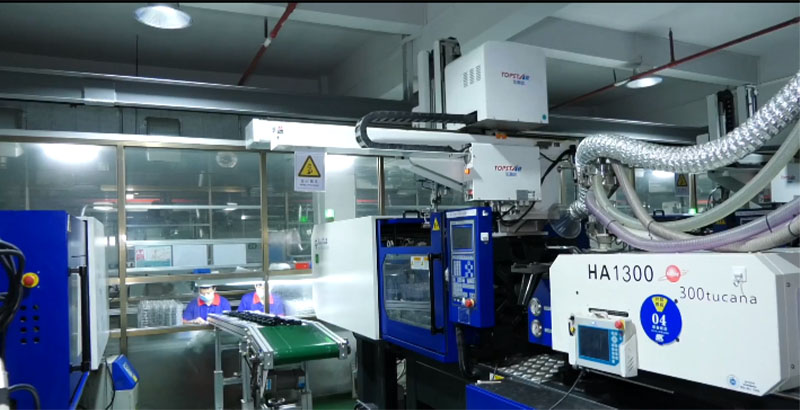
Choosing a suitable process for low volume manufacturing starts with understanding the part's design and performance requirements. CNC machining is a strong option for components that need tight tolerances, durable materials, or accurate mating surfaces. However, complex internal channels and intricate geometries may increase machining time and cost. 3D printing can produce these features with fewer design restrictions, making it useful for rapid prototyping and customized structures. Vacuum casting works well for parts that require detailed surfaces, realistic appearance, or specific resin properties. Injection molding is often more appropriate when plastic components need consistent dimensions and a repeatable finish. Material requirements also matter. Metals, engineering plastics, and flexible resins are not interchangeable, so the chosen process must support the required strength, temperature resistance, and durability. Before selecting a method, consider whether the part is intended for visual evaluation, functional testing, or end-use applications. Matching design complexity, material performance, and precision requirements to the manufacturing process helps prevent unnecessary expenses and avoidable design changes.
The best manufacturing method also depends on the available budget, expected production volume, and required lead time. CNC machining and 3D printing often suit small orders because they can avoid expensive production molds. CNC machining may deliver excellent accuracy, while printing can shorten development cycles when designs change frequently. Vacuum casting provides another option for small batch production, especially when a smooth surface and realistic prototype are important. Injection molding generally involves a higher initial setup cost and tooling cost, but it can become more economical when the same part is produced repeatedly. Production speed should be evaluated alongside preparation time: a process with a fast cycle may still require weeks of tooling development before manufacturing begins. Businesses should compare the total project cost rather than looking only at the price per part. For example, a prototype may justify 3D printing, while a validated plastic product with growing demand may benefit from injection molding. Selecting the right approach helps balance cost, quality, and delivery expectations.
Managing manufacturing costs starts with evaluating the entire project rather than focusing only on the unit price. In low-volume production, setup fees, tooling, material waste, inspection, and post-processing can significantly affect the final budget. For example, CNC machining may be cost-effective for a limited number of precise components because it usually avoids dedicated mold costs. 3D printing can reduce initial expenses for complex prototypes, while vacuum casting may suit small batches that require realistic surface details. Injection molding often involves higher upfront tooling investment but may become more economical as production volume increases. To make a practical decision, estimate the total cost at the expected order quantity and compare alternative processes. Design simplification can also help reduce machining time, material consumption, and manufacturing difficulty. However, removing features should never compromise essential performance or safety. By identifying which specifications directly affect product function, businesses can spend more on critical requirements and avoid unnecessary complexity elsewhere. This approach supports cost control while preserving the value and usability of the finished parts.
Product quality depends on more than the manufacturing equipment used. Clear drawings, suitable materials, realistic tolerances, and defined inspection standards help suppliers understand what the finished parts must achieve. Before production begins, review the design for potential issues such as thin walls, difficult-to-machine features, shrinkage, warping, and assembly conflicts. These checks can reduce rework and prevent expensive corrections later. Different manufacturing methods also require different quality criteria. CNC machining is suitable for many parts with tight dimensional requirements, while 3D-printed components may need additional finishing or inspection depending on the technology. Vacuum-cast parts can reproduce fine details, but silicone mold wear and resin behavior may affect consistency across a batch. Injection molding requires attention to mold design, cooling, material flow, and process settings. For low-volume manufacturing, approving a first article or representative sample before completing the order can reveal problems early. Agreeing on critical dimensions, appearance standards, and functional tests helps ensure that inspection efforts focus on the features that matter most to product performance.
Short lead times are easier to achieve when design decisions, material selection, tooling, and quality requirements are confirmed before manufacturing starts. Frequent revisions, unclear specifications, and delayed approvals can create more schedule risk than the production process itself. At the beginning of a project, establish a realistic timeline covering design review, material procurement, tooling preparation, sample production, inspection, and final delivery. Rapid prototyping can help teams evaluate shape and assembly early, while CNC machining may be suitable when accurate parts are needed without mold development. Vacuum casting can support limited runs using silicone molds, whereas injection molding may require additional time for mold construction and trial adjustments. The best option therefore depends on both production speed and preparation time. Keep communication clear by assigning approval responsibilities, confirming drawing revisions, and agreeing on how defects or design changes will be handled. It is also useful to allow time for inspection and possible corrections rather than planning around an ideal production scenario. With realistic scheduling and early coordination, manufacturers can improve delivery reliability without overlooking essential quality checks or making costly last-minute compromises.
Low volume manufacturing gives businesses a practical way to develop new products, test market demand, and produce custom parts without committing to large orders. Choosing the right manufacturing partner can help balance Cost, Quality, and Lead Time throughout the project. Depending on your design and production goals, available processes may include CNC machining, 3D printing, and injection molding. CNC machining is suitable for precision parts and tight tolerances, while 3D printing supports rapid prototyping and frequent design changes. For plastic components that need consistent dimensions and repeatable finishes, small batch injection molding may be a suitable option when the tooling investment matches the expected order quantity. Yeeshine can also advise on material versatility, design improvements, and cost-effective tooling to help control upfront spending. Whether you are developing an early prototype, preparing samples for market testing, or launching a limited production run, selecting the right process can reduce avoidable delays and support a smoother transition from concept to finished product.
Every project has different priorities, so the most effective manufacturing plan starts with a clear understanding of your requirements. When contacting a supplier, share your 2D drawings or 3D CAD files, preferred materials, estimated order quantity, critical dimensions, surface finish expectations, and target delivery date. If your design is still under development, explain which features need testing and whether design changes are likely. This information helps the engineering team evaluate production feasibility, recommend suitable processes, and identify potential cost or quality risks before manufacturing begins. You can also request a quotation that separates tooling, part production, inspection, finishing, and shipping where applicable. Comparing these details makes it easier to understand the overall budget and expected lead time. From rapid prototyping to small batch production, experienced suppliers can provide custom manufacturing solutions that fit your product's development stage. Contact a manufacturing partner with your project details to discuss process options, review technical requirements, and develop a production plan that supports a faster, more predictable path to market.


