Email: admin@yeeshine-tech.com WhatsApp: +86-13712868936

- All
- Product Name
- Product Keyword
- Product Model
- Product Summary
- Product Description
- Multi Field Search

Views: 0 Author: Site Editor Publish Time: 2025-11-27 Origin: Site


In the manufacturing industry, injection moulding is one of the most widely applied forming processes. According to the injection moulding definition, it is a method where plastic material is heated until molten, then injected into a mould cavity under high pressure, and solidified into the final product after cooling. This process not only enables large-scale production but also allows the creation of parts with complex structures and precise dimensions. Understanding what is injection moulding process helps beginners grasp the basic principles quickly. As an introduction to injection molding, this technique provides modern industries with efficient, cost-effective, and reliable production solutions.
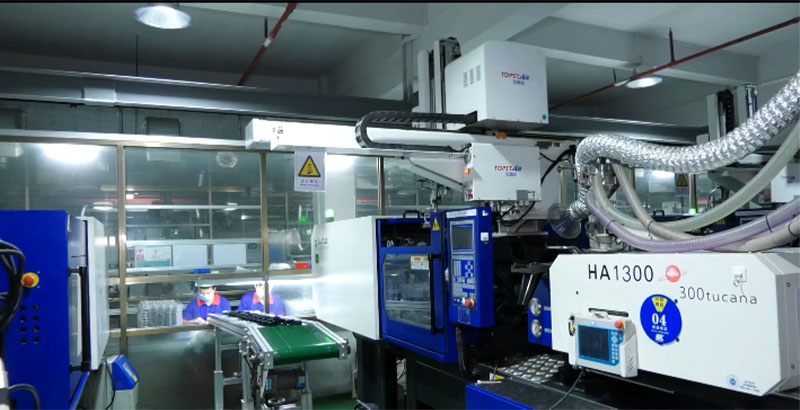
To truly understand injection moulding, it is important to first know how does injection moulding work. The entire process typically involves four key stages. First, plastic pellets are fed into the heating system, where they melt into a highly fluid material. Next, the molten plastic is pushed into the mould cavity by the screw under high pressure. Then, the material cools and solidifies inside the mould, gradually forming the desired shape. Finally, the mould opens and the ejection system releases the finished part. These injection moulding steps work seamlessly together to ensure accuracy and consistency of the product. From an injection molding process overview, we can see that this technique is not only suitable for mass production but also ideal for creating complex components, making it a fundamental process in modern manufacturing.


When evaluating whether to use injection moulding, several aspects should be taken into account. First, injection moulding financial considerations are crucial: while the upfront cost of tooling is relatively high, the cost per part drops significantly in large-scale production, making it ideal for mass manufacturing. Second, quantity considerations for injection moulding must be assessed. For small production runs, tooling expenses may be difficult to make cost-effective, but when volumes reach tens of thousands or even millions, injection moulding shows clear economic advantages. Finally, tooling and volume considerations also play an important role—mould design complexity, durability, and production cycle time all directly impact overall efficiency. By weighing these injection moulding considerations, companies can better decide whether this process aligns with their project requirements.
When deciding between vacuum casting or injection molding, it's important to evaluate your project based on production volume, budget, timeline, and performance requirements. If your product is in the early design stage, requires prototype testing, or only needs a small batch, the answer to when to use vacuum casting vs injection molding often leans toward vacuum casting due to its lower mold cost and faster turnaround, making it ideal for rapid iteration. On the other hand, if the design is finalized and large-scale production is needed, injection molding offers better cost-efficiency and higher output.
This process selection guide for molding recommends choosing injection molding when consistency and low unit cost are priorities, while vacuum casting is better for flexibility and speed. Making the right manufacturing decision between vacuum casting and injection molding helps improve development efficiency and reduce production risk.
Injection moulding is widely used in modern industries and spans across multiple sectors. According to injection moulding applications, this process is suitable for producing consumer goods, electronic housings, automotive parts, medical devices, and packaging products. For example, many household appliance buttons, protective casings for electronic devices, as well as car dashboards and connectors, are common products from injection moulding. Through various injection moulding applications examples, it is clear that this technique not only supports complex shape designs but also ensures dimensional accuracy and consistency in mass production. The industries using injection moulding include automotive, electronics, and toy manufacturing, making it an essential technology in modern manufacturing.


When comparing different manufacturing methods, understanding the injection moulding advantages highlights the unique value of this process. First, the benefits of injection moulding are most evident in mass production, as it ensures dimensional accuracy and consistent appearance, making it ideal for products requiring high repeatability. Second, injection moulding can handle complex structures and fine details, allowing designers to realize more creative ideas—this is one of the key reasons for why use injection moulding. At the same time, the process offers significant injection moulding efficiency, with short cycle times, fast production speed, and a high level of automation that helps reduce labor costs. Combined with excellent material utilization and stable output, injection moulding is considered an ideal choice in modern manufacturing for balancing efficiency and quality.
Although injection moulding has many advantages, there are also several injection moulding disadvantages to consider. First, the initial investment cost for tooling is very high, which makes it less economical for low-volume production—this is one of the common drawbacks of injection moulding. Second, the mould design and manufacturing process can be time-consuming, limiting rapid iteration and fast product updates, which reflects some injection moulding limitations. In addition, for very large parts or certain special materials, injection moulding may not be the most suitable method. Furthermore, if process parameters are not well controlled, defects such as warping, sink marks, or bubbles can occur. These challenges with injection moulding may increase costs in quality management and rework. Therefore, when choosing a manufacturing process, it is important to weigh the pros and cons of injection moulding against project requirements.
Q1: Is injection moulding environmentally friendly?
A1: The injection moulding process itself can be energy-intensive, but its sustainability can be improved by using recyclable plastics, optimizing mould design, and reducing waste.
Q2: Is injection moulding cheap?
A2: For high-volume production, injection moulding offers very low unit costs, making it highly economical. However, for small production runs, the high cost of tooling makes it less cost-effective.
Q3: What are the main costs in injection moulding?
A3: Tooling accounts for the largest portion of upfront expenses. Although the initial investment is high, once mass production begins, the cost per part drops significantly.
Q4: Is injection moulding suitable for low-volume production?
A4: Generally, it is not ideal due to the long lead time and high cost of tooling. For small batches, alternatives like vacuum casting or 3D printing are usually more practical.
Q5: How long does an injection mould last?
A5: High-quality steel moulds can produce hundreds of thousands or even millions of parts with proper maintenance, making them highly suitable for continuous and large-scale manufacturing.
As an efficient and well-established manufacturing process, injection moulding plays a vital role in modern industries. Looking at the summary of injection moulding, its main advantages include low per-unit cost, fast cycle times, and compatibility with a wide range of materials. However, factors such as high upfront tooling investment and longer design lead times must also be considered. Taking these injection moulding key takeaways into account, the conclusion is that injection moulding is the best choice for projects requiring high volume, accuracy, and long-term use. For small batches or rapid prototyping, alternative processes may be more practical. In short, the final thoughts on injection moulding are that it provides a stable, reliable, and cost-effective solution for modern manufacturing.


