Email: admin@yeeshine-tech.com WhatsApp: +86-13712868936

- All
- Product Name
- Product Keyword
- Product Model
- Product Summary
- Product Description
- Multi Field Search

Views: 0 Author: Site Editor Publish Time: 2026-10-21 Origin: Site


Is plastic injection molding truly perfect? While it remains the undisputed gold standard for mass production, critical flaws exist beneath the surface. Ignoring these inherent drawbacks frequently causes blown budgets. Furthermore, delayed product launches routinely frustrate even the most seasoned engineering teams.
In this comprehensive guide, we will dissect the main disadvantages of this manufacturing method. Specifically, we will explore the rigid physical constraints, the financial hurdles, and the strategic workarounds necessary to avoid common production risks on the factory floor.
Evaluating manufacturing processes quickly reveals a massive barrier to entry. You need significant capital just to flip the machine switch. Picture a hardware team finalizing a flagship automotive component, only to stare down a massive invoice merely to cut the steel. That is the harsh reality of this specific manufacturing method.
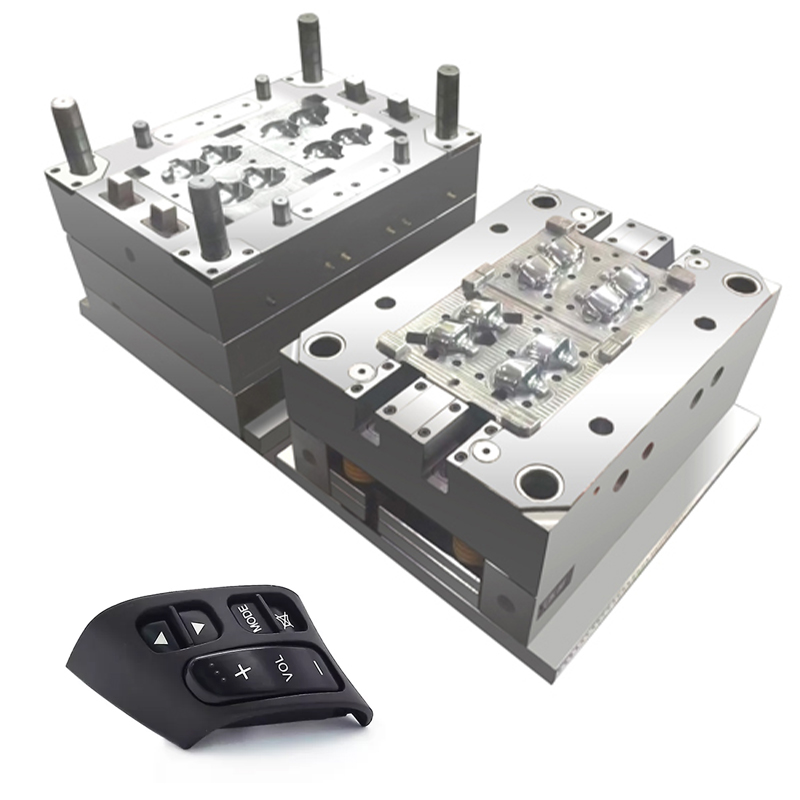
The creation of a mold is not merely a machining task. It is a highly specialized engineering discipline. Molds are typically carved from high-grade materials such as hardened steel, specifically H13, P20, or S136, or aerospace-grade aluminum. Hardened steel is absolutely necessary to withstand the immense clamping forces and thermal stress of injecting molten polymer at high pressures over hundreds of thousands of cycles.
Machining these dense metals requires precision equipment. Toolmakers utilize advanced CNC machining centers and Electrical Discharge Machining to carve complex cavities. These machines must hit tolerances as tight as ±0.01mm. Furthermore, the molds must incorporate intricate internal cooling channels, ejector pin systems, and gate mechanisms. The combination of premium raw materials, specialized machinery, and hundreds of hours of skilled engineering labor results in a massive tooling cost. This expense can range from a few thousand dollars for a simple prototype block to well over six figures for a multi-cavity, high-production steel tool.
Another critical financial disadvantage is the sheer inflexibility of the hardware once it is manufactured. If a product design changes after the metal is cut, modifying the tool becomes an engineering nightmare.
In tooling terminology, changes are categorized as either steel safe or non-steel safe. A steel safe change involves removing metal from the mold. This consequently adds plastic to the final part, making the process relatively straightforward. In contrast, a non-steel safe change requires adding metal back into the cavity to make the plastic part smaller. This procedure involves complex micro-welding or inserting new steel blocks. Such modifications compromise the thermal integrity of the mold and add significant expense. In many cases involving major design revisions, the existing mold must be scrapped entirely.
Product teams often operate on aggressive go-to-market schedules. Therefore, the time required to transition from a digital file to a physical, mass-produced product is a major limitation.
You cannot simply upload a 3D model to a machine and immediately begin production. Because the tooling is so expensive and difficult to alter, the product design must be exhaustively validated first. Engineers typically spend weeks prototyping the part using industrial 3D printing or CNC machining. These prototypes undergo rigorous functional and drop testing to ensure the geometry is flawless. Only after the design is completely locked and signed off can the actual manufacturing phase begin.
The actual mold lead time is a notoriously lengthy, multi-step sequence. Designing the mold layout, programming the toolpaths, rough machining, heat-treating the steel, finish machining, polishing, and final assembly typically spans 4 to 12 weeks.
Once assembled, the tool enters the testing phase. The manufacturer will shoot a first run of parts, known as T1 samples in the industry. Realistically, these samples are rarely perfect on the first try. Quality control inspectors meticulously measure them against the original CAD specifications using coordinate measuring machines. If dimensional inaccuracies or visual defects are found, the mold must be taken offline, disassembled, and fine-tuned. This iterative cycle of T1, T2, and T3 samples can easily add several more weeks to the timeline before the tool is officially approved for mass production.
The financial viability of this manufacturing method is strictly tied to production volume. For businesses seeking to produce small, localized batches of products, this process proves highly inefficient.
The financial model of injection molding consists of exceptionally high fixed costs for the mold itself and very low variable costs for the plastic resin pellets and machine cycle time. To make the process economical, the initial capital expenditure must be amortized over a massive number of parts.
If a company spends $20,000 on a mold and only produces 500 parts, the tooling alone adds $40 to each individual unit. This renders the project commercially unviable for most consumer goods. However, if that same mold produces 200,000 parts, the tooling burden drops to just $0.10 per part.
| Production Volume | Fixed Tooling Cost | Material/Machine Cost per Part | Total Amortized Cost per Part |
|---|---|---|---|
| 500 Units | $20,000 | $0.50 | $40.50 |
| 5,000 Units | $20,000 | $0.50 | $4.50 |
| 50,000 Units | $20,000 | $0.50 | $0.90 |
| 200,000 Units | $20,000 | $0.50 | $0.60 |
*Data reflects a theoretical model demonstrating economies of scale.
Due to this heavy volume dependency, engineers must seek alternative methods for low-volume runs, typically those under 1,000 units. Industrial additive manufacturing and CNC machining require zero upfront tooling fees. This makes them far more economical for small batches. Urethane casting using silicone molds is another viable alternative for bridging the gap between prototyping and mass production, offering lower setup costs albeit with higher per-part manual labor costs.
For product engineers and industrial designers, the rigid geometric parameters required for this process can be a significant source of frustration. Unlike 3D printing, where complex, organic shapes can be printed without much concern for physics, injecting molten polymer into a steel cavity demands strict adherence to fluid dynamics and thermodynamics.
One of the most unforgiving constraints is the requirement for consistent geometry. When molten plastic floods into a steel cavity, it begins to cool and shrink the millisecond it hits the metal. If a CAD designer includes thick, chunky sections next to paper-thin walls, physics takes over. The thin areas freeze solid instantly, while the dense pockets continue to cool and contract inward.
This discrepancy in cooling rates causes uneven volumetric shrinkage. As the thick sections contract long after the thin sections have hardened, massive internal stresses build up. This physical phenomenon leads to severe cosmetic and structural defects, most notably sink marks and severe warping. Designers are constantly forced to compromise their ideal aesthetic vision, utilizing techniques like coring out thick areas and adding structural ribs to navigate these injection molding limitations.
To ensure a part can be successfully ejected from a rigid metal mold without being destroyed, designers must incorporate draft angles. A draft angle is a slight taper, usually 1 to 2 degrees, applied to the vertical walls of the part, parallel to the direction the mold opens. Without sufficient draft, the plastic part will shrink tightly against the mold core as it cools. This causes the ejector pins to punch right through the plastic during the ejection phase.
Furthermore, designing parts with undercuts adds massive complexity. Features like snap-fits or threaded caps prevent the part from ejecting straight out. Undercuts require the mold to have complex moving internal mechanisms, such as side-action cams or lifters, which slide out of the way before ejection. Every additional moving part within a mold drastically increases the size, complexity, and cost of the tooling, while simultaneously increasing the likelihood of mechanical failure on the shop floor.
Even with a perfectly designed CAD file and a meticulously crafted metal mold, the injection process itself is highly sensitive to environmental and mechanical variables. Step onto any factory floor, and you will realize that slight deviations in barrel temperature, hydraulic pressure, or cooling time can instantly ruin a production run.
The interaction between molten polymer dynamics and thermodynamics can produce several documented defects. Maintaining strict quality control is essential to minimize these costly issues.
| Defect Name | Visual Characteristic | Primary Mechanical Cause |
|---|---|---|
| Flash | Excess, paper-thin plastic protruding from the parting line of the part. | Excessive injection pressure or inadequate clamping force allowing plastic to seep between mold halves. |
| Short Shot | Incomplete parts where the plastic did not fully fill the mold cavity. | Insufficient injection pressure, low melt temperature, or trapped air restricting flow. |
| Sink Marks | Small craters or depressions on flat surfaces. | Inadequate holding pressure or localized thick sections cooling and shrinking too slowly. |
| Weld Lines | Visible lines where two separate flows of molten plastic meet and bond. | Melt fronts cooling down too much before they properly fuse together, preventing a strong molecular bond. |
Attempting to mitigate high costs by partnering with facilities utilizing outdated or poorly maintained machinery often backfires spectacularly. Precision molding requires exact, closed-loop control over the barrel temperature, injection velocity, and cavity pressure. Older, cheaper machines often suffer from hydraulic leaks and poor thermal regulation. When the machinery cannot maintain a stable processing window, it leads to dimensional variations between batches. This ultimately results in a much higher true cost of production due to scrapped materials and delayed shipments.
While thousands of engineering polymers exist, the physical properties of these materials present inherent limitations and environmental challenges during the manufacturing lifecycle.
Plastics used in this process are broadly divided into two categories: thermoplastics and thermosetting plastics. Thermoplastics, such as ABS, Polycarbonate, and Polypropylene, can be melted, molded, cooled, and then remelted.
Thermosets, like epoxy or phenolic resins, undergo a permanent chemical cross-linking reaction when heated. A major disadvantage of thermoset molding is that once the material cures, it cannot be remelted. Any defective parts, runner systems, or excess flash generated during a thermoset production run become permanent, non-recyclable waste.
Even when utilizing highly recyclable thermoplastics, the setup and calibration phases generate considerable waste. When a machine switches from one color to another, or from one material to another, the barrel must be purged. This purging process extrudes a large amount of mixed-plastic waste that often cannot be recycled due to material cross-contamination. Additionally, complex polymer blends containing glass fibers or chemical flame retardants are notoriously difficult to recycle. This presents a significant environmental limitation for companies striving for zero-waste manufacturing.
Recent industry shifts highlight a growing tension between traditional overseas production and the urgent need for supply chain resilience. Procurement teams frequently face frustration over rigid production constraints. Extended shipping delays often compound already lengthy setup schedules.
Consequently, a noticeable trend toward hybrid manufacturing has emerged. Smart engineering teams now leverage industrial additive manufacturing to validate iterations instantly. They only commit to expensive steel tooling once the geometry is mathematically flawless. This agile approach directly addresses historical inflexibility, allowing brands to mitigate financial risks while maintaining high-volume scalability.
Despite these formidable physical and financial challenges, injection molding remains the undisputed champion of mass production. The key to success lies not in avoiding the process entirely, but in strategically mitigating its risks through engineering foresight and strategic supply chain partnerships.
The most effective way to control costs and prevent defects is through a rigorous Design for Manufacturability analysis. Before any steel is cut, engineers utilize specialized mold-flow simulation software to predict exactly how molten plastic will behave inside the cavity. A comprehensive analysis verifies uniform wall thickness, identifies potential sink marks, and optimizes gate locations. By identifying and resolving these issues in the digital realm, product teams avoid the disastrous costs of modifying physical metal later.
Navigating the complexities of tooling investments, lead times, and strict design rules requires deep expertise. Attempting to manage this process with unverified, lowest-bidder suppliers often leads to communication breakdowns and substandard tooling.
Instead of vague promises, look for a manufacturing partner capable of handling complex automotive or medical-grade requirements. Your supplier should utilize advanced CNC machining centers to guarantee mold longevity and achieve dimensional tolerances as tight as ±0.01mm. They must offer transparent feedback before cutting metal. By partnering with specialists who excel in producing custom plastic parts, product teams can successfully offset traditional industry drawbacks. This ensures projects launch on time, within tight tolerances, and under budget.
While the manufacturing landscape offers numerous production methods, understanding the inherent limitations of each is critical for informed decision-making. The disadvantages of plastic injection molding—namely the exorbitant upfront tooling costs, extended lead times, strict geometric design rules, and absolute reliance on high-volume production to achieve profitability—are undeniable. It is an unforgiving process where early engineering mistakes translate directly into severe financial penalties.
However, these drawbacks do not diminish its status as the most efficient, cost-effective method for scaling physical products globally. By acknowledging these constraints early in the product development lifecycle, applying rigorous engineering principles, and aligning with a competent manufacturing partner, teams can navigate these hurdles successfully. The ultimate verdict is clear: success in high-volume manufacturing requires respecting the physical limitations of the process and designing intelligently around them from day one.
Ready to scale your production without the common pitfalls? Whether you need high-precision automotive components or robust consumer goods, Yeeshine Tech provides expert tooling and molding solutions tailored to your specific engineering requirements. Explore our comprehensive services today to turn your complex designs into flawless physical realities.
It is highly complex and financially burdensome to modify a mold once the steel has been cut. In the tooling industry, there is a concept known as steel safe modifications. This means it is relatively easy to remove metal from the mold, which adds plastic to the final part, making a feature larger or a wall thicker. However, if you need to make a plastic feature smaller, the manufacturer must add metal back into the mold cavity. This often requires complex micro-welding, which can compromise the structural integrity of the mold, or it may require machining an entirely new tool, effectively doubling your initial investment.
The timeline is heavily dependent on the complexity of the part and the type of metal used. For simple geometries with no undercuts, a prototype aluminum tool might be completed in 2 to 4 weeks. However, for complex, multi-cavity hardened steel molds designed for high-volume production, the lead time typically ranges from 6 to 12 weeks. This timeframe includes 3D tool design, CNC machining, EDM processing, hand-polishing, and the production of initial T1 samples for client approval.
The better option depends entirely on your production volume and specific material requirements. Additive manufacturing is vastly superior for rapid prototyping and low-volume production, typically under 500 units, because it completely eliminates the upfront tooling costs. You only pay for the raw material and machine time. However, 3D printed parts generally have weaker structural integrity due to layer adhesion limitations. Once production scales beyond 1,000 units, injection molding becomes exponentially more cost-effective per part, offers vastly superior surface finishes, and provides true isotropic mechanical properties.
Maintaining uniform wall thickness is one of the most critical design constraints due to the physics of thermodynamics. Molten plastic shrinks as it cools. Thick cross-sections retain heat much longer than thin sections. If a part has varying thicknesses, the thin areas will solidify while the thick areas are still cooling and shrinking. This differential shrinkage pulls the material inward, creating internal stresses that manifest as visible sink marks on the surface or cause the entire part to warp severely out of its intended dimensional tolerances.
Technically, a machine can produce a single part once the mold is installed. However, the setup process, which involves installing a heavy steel tool, heating the barrel, and purging old resin, takes significant time and labor. Because of these fixed setup costs, running small batches is financially impractical. Most reputable manufacturers require a minimum order quantity of at least 1,000 to 5,000 units to ensure the per-part price remains economically viable for the customer.
Warping is primarily caused by uneven cooling rates across the geometry of the part. When plastic is injected into the mold, it must cool uniformly to maintain its intended shape. If a design features drastic changes in wall thickness, or if the mold's internal cooling channels are poorly designed, certain sections of the plastic will cool and shrink faster than others. This differential shrinkage creates massive internal stress, causing the part to twist or bow as it is ejected from the machine.


