Email: admin@yeeshine-tech.com WhatsApp: +86-13712868936

- All
- Product Name
- Product Keyword
- Product Model
- Product Summary
- Product Description
- Multi Field Search

Views: 0 Author: Site Editor Publish Time: 2026-10-20 Origin: Site


Everyday plastic products rely on a masterfully crafted block of metal to come into existence. From life-saving medical syringes to durable household components, these items begin their lifecycle inside a highly engineered cavity. Plastic injection molding remains the gold standard for mass-producing high-quality, repeatable parts. However, the success of this entire manufacturing process hinges completely on the precision and durability of the tool itself.
Building these tools requires massive upfront capital. A poorly constructed block inevitably leads to severe product defects, extended production delays, and wasted financial resources. Therefore, understanding the intricate manufacturing steps is critical for product designers and procurement managers. This guide walks you through the exact process of tool creation. We cover everything from initial digital engineering phases to advanced machining techniques, right up to final validation.
The tooling industry is currently experiencing a massive shift driven by automation and advanced metallurgy. Direct metal laser sintering has revolutionized thermal management on the shop floor. Engineers are no longer restricted to straight-line drilled water channels. Instead, conformal cooling lines wrap seamlessly around complex part geometries. This technological leap drastically reduces cycle times and improves dimensional stability.
Furthermore, artificial intelligence is now heavily integrated into flow simulation software. By predicting shear stress and potential failure points in the digital environment, toolmakers can optimize gate locations with unprecedented accuracy. These advancements make the upfront engineering phase more critical and effective than ever before.
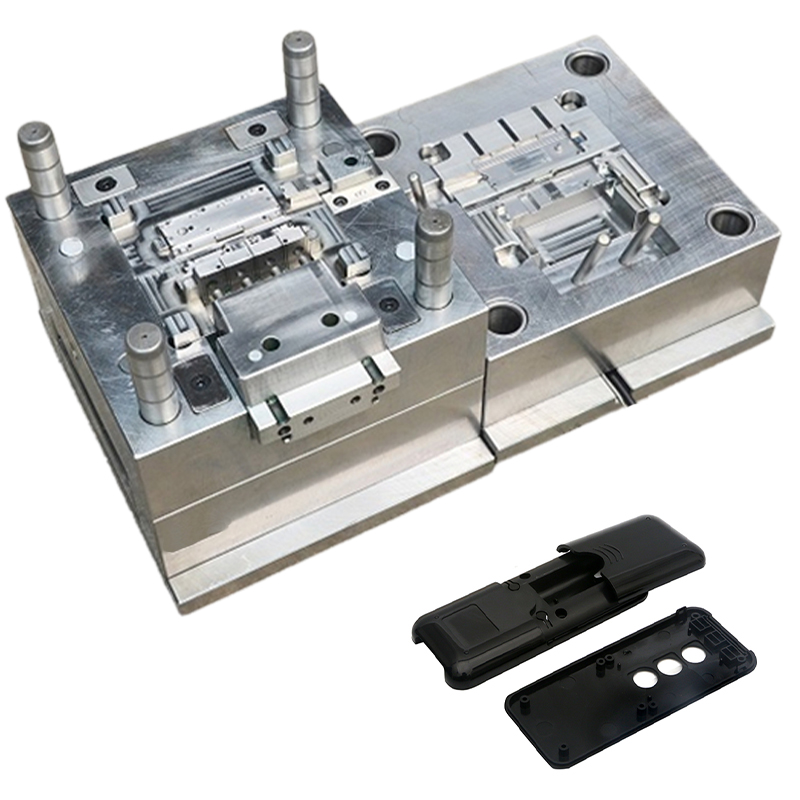
Before diving into the machining steps, it is essential to understand fundamental tool architecture. A mold is not just a hollow block. Rather, it is a highly complex mechanical system engineered to withstand extreme internal pressures and rapid temperature fluctuations.
An assembly consists of two primary halves. The A-side, often called the cavity, remains stationary and is attached to the injection side of the molding machine. In contrast, the B-side, known as the core, is attached to the moving platen. When the machine closes, these two halves shut together with immense clamping force. This creates the precise negative space that forms the physical shape of the final plastic part. Typically, the cavity dictates the exterior cosmetic surface, while the core forms the internal hidden structure.
Molten plastic does not simply teleport into the cavity. It travels through a highly engineered delivery network. The plastic enters through the sprue bushing, travels along runners, and passes through a restrictive gate before filling the part. Depending on the project requirements, engineers utilize either standard cold runners or advanced hot runner systems to optimize material flow and reduce waste.
During the molding process, the transition of plastic from a molten liquid to a solid state accounts for the majority of the cycle time. To accelerate this phase, internal cooling channels are meticulously mapped out. Water or specialized coolant is pumped through these intricate pathways to extract heat from the metal. Proper thermal management prevents part warpage, reduces internal stresses, and maximizes production efficiency.
Physical construction is entirely dictated by the digital engineering that precedes it. Rushing the design phase invariably leads to catastrophic tooling failures or unacceptable part quality on the production floor.
The first step in injection mold design is conducting a comprehensive manufacturability analysis. Engineers meticulously evaluate the 3D CAD model to ensure it can actually be molded. This involves checking for uniform wall thickness to prevent sink marks. They also add appropriate draft angles so the part can eject smoothly. Identifying undercuts that require complex mechanical actions like sliders or lifters is a crucial part of this stage.
Following the initial review, modern engineering relies heavily on simulation software to predict how molten polymers will behave inside the cavity. Flow analysis simulates the injection process. It allows designers to visualize the flow front of the plastic, predict fill times, and identify potential issues such as air traps or weld lines. By adjusting gate locations and cooling line layouts in the digital environment, engineers eliminate the need for costly physical rework later.
The material chosen for the base and core inserts dictates longevity, maintenance requirements, and upfront cost. Engineers select specific custom mold tooling materials based on the projected production volume and the abrasiveness of the plastic resin being used.
For high-volume production runs, steel is the undisputed industry standard. However, not all steel is created equal. The choice depends entirely on the expected lifecycle and the type of plastic injected, such as ABS, PC, PP, or POM.
| Material Grade | Characteristics | Estimated Mold Life | Best Application Scenarios |
|---|---|---|---|
| P20 / 718H | Pre-hardened steel, excellent machinability, good balance of cost and durability. | 300,000 - 500,000 shots | Medium-volume consumer goods, household products, enclosures. |
| NAK80 | Pre-hardened premium steel, superior polishing capabilities, highly stable. | 500,000 - 800,000 shots | Clear parts, high-gloss cosmetic surfaces, precision electronics. |
| S136 / H13 | Fully hardened stainless/tool steel. High wear and corrosion resistance. | 1,000,000+ shots | Medical devices, optical components, abrasive glass-filled resins. |
| Aluminum 7075 | Soft metal, extremely fast machining, superior thermal conductivity. | Under 10,000 shots | Rapid prototyping, bridge tooling, low-volume testing. |
In specific engineering scenarios, certain areas of the core struggle to cool down at the same rate as the rest of the block. To combat these thermal hotspots, designers insert beryllium copper alloys. Copper transfers heat away from the plastic much faster than standard steel, ensuring uniform cooling and preventing localized part deformation.
Once the design is finalized and the raw steel blocks are procured, physical manufacturing begins. The heavy lifting of tool creation is performed by advanced milling machines. They transform a massive metal block into a highly detailed engineering marvel.
Advanced CNC mold machining utilizes pre-programmed software to dictate the movement of rotary cutting tools. When the machinist clamps the raw steel onto the bed of a multi-axis mill, the machine carves out the precise geometric shapes required. These automated systems can reach complex angles and machine deep pockets with absolute precision, operating continuously to meet tight deadlines.
The milling process is divided into distinct operational phases. The roughing phase produces an aggressive roar on the shop floor as large cutting tools plunge into the metal. This removes the bulk of the raw material as quickly as possible. Once the rough shape is established, the machine automatically swaps to smaller, specialized tools for the finishing phase. Finishing requires ultra-precise, slow passes to achieve the final dimensions, leaving behind a smooth surface ready for the polishing bench.
In the world of high-volume manufacturing, there is absolutely no room for error. If the two halves do not shut together perfectly, highly pressurized molten plastic will seep into the microscopic gaps. This creates an unacceptable defect known as flash. Consequently, advanced milling equipment is calibrated to hold tolerances as tight as 5 microns. This extreme level of precision ensures mechanical shut-offs function correctly and moving components slide without friction.
While milling is incredibly efficient, physical rotary cutters have inherent geometric limitations. A round spinning tool cannot cut a perfectly sharp internal corner. Nor can it easily machine ultra-deep, narrow structural ribs. This is where non-traditional machining methods come into play.
Instead of cutting metal with physical force, EDM mold manufacturing uses controlled electrical sparks to erode the steel. A custom electrode is machined into the exact inverse shape of the desired feature. The electrode is slowly lowered toward the steel block while submerged in a bath of dielectric fluid. As the electrode gets microscopically close, massive electrical discharges arc across the gap. This vaporizes the steel particle by particle without ever physically touching it.
This process is deployed for features that are physically impossible to mill. This includes sharp internal corners, deep structural ribs, intricate company logos, and ultra-thin wall sections. Because electrical erosion does not apply physical cutting stress to the steel, it is also ideal for machining very delicate features that might snap a fragile endmill.
After the heavy machinery falls silent, the machined steel components require meticulous finishing. This assembly is handled by highly skilled, veteran toolmakers.
The surface of the cavity directly dictates the appearance of the final plastic part. Toolmakers follow standard industry finishes. A premium finish requires rigorous hand-polishing with diamond abrasive compounds to achieve a flawless, optically clear mirror surface. Conversely, a matte finish leaves a rougher surface suitable for internal structural parts where aesthetics are not a priority.
Many consumer products require specific tactile textures, such as a leather grain on an automotive dashboard or a sandblasted grip on a household appliance. These textures are applied directly to the cavity walls. This is typically achieved through chemical photo-etching, where an acid resist is applied, and acid is used to eat away specific patterns into the steel. Additionally, multi-axis laser texturing is becoming a highly precise alternative for complex geometric patterns.
Building an assembly is not like putting together flat-pack furniture; it requires an artisanal touch. Toolmakers carefully fit the core, cavity, lifters, sliders, and ejector plates. They use a traditional technique called blueing, where a thin layer of blue dye is applied to the parting line. The block is then shut in a spotting press. Any areas where the blue dye does not transfer evenly indicate microscopic high spots in the steel. The toolmaker must manually grind and stone these spots down to ensure a perfect, flash-free seal.
A newly assembled block is never shipped directly to a mass production facility. It must first undergo a rigorous testing phase to validate the engineering, machining, and assembly work.
The T1 trial is the critical moment when the completed tool is loaded into a molding machine for the very first time. Engineers establish a scientific molding process, carefully adjusting injection speeds, barrel temperatures, and holding pressures. Molten plastic is injected, and the very first physical parts drop from the machine.
These initial parts are rarely perfect straight out of the gate. Quality control engineers subject these samples to rigorous metrology inspections using coordinate measuring machines. They verify dimensional accuracy against the original CAD data. Furthermore, the parts are visually inspected under bright lights for cosmetic defects such as sink marks, warpage, or drag marks.
Based on the inspection data, the block is usually taken back to the shop for slight modifications. This tuning process might involve polishing a draft angle to fix a drag mark, slightly widening a gate to improve material flow, or adjusting a cooling line to address warpage. The assembly is then tested again. This iterative process continues until the output meets one hundred percent of the client's dimensional and aesthetic requirements.
The process of designing, machining, and validating is highly technical and capital-intensive. Selecting the right manufacturing partner is arguably the single most important decision in your product development lifecycle.
When evaluating manufacturers, prioritize companies that possess robust in-house capabilities. In-house tooling ensures seamless, real-time communication between the part designers, the machinists, and the injection molding technicians. It also guarantees that if maintenance or repairs are required during the production lifespan, the work can be done immediately without shipping a massive steel block back and forth across the globe.
A reliable partner should operate state-of-the-art multi-axis mills and precision erosion equipment. The presence of advanced metrology labs is a strong indicator that the manufacturer relies on objective, hard data rather than guesswork.
Choosing a dedicated manufacturer like Yeeshine Tech provides a streamlined, end-to-end solution. By integrating expert manufacturability analysis, precision steel machining, and scientific validation under one roof, production risks are severely mitigated. Whether you are developing custom household products or complex industrial components, this comprehensive approach ensures your investment yields optimal cycle times, minimal defect rates, and a highly profitable production lifespan.
Building a high-performance production tool is a highly complex endeavor that perfectly blends advanced engineering, cutting-edge technology, and skilled craftsmanship. While the upfront financial cost and time investment are undeniably significant, a perfectly executed block is an invaluable asset. It pays for itself many times over by guaranteeing manufacturing efficiency, minimizing material waste, and ensuring unwavering product quality across millions of cycles. If you are ready to bring your product to life, explore the custom solutions at Yeeshine Tech today to request a comprehensive analysis and secure a precise quote for your upcoming project.
The cost varies significantly based on mechanical complexity. Simple, single-cavity aluminum configurations intended for low-volume production can start around three thousand dollars. Conversely, highly complex, multi-cavity hardened steel configurations designed for millions of cycles can easily exceed one hundred thousand dollars. Ultimately, the final price depends entirely on part complexity, the chosen steel grade, and the cavity count.
The typical lead time ranges between four to eight weeks. This timeline fluctuates based on the complexity of the digital design and the specific machining processes required. Highly intricate geometries that require extensive erosion work or complex mechanical slider mechanisms will naturally take longer to complete.
Lifespan is categorized by Society of the Plastics Industry classifications. A premium configuration built from hardened tool steel like S136 is designed for extreme high-volume production and can reliably last for over one million shots. In contrast, an aluminum prototype setup may only last for a few thousand cycles before showing noticeable signs of wear.
Yes, but modifications have strict physical limitations. It is considered metal safe to machine steel away, which effectively adds plastic thickness to the final part. However, adding metal back to remove plastic from a part is incredibly difficult, costly, and requires specialized micro-welding. This limitation highlights exactly why upfront manufacturability analysis is absolutely critical.
Milling uses physical rotary cutters to remove metal quickly and accurately, making it ideal for shaping the bulk of the geometry. Erosion uses controlled electrical sparks to burn away metal without any physical contact. Erosion is strictly necessary for creating intricate details, deep ribs, and sharp internal corners that physical cutters simply cannot achieve. Both processes are absolutely essential for modern toolmaking.
A cold runner system allows the plastic inside the runner channels to cool and eject along with the final part, which creates excess scrap material that must be recycled. A hot runner system uses internally heated manifolds to keep the plastic molten right up to the cavity gate. While hot runners require a higher upfront investment, they eliminate runner waste and significantly reduce cycle times for high-volume production.
Routine maintenance is critical for longevity. Preventative maintenance includes regularly cleaning the parting lines to remove plastic residue, lubricating moving components like ejector pins and sliders, and flushing the cooling channels to prevent mineral buildup. After a production run, the steel should be coated with a rust preventative spray before being stored in a climate-controlled environment.


