Email: admin@yeeshine-tech.com WhatsApp: +86-13712868936

- All
- Product Name
- Product Keyword
- Product Model
- Product Summary
- Product Description
- Multi Field Search

Views: 0 Author: Site Editor Publish Time: 2026-10-24 Origin: Site


Do manufacturing professionals and product designers ever confuse stamping with forging? Surprisingly, they often do. Both are foundational metalworking techniques. Yet, they manipulate raw material in fundamentally different ways. This seemingly minor confusion frequently leads to costly manufacturing errors, delayed product launches, and compromised structural integrity.
To navigate these complexities, engineers must break down the mechanics of each method. We will explore the nuances of the metal stamping process, contrast it directly against forging, and provide the actionable insights needed to make an informed, cost-effective engineering decision for your next project.
To make a sound manufacturing decision, one must first grasp the foundational mechanics of these technologies. Metal stamping is a predominantly cold-forming manufacturing method. It converts flat metal sheets, often referred to as blanks or coils, into specific predetermined geometries. Unlike casting or molding which requires melting liquid metal, stamping relies on sheer mechanical force to shear, bend, and stretch the material into its final form.
When engineers require tens of thousands of identical thin-walled components, they typically turn to this method. The rapid-fire cycle times offer unparalleled repeatability. This efficiency makes it the backbone of modern mass production.
The operation begins on the factory floor, where a heavy-duty press is fed with a continuous coil of metal. As the machine cycles, customized tooling applies immense pressure, forcing the raw material to conform to the desired shape.
Drilling down further, sheet metal forming encompasses several distinct mechanical actions. These are often performed simultaneously or sequentially within the press:
The true engineering marvel behind this speed lies entirely in the custom tooling. A die set consists of the lower stationary mold and the upper moving punches. These tools are machined with microscopic precision. For instance, when producing custom automotive aluminum sheet metal components, tooling tolerances must often be held within ±0.05mm. If the clearance between the punch and the die is off by even a fraction of a millimeter, the sheet metal will tear, wrinkle, or suffer from severe springback, which is the metal's natural tendency to return to a flat state.
Furthermore, for complex continuous production, manufacturers deploy progressive die stamping. Picture a continuous strip of metal feeding through a gauntlet of consecutive stations within a single tool. Each station executes a distinct operation. By the time the metal reaches the end of the line, a fully realized part drops into the collection bin, often at rates exceeding hundreds of strokes per minute.
If stamping is the precise art of folding flat sheets, forging is the brute-force science of crushing solid mass. The forging process involves capturing solid metal, typically thick billets, ingots, or bars, and forcing it into customized three-dimensional shapes using localized compressive forces. Delivered via massive mechanical hammers or hydraulic presses, this method does not cut the metal; it displaces it.
Depending on the alloy and the required geometry, this bulk deformation can be executed at different thermal stages:
The most profound advantage of crushing solid metal lies at the microscopic level. Metals possess a crystalline grain structure. When a component is machined, such as being cut from a solid block, the internal grain is severed, creating microscopic weak points.
In contrast, during forging, the brutal compressive force causes the internal grain to flow and align perfectly with the external contours of the part. This continuous, unbroken grain flow eliminates internal voids, porosity, and micro-cracks. Consequently, forged components exhibit exceptional structural integrity and unmatched fatigue resistance, making them indispensable for critical load-bearing applications.
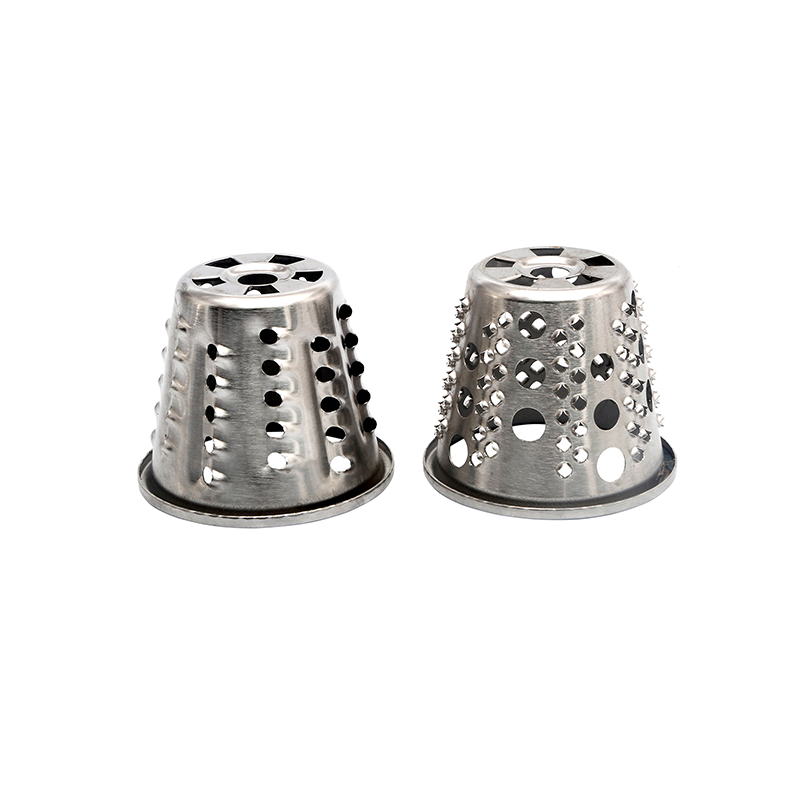
To definitively answer how these methods diverge, we must evaluate them across multiple engineering and economic parameters. The matrix below offers a direct, objective comparison.
| Feature | Metal Stamping | Forging Process |
|---|---|---|
| Material Input | Flat sheet metal or continuous coils | Solid metal blocks, billets, or ingots |
| State of Material | Room temperature Cold forming | Often heated to extreme temps Hot forging |
| Deformation Method | Shearing, bending, and stretching | Compressive crushing and volumetric displacement |
| Structural Strength | Adequate for enclosures and light structures | Exceptionally high due to continuous grain flow |
| Production Speed | Extremely fast hundreds of parts per minute | Slower requires heating and multiple strikes |
| Unit Cost High Volume | Very low | Moderate to High |
The most visible divergence lies on the factory intake floor. Sheet metal manipulation relies on flat stock, meaning the thickness of the finished part is generally uniform throughout, except where intentionally stretched. In contrast, forging utilizes solid chunks of metal. This bulk approach allows engineers to design massive 3D geometries, heavy solid cross-sections, and varying thicknesses that simply cannot be folded from a flat sheet.
When evaluating tensile and yield strength in a laboratory setting, forged parts unequivocally dominate. Because a stamping press merely bends or shears a sheet, the internal grain structure is actively severed at the cut edges. While stamped parts are highly durable and perfectly suited for structural enclosures or brackets, they cannot withstand constant cyclic fatigue. For load-bearing applications subject to high-impact forces, the unbroken grain flow of a forged part remains a strict engineering prerequisite.
In the realm of mass production, the stamping press reigns supreme. Once a progressive die is installed and calibrated, the system can run with minimal human intervention, spitting out parts in a rapid-fire rhythm. Forging is inherently methodical and slower. Even with automated robotics handling the red-hot billets, the cycle of heating, transferring, striking multiple times, and cooling is a labor-intensive and energy-intensive reality.
The manufacturing sector is currently experiencing a massive shift driven by the electric vehicle and aerospace markets. In the automotive world, the relentless push for lightweighting to extend battery range has pushed sheet metal manipulation to its absolute limits. Manufacturers are increasingly adopting hot stamping of ultra-high-strength boron steels. This hybrid approach allows them to create incredibly rigid, lightweight chassis components that improve crash safety without adding bulk. While it uses heat, it remains fundamentally a sheet forming process, distinct from the volumetric displacement of forging.
Simultaneously, the aerospace and defense sectors are driving innovations in precision forging. As the demand for titanium and advanced superalloys grows for jet engines and structural aircraft components, forging facilities are adopting sophisticated thermal modeling software. This ensures that every solid block of metal is compressed with zero internal defects, meeting the zero-fail tolerance required for modern aviation. Both industries highlight how these traditional methods are adapting to cutting-edge technological demands.
The machines and tools used in these processes represent two entirely different branches of mechanical engineering. Understanding the operational stresses placed on this equipment helps clarify why production costs scale differently.
Tooling design for sheet metal is a masterclass in clearance management. Engineers must account for the specific mechanical properties of the coil being fed into the machine. If a punch is too tight within the die cavity, the metal will gall, generating friction that quickly destroys the press tooling. If it is too loose, the metal folds rather than shears, leaving jagged burrs and rejected parts.
Designers must also calculate the aforementioned springback. Tooling is often engineered to over-bend the metal by a precise fraction of a degree. When the pressure releases, the metal relaxes exactly into the specified tolerance. Machined from hardened tool steels or tungsten carbide, these dies are built to hold a razor-sharp cutting edge over millions of cycles.
Forging dies, on the other hand, operate in a brutal, chaotic environment. They do not require the microscopic shearing clearances of a stamping punch, but they must survive conditions that would instantly melt standard tooling.
During hot forging, a cold die is repeatedly struck by metal heated to over 1,000°C, followed immediately by rapid cooling from vaporized lubricants. This violent thermal cycling causes surface cracking known as heat checking. Furthermore, as the solid metal is crushed and forced to flow, it generates immense friction. Therefore, forging dies are machined from specialized hot-work tool steels that prioritize toughness, impact resistance, and thermal stability over edge sharpness.
This manufacturing debate frequently spills over into the consumer market, particularly regarding culinary knives, gardening equipment, and hand tools. Peering behind the marketing hype reveals how the manufacturing method directly impacts daily performance.
Tracing their lineage back to traditional blacksmithing, modern forged knives are created through drop-forging. A heated bar of high-carbon steel is hammered into shape.
Consumers can easily identify forged knives by the bolster, which is the thick, heavy piece of steel bridging the blade and the handle. They feature a thicker spine and a heavier overall weight, providing a rigid, perfectly balanced tool that resists bending and facilitates effortless chopping. Due to the intense labor and energy required, they command premium pricing.
Advancements in laser cutting and precision punching have revolutionized the cutlery industry. Stamped knives are punched directly from large sheets of high-quality stainless or carbon steel, then heat-treated and ground to a sharp edge.
Lacking a traditional heavy bolster, these blades maintain a uniform thickness from handle to tip. They are significantly lighter, reducing wrist fatigue during prolonged prep work. Because they are cut from flat sheets, they offer superior flexibility, making them ideal for tasks like filleting. Most importantly, the extreme efficiency of the manufacturing process makes these tools highly affordable, providing exceptional value without sacrificing edge retention.
Selecting the correct manufacturing route is a critical pivot point that dictates product safety, supply chain budgets, and time-to-market. Procurement managers and engineers must weigh their specific requirements against the physical realities of each process.
This method is the definitive choice when economic efficiency at scale is the primary driver, provided the structural requirements allow for sheet metal.
Massive Production Volumes: Stamping is the undisputed leader in high-volume scalability. If your project demands 50,000 units or more, the high upfront tooling cost is quickly amortized. Eventually, the cost to produce each individual unit drops to fractions of a cent.
Thin-Walled or Lightweight Geometries: If your component is an electronic enclosure, a structural bracket, or an automotive body panel, it requires a uniform, thin wall typically ranging from 0.1mm to 10mm. Stamping is specifically engineered to manipulate flat sheets, making it the ideal choice for applications where reducing overall weight is critical.
Complex Cut-Outs and Perforations: Progressive dies can punch dozens of intricate holes, slots, and geometries into a part in a single stroke. Achieving this same level of intricate perforation on a solid forged part would require extensive, costly secondary CNC machining operations.
Forging is non-negotiable when material failure could lead to catastrophic results. It remains the gold standard for heavy-duty, load-bearing applications.
Extreme Mechanical Stress: The primary advantage here is metallurgical. By aligning the internal grain structure with the part's contours, forging delivers superior tensile strength and impact tolerance. Critical automotive drivetrain components, aerospace landing gears, and high-pressure industrial valves are strictly forged for this reason.
Massive 3D Geometries: Stamping is limited to folding flat stock. If your part requires varying thicknesses throughout its cross-section, such as a heavy hammerhead or a thick engine connecting rod, it must be compressed from a solid block of material.
Safety Overrides Unit Cost: In highly regulated industries, the slower production speeds and higher per-unit costs of forging are necessary trade-offs to guarantee maximum structural integrity and user safety.
Yes, but this is heavily dependent on your production volume. The initial engineering and fabrication of the custom tooling require a significant upfront capital expenditure. However, because presses can cycle hundreds of times per minute, the labor and energy costs per part plummet. At high volumes, stamping is vastly cheaper. Forging requires heating the metal, transferring it between dies, and extensive secondary machining, all of which keep the per-unit cost elevated regardless of volume.
From a purely metallurgical standpoint, no. While manufacturers can utilize ultra-high-strength steel alloys to create robust sheet metal components, the fundamental mechanics of the process involve cutting and bending the metal's grain structure. This creates inherent weak points at the shear edges and tight radii. Forging compresses and aligns the grain structure without severing it, creating a continuous flow of strength throughout the solid mass. A stamped part is excellent for enclosures, but it cannot replace a forged part in heavy-load applications.
Traditional stamping is strictly a cold-forming process, performed at room temperature to preserve the surface finish and prevent thermal distortion. However, there is a specialized sub-category known as hot stamping or press hardening, primarily used in the automotive industry. In this scenario, boron steel sheets are heated in a furnace, quickly stamped into shape, and simultaneously quenched within the die to lock in extreme hardness. While it uses heat, it still manipulates thin sheet metal and is distinctly different from the bulk volumetric deformation of hot forging.
In specific lightweighting scenarios, yes. Automotive engineers are increasingly replacing heavy forged steel brackets and suspension components with hot-stamped ultra-high-strength steel or precision-stamped aluminum alloys. While these stamped parts do not have the same solid mass as forged pieces, their engineered geometries and advanced material properties provide sufficient strength while drastically reducing vehicle weight. However, core engine internals and drivetrain components still strictly require forging.
Visual inspection usually reveals the manufacturing method. A stamped part will have a uniform material thickness throughout its body. You will also notice shear marks or slight burrs along the cut edges, and visible bend radii. A forged part will typically feature varying thicknesses, solid heavy cross-sections, and a parting line where the two halves of the forging die met. Forged parts also lack the sharp, punched holes typical of sheet metal forming.
Understanding the fundamental metallurgical and mechanical differences between these processes is the first step in optimizing your supply chain. Whether your project requires the rapid scalability of thin-walled enclosures or the unmatched structural integrity of solid metal components, selecting the right fabrication partner is crucial. To explore advanced custom automotive aluminum sheet metal solutions, tight-tolerance press capabilities, and cost-effective manufacturing strategies tailored to your exact engineering specifications, visit Yeeshine Tech today.


